(Baonghean.vn) - During a working trip with the Vietnamese press delegation to Cambodia, a reporter from Nghe An Newspaper managed to capture some moments at the Toul Sleng Genocide Museum in Phnom Penh, the capital of Cambodia. This museum preserves images, relics, and artifacts that serve as vivid evidence of the genocide perpetrated by the Khmer Rouge.
In just 3 years, 8 months, and 20 days, the Pol Pot regime murdered nearly 3 million innocent Cambodians, destroyed all social infrastructure, and pushed the Cambodian nation to the brink of annihilation. Vietnamese volunteer troops helped the Cambodian army and people stop this historical catastrophe, achieving a great victory on January 7, 1979, closing one of the darkest chapters in Cambodian history and in human history. Many people were haunted when visiting the school that the Khmer Rouge had turned into a prison to commit genocide. They were deeply affected when touring the prison cells, witnessing the barbaric torture methods, and especially when viewing the exhibition room displaying the remains and skulls of innocent people unjustly killed by the Pol Pot-Ieng Séeri regime. Lim, a guide, repeatedly emphasized: "I know many people are haunted, and some even suffer psychological trauma after visiting the prison." However, that is precisely why this museum needs to be maintained, because it serves as the most concrete reminder of the authorities' attitude towards the lives of their citizens, regardless of the regime or ethnicity they belong to.
During this visit, a reporter from Nghe An newspaper met two witnesses in a photograph depicting surviving victims from the time the Vietnamese volunteer army liberated Cambodia. Chum Mey – one of the two witnesses in the photograph of a survivor from Toul Sleng prison in 1979 – was deeply moved: “If it weren’t for the Vietnamese volunteer army, the genocide would have never ended, and I certainly wouldn’t have survived to be here at this museum every day to recount the story of the genocide, a historical tragedy unlike any other in human history. Currently, many rulers of major countries still harbor schemes of annexation, invasion, and attack… Therefore, the existence of the Toul Sleng Museum serves as a profound reminder. Because history cannot repeat itself, but historical mistakes are difficult to avoid…”
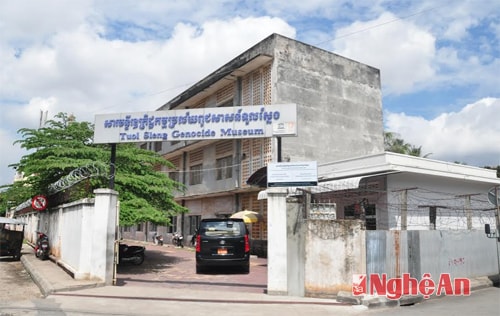 |
| The entrance to the Toul Sleng Genocide Museum – originally a school, but transformed into a prison under the Pol Pot regime due to the enormous number of Khmer Rouge members who arrested and executed them. |
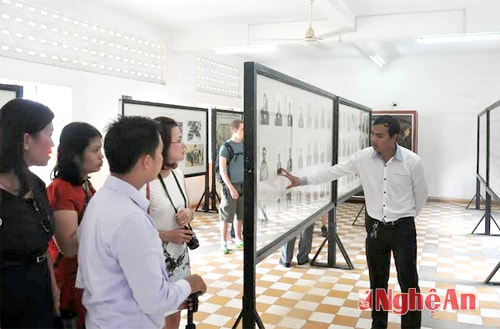
The tour guide is recounting the crimes of the genocidal regime – a monstrosity of history. |
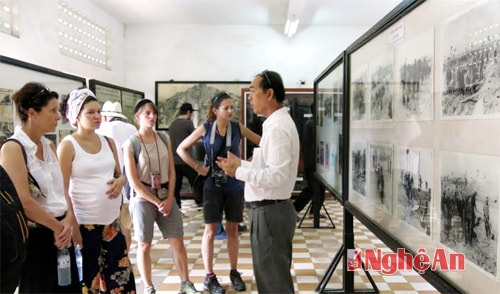 |
| The Genocide Museum has become a destination for both domestic and international tourists. |
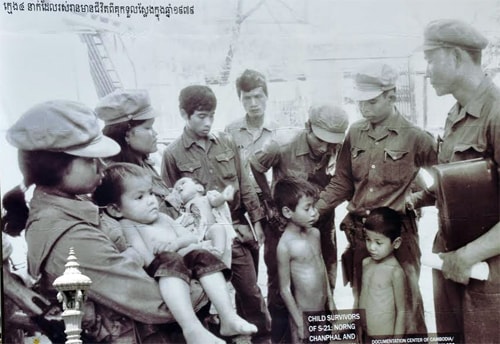 |
| The photograph of Vietnamese soldiers rescuing young children – a large-format outdoor display – always attracts attention. |
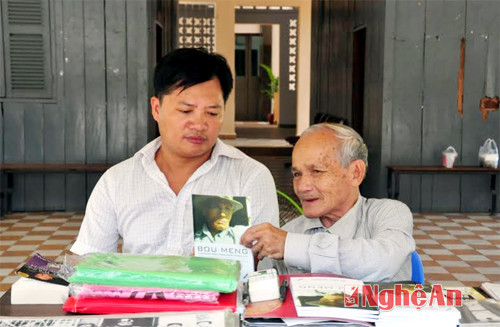 |
| Visitors take photos with Mr. Chum Mey (in the blue shirt), and a reporter from Nghe An Newspaper takes a commemorative photo with Mr. Bou Meng – two witnesses present in the photograph of the liberation army rescuing people from Toul Sleng prison to escape genocide. |
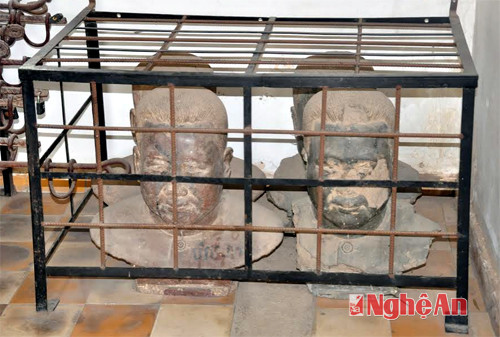 |
| Statues of those who held power during the genocide are now imprisoned in cages – subject to the judgment of history. |
Ngo Kien(email from Cambodia)


