

Strengthening measles vaccination efforts.
(Baonghean) - The transition period between winter and spring is a time when bacterial and viral pathogens have very favorable conditions to develop and spread, increasing the risk of infectious diseases in young children (including measles). Anticipating this seasonal disease situation, the provincial health sector has coordinated with relevant units to strengthen measles prevention and control activities in the community.
One of the measures aimed at proactively building broad immunity in the community (especially among children at highest risk of disease, aged 1-14) is the implementation of a measles-rubella vaccination campaign for this age group. In Vinh City, with its large population, including a significant number of immigrants, controlling infectious diseases is challenging. Therefore, when the health sector issued a directive to implement a measles-rubella vaccination campaign for children aged 1-14, the city mobilized all political systems to participate. The campaign was divided into three phases, lasting from November 1, 2014 to January 25, 2015. As a result, 97.5% of children aged 1-14 in Vinh City received the measles-rubella vaccine, ensuring vaccination safety.
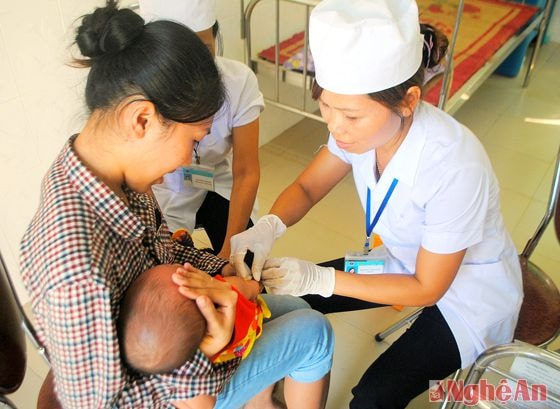 |
| Children receive measles-rubella vaccinations at Chi Khe Commune Health Station (Con Cuong District). |
According to statistics, in 2014, Vinh City recorded 241 cases of children with fever and rash suspected to be measles. To proactively prevent and control measles, at this time, in addition to implementing the measles-rubella vaccination campaign, the city has issued directives to 25 health stations in wards and communes to regularly disseminate information to the community on how to prevent the disease in children; at the same time, it is strengthening epidemiological surveillance to detect suspected cases early, thereby taking timely measures…
Returning to Tuong Duong district, the epicenter of the measles outbreak, in October 2014, 48 cases of measles were recorded in Mai Son commune, followed by two more cases in Huu Khuong commune. As the area had just experienced a measles outbreak, the district's health sector placed special emphasis on implementing a measles-rubella vaccination campaign for children aged 1-14 years. In just over a month, the campaign was completed in all 18 communes of the district. In communes and villages located tens of kilometers apart through forests and across streams, the Tuong Duong health sector established vaccination points right in the villages to make it easier for residents to bring their children for vaccination. Each commune was assigned 2-3 teams of district health officials, working in coordination with commune and village health workers to administer the vaccinations. In some remote communes far from the district center, the local health sector has established a cold chain, replenishing ice promptly 1-2 times during each vaccination campaign to ensure the preservation of vaccines for immunization purposes. During the measles-rubella vaccination campaign in November 2014, over 17,000 children in Tuong Duong district were vaccinated, achieving a rate of 96.5%, with only a few children not vaccinated due to contraindications. According to Mr. Pham Quoc Duong, Director of the Tuong Duong District Health Center, in addition, to proactively prevent measles outbreaks during the winter-spring season, the locality is currently implementing catch-up measles vaccinations for children under 1 year old and expanding immunization for children under 9 months old. Simultaneously, we will strengthen propaganda through banners and posters at community centers, commune health stations, and village health teams, directly disseminating information to the people about hygiene methods for preventing diseases in children… In addition, we will strengthen disease surveillance and two-way information exchange on the disease situation between village health teams, commune health stations, and the district level on a monthly basis.
Complete measles-rubella vaccination can help children develop immunity against the disease, achieving up to 95% protection and lasting a lifetime. According to Mr. Tran Nguyen Truyen, Deputy Head of the Medical Operations Department of the Provincial Department of Health, as of now, 19 out of 21 districts and towns in the province have completed the measles-rubella vaccination campaign for children aged 1-14. Overall, 95.6% of children in the province have received the measles-rubella vaccine. Most districts have achieved high vaccination rates, 96% or higher, with only Nam Dan and Tan Ky districts still undergoing the final vaccination phase. Once the Central Institute of Hygiene and Epidemiology provides sufficient vaccines, these districts will complete the campaign; it is expected to end on February 15th. Therefore, approximately over 760,000 children will receive the measles-rubella vaccine in Nghe An province.
Although no measles cases have been recorded in the province since the beginning of 2015, in 2014 Nghe An recorded 844 cases of children with fever and rash suspected to be measles, scattered across several localities such as Vinh City, Hung Nguyen, Yen Thanh, Tuong Duong, etc. The winter-spring season, with its low temperatures and prolonged humidity, creates favorable conditions for the outbreak of infectious diseases in young children, including measles. To proactively prevent and control measles, in parallel with the implementation of the measles-rubella vaccination campaign for children aged 1-14 years throughout the province, the Department of Health issued Official Letter 245/SYT-NVY dated February 2, 2015, directing localities to focus on the following: reviewing equipment, supplies, chemicals, and medicines for disease prevention and control. Closely monitor suspected measles cases in the community and at healthcare facilities to detect measles cases early, provide timely emergency care and treatment, thoroughly handle outbreaks, and minimize the number of cases and deaths. The Centers for Preventive Medicine and the Health Centers of districts, cities, and towns should direct the implementation of measles vaccination within the monthly expanded immunization program, ensuring all children receive the measles vaccine at 9 months of age to avoid measles due to delayed vaccination. They should also continue to organize the measles-rubella vaccination campaign for children aged 1-14 years, aiming for a vaccination rate of over 95%; regularly review target groups and organize catch-up measles vaccinations, especially in remote areas, areas with difficult access, areas inhabited by ethnic minorities, social welfare centers, and voluntary care facilities. In addition, it is necessary to strengthen public awareness campaigns about measures to prevent and control respiratory diseases, including measles, the benefits of measles vaccination, and the importance of timely and complete vaccination for children within the eligible age range for expanded immunization programs. This will help people understand and take their children for vaccination, proactively implementing disease prevention measures for themselves and the community.
Measles is transmitted through airborne or direct contact with nasal and throat secretions from infected individuals. Children who have not been vaccinated against measles and individuals without immunity to the measles virus can contract the disease. To prevent measles, parents should proactively ensure that children aged 9 months to 2 years who have not been vaccinated or have not received both doses of the measles vaccine, or children aged 1 to 14 years who have received the full course of measles-rubella vaccination, are vaccinated according to schedule; keep children away from or in contact with children suspected of having measles; ensure good hygiene for children, such as frequent handwashing with soap, maintaining daily hygiene of the body, nose, throat, eyes, and mouth; ensure that homes and bathrooms are well-ventilated and clean; and pay attention to improving children's nutrition.
Health experts also advise that measles is highly contagious, especially in crowded places like schools. Therefore, schools, nurseries, and kindergartens—places where many children gather—need to maintain cleanliness and good ventilation; toys, learning materials, and classrooms should be regularly disinfected with common disinfectants. When parents notice signs such as fever, cough, runny nose, and rash, they should promptly isolate the child and take them to the nearest medical facility for examination and timely treatment; they should avoid taking children to higher-level facilities for treatment unnecessarily to prevent overloading hospitals and cross-infection within hospitals.
Dinh Nguyet