

The electricity price increase proposed by EVN is too high.
The Vietnam Electricity Group (EVN) has proposed electricity price increases ranging from 7-10%. The Ministry of Industry and Trade is studying these proposals to report to the Government this March, suggesting an increase of around 9.5%. However, experts believe that an increase of this magnitude would be too high…
Is raising electricity prices justified?
Deputy Minister of Industry and Trade Do Thang Hai said that before the Lunar New Year, all the conditions were met to increase electricity prices, but the Prime Minister issued a directive that prices could not be raised due to concerns about affecting public sentiment.
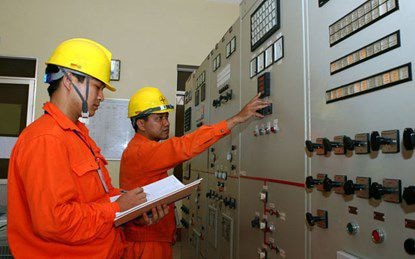 |
| Electricity prices have increased nine times already, and the tenth increase is expected to bring the price to 1,508.85 VND/kWh. (Illustrative image) |
“EVN’s proposal to increase electricity prices is entirely reasonable given that the components of electricity prices have risen. Specifically, coal prices have increased by 22% to date, while thermal power generation accounts for 32.7%. Gas prices have also increased significantly in 2014, the average exchange rate has also risen, and the water resource tax has increased from 2% to 4%... making electricity prices currently lower than production costs,” Mr. Hai added, providing further reasons for the electricity price increase.
According to Deputy Minister Do Thang Hai, the recent drop in gasoline and diesel prices has had almost no significant impact on the electricity sector because electricity produced using gasoline and diesel only accounts for 0.55%. Comparing with other countries, Deputy Minister Hai stated that Vietnam's electricity prices are significantly lower; compared to the Philippines, we are still approximately three times lower, and Singapore is also nearly three times lower. "While labor productivity in Vietnam's electricity sector is low, and energy consumption is higher than in other countries, the fact that we have been able to maintain the current electricity price level is a tremendous effort," Mr. Hai remarked.
Previously, Mr. Hai stated that EVN had proposed electricity price increases with the highest rate at 9.5%, and the other two rates lower. "The Ministry of Industry and Trade is currently reviewing and evaluating the 2015 electricity price plan proposed by EVN and will report to the Prime Minister this March," the Ministry's spokesperson said.
Don't let the achievements go to waste...
Economist Ngo Tri Long believes that, given the statements from the governing body, electricity prices will certainly increase sharply in the near future. Mr. Long said: "If input costs increase, an increase in electricity prices is inevitable. However, my concern remains whether such a sharp increase in electricity prices is commensurate with input costs, whether EVN can be transparent about its input costs, and what the power company has done to reduce the pressure of price increases when the outstanding debt is still enormous?!"
Mr. Long analyzed that EVN's proposed 9.5% increase in electricity prices is too high. He argued that EVN and its governing body (the Ministry of Industry and Trade) claiming high input costs require independent auditing, rather than being controlled by the ministry, as this is not objective. Furthermore, the Ministry of Finance, the appraisal agency, also finds it difficult to fully assess the input costs of the electricity sector. "Comparing electricity prices in other countries to ours is inappropriate, because the cost structure of electricity in Vietnam differs from other countries in the region," Mr. Long stated.
Dr. Ngo Tri Long also argued that raising electricity prices after Tet (Lunar New Year) is a rather dangerous time. Raising electricity prices is a very sensitive issue, affecting the lives of all citizens and the entire economy. "Inflation has been continuously decreasing recently, even during Tet, showing low purchasing power and low incomes, leading people to limit spending, and thus businesses are still struggling. Therefore, increasing electricity prices by nearly 10%, even after Tet, will make things even more difficult for struggling businesses, reduce their competitiveness, and make things even harder for people, causing them to tighten their spending even more. With such a large increase in electricity prices, will the government consider this and come up with a solution?!" Dr. Long analyzed.
Economist Pham Tat Thang also believes that low inflation creates significant policy space for the Government to manage electricity prices in the future, aiming to liberalize the sector and attract investment. Over the past five months, prices have decreased by an average of 0.2% compared to the previous month. By January 2015, inflation had increased slightly by about 0.9% compared to the same period last year, while in January 2014 it was 6.5%, and in February it continued to decrease by 0.05%. However, this expert also argues that while low inflation presents a great opportunity to increase electricity prices, a 9.5-10% increase would be too high. Without accompanying solutions, this could significantly impact the achievements in controlling inflation in recent times, as the prices of many goods and costs would increase if electricity prices rise sharply…
| Since 2007, electricity prices have increased nine times, with four consecutive increases in the past two years, each at only 5%. With a proposed tenth increase of approximately 9.5%, this would be the highest increase in the past three years. The new average electricity price, under this plan, is expected to be 1,652.19 VND/kWh, an increase of 146.34 VND/kWh compared to the current price. |
It's difficult to attract investment if electricity prices are not appropriate. Even with cost-cutting measures such as liquidating non-essential assets, reducing the workforce, renovating old power plants, and increasing labor productivity, it is still not enough to address EVN's financial challenges. Electricity prices remain the most significant bottleneck. In short, EVN is fully capable of and will have to reduce electricity production costs, but adjusting electricity prices is still necessary. Over the next five years, total investment in power projects will need to be around US$7.5 billion per year, with 70% of this capital depending on the private sector through independent power plant projects. Vietnam cannot attract investment in power generation if electricity prices are not appropriate. According to a report by the World Bank (WB) |
According to danviet.vn
| RELATED NEWS |
|---|