
Đường Thái Phiên - Những cung bậc cảm xúc
(Baonghean) - Đường dài độ cây số rưỡi, thông qua mấy ngã tư sôi động bậc nhất trung tâm thành phố vinh, mà mỗi nơi như khởi đầu cho một cảm quan khác biệt. Đường dường như độc nhất thành Vinh về những “đoạn trường” phân khúc, và đặc biệt bởi những câu chuyện lịch sử dày dặn bao quanh…
(Baonghean) - Đường dài độ cây số rưỡi, thông qua mấy ngã tư sôi động bậc nhất trung tâm thành phố vinh, mà mỗi nơi như khởi đầu cho một cảm quan khác biệt. Đường dường như độc nhất thành Vinh về những “đoạn trường” phân khúc, và đặc biệt bởi những câu chuyện lịch sử dày dặn bao quanh…
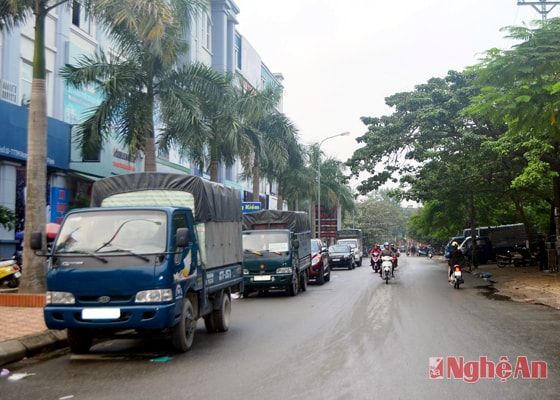 |
| Đường Thái Phiên. |
Năm 1901, sách “Tổng quát An Nam” đã viết: “Vinh cách Huế 400 cây số và cách Hà Nội 296 cây số, có 40 người Âu, 161 người Hoa, 12.000 người Việt, là tỉnh lỵ Nghệ An. Cách đây 2 năm, Vinh đã trở thành một thành phố thực sự có những con đường rải đá thẳng xinh đẹp, những đường phố có nhiều hiệu buôn của người Trung Hoa và người Việt Nam và những hiệu làm nghề thủ công, như đồ sắt, đồ thêu, làm lọng, làm đồ mã, buôn gỗ nứa. Khu vực người Hoa kiều ở có nhiều nhà gác cao đẹp, sân xây bằng đá san sát đều nhau…”. Khu vực người Hoa cư trú đông đúc ấy, bấy giờ được gọi là phố Khách, chủ yếu cư trú dọc theo tuyến buôn bán từ Cửa Tiền xuống chợ Vinh. Phía cánh tả chợ Vinh, đường Thái Phiên hiện diện như một nét mày đầy thân phận. Trong ký ức người già, đường Thái Phiên vào những năm cuối thế kỷ XIX, đầu thế kỷ XX, dẫu nằm cạnh bên những tấp nập bán buôn nhưng không có vẻ sầm uất của kiến trúc nhà dân, đời sống thợ thuyền vẫn nặng bầu không khí phố xá hơn là nhịp sinh hoạt tiểu thương. Đường Thái Phiên bấy giờ chủ yếu là nơi sinh sống của cư dân lao động phổ thông, phục vụ cho các cửa hàng, cửa hiệu và dịch vụ bán mua sôi động của chợ.
During the centrally planned economy era, cooperatives emerged as well-organized collective business models, and the Thong Nhat Woodworking Cooperative became a highlight at the end of Thai Phien Street. I completely failed in my attempts to find documented sources about the market street at that time. Fortunately, the sidewalk culture helped me meet some respected elderly people. In their memories, the emulation movements for excellent labor and production spread strongly, creating a vibrant atmosphere. At that time, the Thong Nhat Woodworking Cooperative mainly produced household wood products, serving the practical needs of people's lives. All buying and selling was done through ration coupons, and the stretch of Thai Phien Street in front of the cooperative's gate was always bustling with people coming and going, queuing for their turn.
In front of the Thong Nhat Woodworking Cooperative's gate stood an ancient tamarind tree, its wide, lush canopy shading a stretch of road in the summer. Beneath the tree was Mr. Thao's tea stall, once famous for selling acne patches. Young men and women, and even elderly people, would often sit there, sometimes quietly playing a few games of chess to pass the time, other times chewing betel nut and sipping green tea while chatting about everything under the sun until closing time. Later, the stall closed due to declining customer demand, remaining closed for several decades, seemingly permanently shut down. However, it suddenly "reopened" a few years ago. It's still the same makeshift stall, with the same plastic containers clattering peanut candy and a few rickety wooden chairs. The owner is Mr. Thuc, Mr. Thao's younger brother. Every morning and evening, passing by, one still hears the bustling sounds of laughter and conversation; the customers are mostly factory workers and general laborers from warehouses, loading and unloading points for porters, rickshaw drivers, and market vendors.
It's often said that walking along the streets is the best way to truly experience the essence of city life. The hustle and bustle, the peaceful tranquility, or the melancholy emptiness—all are reflected in the streetscape. Starting from the intersection with Dinh Cong Trang Street, then crossing the Ngu Hai intersection, continuing a little further past the Tran Phu intersection, and past rows of shops overflowing with all sorts of goods, you reach the Ngo Duc Ke intersection. At this point, the street softens with the colors of rustic cuisine before culminating at the intersection with Ben Den Street, and finally ending at the junction with Cao Xuan Huy Street. Thai Phien Street crosses the territories of three wards: Quang Trung, Hong Son, and Vinh Tan. These numerous meeting points create a unique and emotionally rich street in Vinh City.
Each intersection serves as a starting point for new and unfamiliar sensations. The street begins peacefully with a few cozy coffee shops; then there's the bustling trade of garment materials, fashion shops, birdcage vendors, fishing gear sellers…; and further on, there are fried dumpling stalls, Thai tea shops, and fragrant Hue-style noodle soup…; passing by Ben Den, the atmosphere of daily life seems to overshadow the hustle and bustle outside. To the left of the street is a fairly busy area of residential buildings, some with impressive four or five stories, while to the right, it remains quiet with mechanical workshops, fine art woodworking shops, and scrap metal dealers, their fronts always cluttered with rickshaws tied with rubber bands, ready for transport. The street carries the heavy imprint of a bygone era of hard work, partly due to the row of collective housing units of the Thong Nhat Woodworking Cooperative located right along the roadside. The cooperative has long since dissolved, but that atmosphere still lingers today, as the dilapidated collective rooms retain their original architectural style from the 1980s…
Although the street isn't famous for its ecological features, it's still pleasing to the eye due to the density of trees providing shade. There are trees of all sizes and species, sheltering the residents from the scorching hot summer winds. And when it rains, standing on a high vantage point to admire the street is also a delightful experience. The bustling traffic rushes by in the daily grind, the murmur of bargaining fills the air below the shops. Leaning out a little, you can take in the expansive, wide-open space of the street, feeling a newfound affection for this place!
Thai Hieu(1882 - 1916) was born in Nghi An village, Hoa Phat commune, Hoa Vang district, Quang Nam province (now Nghi An block, Hoa Phat ward, Cam Le district, Da Nang city). In his youth, he became a monk at Co Lam pagoda (in the mountainous region of Quang Nam). After a while, he went to Binh Dinh to work as a teacher and participate in revolutionary activities, joining the uprising against the French. In 1904, he joined the Dong Du movement, and in 1908 he joined the Duy Tan movement along with Phan Boi Chau and Phan Chau Trinh. From 1913, he was one of the leaders of the Vietnam Restoration Society in the South Central region. In early 1916, he and Tran Cao Van met with King Duy Tan to finalize a plan for an uprising to overthrow the French. The plan was leaked, the uprising failed, and Thai Phien, Tran Cao Van, and King Duy Tan were captured by the French on their way to their base in the early morning of May 4, 1916. On May 17, 1916, along with two of his comrades, Nguyen Quang Sieu and Ton That De, and several others, he was executed by the French colonial authorities and the Southern Dynasty. Today, his name is given to many streets and schools in cities across the country. |
Phuong Chi