
To be honest!
(Baonghean) - It's so touching, and how could it not be? For the first time, a document that truly cares for the people, that urgently seeks to protect them, has been officially sent by representatives of the Saigon Taxi Association to the competent authorities. No matter how roundabout its content may be, it all boils down to: "Requesting the Government and the Ministry of Transport to immediately terminate the operation of the Uber taxi network in Vietnam."
(Baonghean) - It's so touching, and how could it not be? For the first time, a document that truly cares for the people, that urgently seeks to protect them, has been officially sent by representatives of the Saigon Taxi Association to the competent authorities. No matter how roundabout its content may be, it all boils down to: "Requesting the Government and the Ministry of Transport to immediately terminate the operation of the Uber taxi network in Vietnam."
How quick and timely! Before most people even knew what Uber was, they (that taxi association) immediately "stamped" and hastily issued this document, reeking of jealousy, and it even reached the right people. This shows just how enthusiastic, responsible, and eager they are to serve their passengers. Their explanations sound so heartbreaking: Uber taxi drivers haven't received training, don't have professional licenses, their cars don't have logos, light boxes, meters, or radios, and some drivers don't even wear uniforms... so if something happens, who will be responsible? And that's not all; the association even pointed out the problems: the taxi development plan has already been approved, so it's not banned, and Uber might disrupt it! How objective and far-sighted!
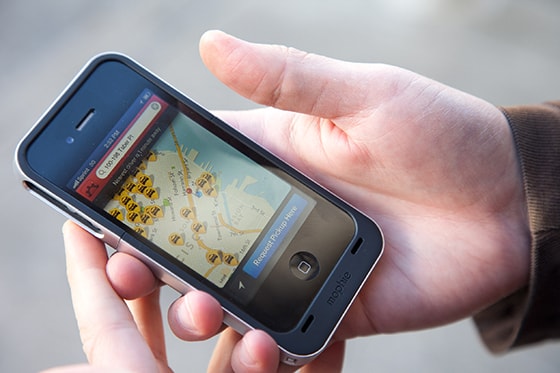 |
| Illustrative image |
Speaking of Uber, I'm confident enough to say that many readers are like me before writing this article – that is, they've never heard of Uber or anything like that! In recent days, this strange, unfamiliar name, with its very "Western" sound – Uber Taxi – has suddenly become incredibly popular. People are both curious and envious of the big players in Saigon (and I've heard they're about to launch in Hanoi). So what is Uber Taxi? To put it a bit more poetically, Uber is a brilliant and skillful union between a product of digital technology and the market. In short, if you want a taxi, you call a company like "Mai Luon" or "Van Xin." It's not an exaggeration to say that sometimes, taking a taxi is a strenuous and even hazardous task! The unprofessional attitude of taxi company employees is probably not a secret to most people.
On long journeys, you might get a few friendly questions from the uniformed driver with a tie, but on shorter trips, avoiding any sarcastic remarks is a stroke of luck. As for the claim that "transportation fares in Vietnam are three times more expensive than in South Korea," the media has reported on it extensively, so there's no need to repeat it. Incidents of passenger poaching, overcharging, reckless driving, detours, accidents, meter tampering, theft, and snatching passengers' phones have probably occurred at least a few times. Yet, when a new, seemingly "good, affordable, and convenient" service enters the market, the authorities immediately jump up in alarm! Ban! Ban! And ban! Why not think about regulation first?
Uber is a new type of service with unexpected conveniences. Simply installing the Uber app on your smartphone is all it takes! Passengers just use the app to book a ride, and the system automatically connects them with a driver. The system then displays information about the trip cost and basic details about the car that will pick them up. If the customer agrees to the ride, the cost is paid via card (fares are about one-third cheaper than regular taxis). In short, by joining Uber, everyone can become a business owner and taxi driver if they own a car. So, is it really necessary to ban it completely?
The author of this article completely agrees with the view of Dr. Nguyen Duc Thanh, Director of the Institute for Economic and Policy Research (University of Economics - VNU Hanoi): “Uber taxi is a new initiative. Thanks to this service, the cost of finding a taxi is significantly reduced, without needing to call any other taxi company. It can be said that this is a very effective application of technological achievements in the Internet era... The issue is how we accept it, in a civilized way.” That is the opinion of a scientist, but what about the managers? Minister of Transport Dinh La Thang is considered to have given the “green light” when he stated that: A service that benefits consumers like this should be studied for legalization.
While nothing can stop development when it's inevitable, just like you can't force someone to use postage stamps instead of email, given what has happened and is happening, I don't think Uber will be legalized in Vietnam, at least not in the near future. However, its appearance is not without merit. It can be said that this is a strong enough warning to traditional taxi companies about the quality and price of their services, which have remained stagnant with outdated methods. Hopefully, Uber's appearance, however fleeting, will change traditional taxi services in a more progressive direction. That would be valuable. As a customer, I would like to ask the association members: Do your recommendations truly stem from a genuine concern for the safety of the people? Or are you afraid of losing market share? Please answer! And before you answer, please allow me to remind you: Be honest!
Nguyen Khac An