

"Privatization that only involves selling a few percent of state capital is... a waste of time."
Minister of Finance Dinh Tien Dung suggested that over 51%, or even 100%, of shares should be sold in units where the State does not need to retain any stake.
Some companies competed to buy shares as soon as they were offered for sale.
According to Minister of Transport Dinh La Thang, in 2014 the Ministry of Transport (MOT) successfully equitized 48 enterprises. In the first quarter of 2015, the value of 24 enterprises had been basically determined, and equitization steering committees were established at 28 enterprises… The MOT also developed divestment plans for two corporations, Cenco 1 and Cenco 4, and is submitting them to the Government for consideration regarding the divestment of the remaining state capital in eight corporations.
In the last nine months of the year, the ministry is expected to privatize 100% of the remaining state-owned enterprises (SOEs) where the State does not need to retain capital. According to Mr. Thang, by the end of 2015, only 16 SOEs in the public service sector will remain, including maritime security, air traffic control, railways, etc. The task is challenging, but the ministry will divest all state capital in strong corporations and large enterprises.
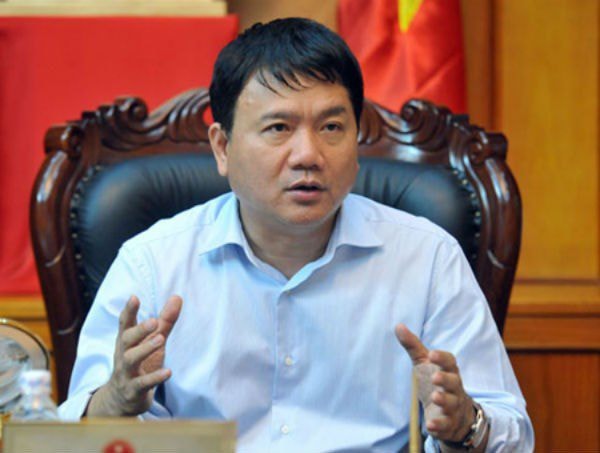 |
| Minister Dinh La Thang: After equitization, talented people will still have their jobs secured, while those without talent will have to take on other jobs. |
"Currently, the Ministry of Transport has submitted a plan to the Prime Minister to divest 80% of state capital in Hai Phong Port and Saigon Port, and we hope it will be approved soon," Minister Thang said impatiently about the divestment of state capital in the country's two largest ports.
Speaking about the equitization situation in units under the transport sector, Minister Thang enthusiastically said, "The business performance of enterprises has improved significantly after equitization. In particular, in enterprises that previously were constantly embroiled in lawsuits, after equitization, salaries are paid to employees on the 10th of every month, and this phenomenon of litigation has ceased."
For example, at some public service units under the transport sector, such as the Transport Hospital, before deciding to sell shares, everyone from the leadership to the staff was worried, wondering "will anyone buy the shares?", and whether salaries would decrease after the hospital was privatized... But the reality turned out to be the opposite.
“As soon as the share sale was announced, people rushed to register to buy. Furthermore, commitments were made that after the equitization, the salaries of staff here, from nurses to directors, would double, averaging 20 million VND per month. Before, directors and deputy directors would only lose their positions, but now they can rest assured. Talented people will retain their positions, while those without talent will have to take on other jobs,” Minister Thang shared.
Affirming the determination to privatize public service units in the transportation sector such as healthcare, education, and schools, Minister Thang commented, "Only through decisive privatization of these units can we reduce staffing levels, improve service quality, and reduce corruption..."
The investor wants to buy the entire lot, 51% of the state-owned shares.
Although actively promoting the equitization process of enterprises, the "commander" of the transport sector also complained about obstacles that are causing the equitization process to proceed slower than expected. He emphasized that the regulations regarding the sale of entire blocks of shares to investors are still unclear.
"For large enterprises selling shares in small batches, it will take a very long time to complete the equitization process. Therefore, selling shares in blocks to investors is a better way to select large, influential investors for the enterprise and to accelerate the equitization process," Minister Thang expressed.
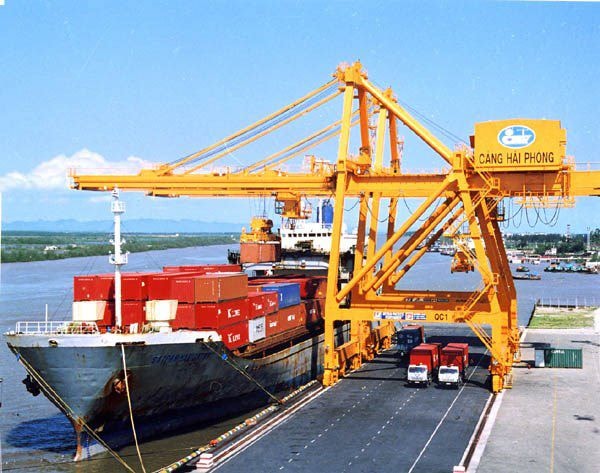 |
| The transport sector wants to divest 80% of state capital in Hai Phong port. |
The Minister boldly proposed that the Government allow the Ministry of Transport to proactively negotiate and select investors to sell the entire block of shares to investors, including the sale of 100% of state-owned shares in the Vietnam Automobile Industry Corporation, Cienco 5, Cienco 6, etc., based on criteria such as capital, capacity, and experience. He also urged relevant ministries and agencies to promptly finalize regulations on the sale of entire blocks of shares to investors.
Even businesses face bureaucratic obstacles when investors want to buy more than the permitted number of shares, up to 51%, but the law only allows a maximum of 49%. Mr. Le Minh Chuan, Chairman of the Board of Directors of the Vietnam Coal and Mineral Corporation, cited an example: “Currently, some companies are offering to sell 49%, but customers are demanding a higher price, insisting on buying 51%.” According to Mr. Chuan, the State needs to be more “open”; otherwise, without allowing investors to participate in management, the privatization process will be very slow.
Minister of Finance Dinh Tien Dung stated frankly that equitizing state-owned enterprises by selling only a few percent of their capital is a waste of time and ineffective. He suggested selling over 51%, or even 100%, of state-owned enterprises where no state ownership is necessary.
Regarding the idea of selling entire blocks of shares to investors, Mr. Vu Bang, Chairman of the State Securities Commission, believes that selling entire blocks is crucial for bringing about change in corporate governance. "Ministries should conduct pilot programs, learning from experience as they go to evaluate and issue model regulations for auctioning entire blocks," Mr. Bang said.
Furthermore, according to Mr. Bang, what investors are interested in is a clearer schedule so they can make more informed choices, and therefore, earlier information disclosure would attract more capital.
Furthermore, it is necessary to institutionalize and compel state-owned enterprises (SOEs) to link auctions with listing transactions on the stock market to facilitate transfers. For a long time, the situation has persisted where enterprises are auctioned off but only listed on the stock exchange after a while, resulting in tied-up capital. Therefore, sanctions are also needed for SOEs that have completed equitization but remain indifferent and fail to list on the stock exchange.
According to infonet
| RELATED NEWS |
|---|