

Exchange rates are rising sharply, but the State Bank of Vietnam has yet to comment.
The US dollar just experienced an unusually sharp surge this past week. If that trend repeats itself this week, the State Bank of Vietnam (SBV) will not be able to remain silent any longer.
Exchange rates rise, but the State Bank of Vietnam remains silent.
The USD exchange rate just ended a week of shocking increases, soaring to 120-130 VND/USD. Leaders of commercial banks affirm that foreign exchange transactions are still proceeding normally. The fluctuations in the domestic USD price are mainly due to the sharp increase in the global USD price and speculative hoarding of USD in anticipation of an upward adjustment by the State Bank of Vietnam. Another reason for the "surge" in the domestic USD is the fact that Vietnam's trade deficit increased by more than 1.2 billion USD in the first two months of the year.
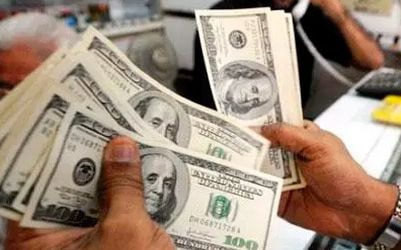 |
| The US dollar just experienced an unusually sharp surge this past week. (Illustrative image) |
"All these factors have put certain pressure on the exchange rate," commented Dr. Le Xuan Nghia, an economic expert.
Surprisingly, in the past, whenever the USD market showed signs of volatility, the State Bank of Vietnam (SBV) would immediately issue reassuring statements. But this time, the SBV remained silent. When asked by a reporter from Investment Newspaper whether the SBV was considering adjusting the exchange rate, both the Deputy Governor of the SBV and the head of the Monetary Policy Department (SBV) remained silent.
The State Bank of Vietnam's silence has caused public concern and rumors of exchange rate adjustments have surfaced in the market. In reality, the US dollar is at its highest level in 12 years and its upward trend shows no sign of stopping. The Federal Reserve's (Fed) statement at its midweek meeting, which indicated it would not raise interest rates, has slowed the dollar's rise, but in the long term, the dollar will continue to appreciate, as the Fed is expected to raise interest rates in September.
Many economic experts advise that the State Bank of Vietnam should speak out soon to stabilize the exchange rate.
"It is necessary to reaffirm the government's and the State Bank of Vietnam's direction that the exchange rate will not increase by more than 2% this year, and the State Bank of Vietnam will adhere to this. Once domestic market sentiment stabilizes, there will be no reason to push the exchange rate up," advised Mr. Truong Van Phuoc, Vice Chairman of the National Financial Supervisory Commission.
Agreeing with this opinion, Dr. Nguyen Tri Hieu, an economic expert, said: "If the State Bank of Vietnam resolutely maintains the exchange rate, then the exchange rate 'balloon' may soon deflate. In my opinion, the State Bank of Vietnam does not need to adjust the exchange rate yet because the supply and demand for foreign currency are currently balanced."
Experts are divided into factions; the market needs a clear message.
The pegging of the Vietnamese dong to the US dollar, in the context of dozens of countries such as Japan, the UK, and China actively devaluing their domestic currencies, is having a significant impact on Vietnam's imports and exports. In this context, experts have expressed conflicting opinions on whether or not to adjust the exchange rate.
Opponents of exchange rate adjustment argue that foreign exchange reserves are abundant, the supply and demand for foreign currency are balanced, most of Vietnam's export markets are settled in USD, and not all local currencies have depreciated against the USD. Conversely, supporters of exchange rate adjustment argue that continuing to peg the Vietnamese dong to the USD would put Vietnamese exports in a difficult position.
"The appreciation of the US dollar while Vietnam still pegs its exchange rate to the USD will put the Vietnamese dong at risk of appreciating against many currencies of trading partners, reducing the competitiveness of Vietnamese businesses' goods," commented Dr. Vo Tri Thanh, Deputy Director of the Central Institute for Management Research.
Of course, with the current foreign exchange reserves, the State Bank of Vietnam is fully capable of stabilizing the market. However, according to Dr. Phan Minh Ngoc, an economic expert, countries that proactively devalue their domestic currencies do not do so due to foreign exchange imbalances, but rather to maintain export market share and protect their domestic markets from the "impoverishing the neighbor" policies of other countries.
Clearly, adjusting or maintaining exchange rate stability at this time both have advantages and disadvantages. The State Bank of Vietnam (SBV) will inevitably have to weigh the overall benefits and drawbacks for the economy before deciding whether or not to adjust. However, experts believe that regardless of whether or not an adjustment is made, the SBV needs to send a clear message soon. If no exchange rate adjustment is made, the SBV should consider further measures to reduce interest rates to help businesses increase their competitiveness.
According to baodautu.vn
| RELATED NEWS |
|---|