

Kenya: Three days of national mourning after massacre in Garissa.
(Baonghean) - On Sunday, April 5th, Kenya began a three-day national mourning period to commemorate the 148 victims killed in the attack on Garissa University by the Somali Islamist terrorist group Shabab. A memorial service for the victims will also be held on Thursday on the campus of Garissa University.
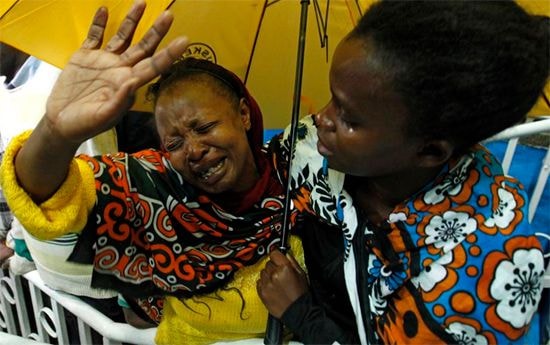 |
| A mother whose child was killed in the massacre at Garissa University in the early hours of Thursday, April 2nd. Photo: Reuters/Thomas Mukoya |
On Saturday evening (April 4), Kenyan President Uhuru Kenyatta announced a three-day national mourning period during which flags will be flown at half-mast. In his speech, President Kenyatta declared, “The government will provide the best possible response to this attack, as well as to all other attacks.” This marks President Uhuru Kenyatta’s first public appearance since the 1998 massacre at the US Embassy in Nairobi, which killed 213 people.
President Kenyatta affirmed, “Despite the difficulties, we are not and will never run away,” and stressed that the Somali Islamist terrorist group Shabab will fail to establish a “Caliphate” state in Kenya. Kenyatta declared that Kenya will do “everything to protect its people,” and appealed to the local Muslim community for assistance in the fight against Islamist extremists.
Amid criticism that the Kenyan government has failed to prevent attacks by the Shabab Islamist group, President Kenyatta stated that the officials responsible “will be brought to trial.” It is known that since mid-2013, more than 400 Kenyans have been killed in attacks carried out by the Shabab.
President Kenyatta warned, "Combating terrorism is becoming particularly difficult" because those planning or financing attacks may be hiding within the community and appearing harmless or ordinary. Simultaneously, he urged all communities in the country, including Muslims, Somalis, and Kenyans, to maintain solidarity.
Regarding the Shabab Islamic terrorist group, after being weakened in Somalia, they shifted their operations to Kenya. Kenya gradually became fertile ground for Islamic extremism to flourish as the country itself weakened by corruption. Following the massacre at Garissa University, the Shabab terrorist group continued to threaten further attacks and declared that they would make "blood flow on the streets of Kenya."
Chu Thanh
According to Le Monde, April 5th
| RELATED NEWS |
|---|