

Technological transformation is needed in the energy sector.
(Baonghean) - On Monday, May 4th, the International Atomic Energy Agency (IEA) released a report on technological innovation in the energy sector.
According to Maria Van Der Hoeven, Executive Director of the IEA, technological innovation in the energy sector will be key to the fight against global warming. The report states that significant untapped potential remains to drive innovation in energy technology. It also condemns the lack of public investment in research and development beneficial to “clean energy,” or in other words, “low-carbon fuels.”
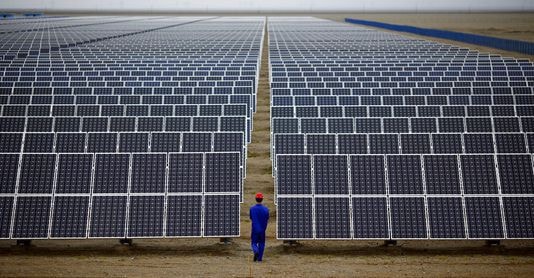 |
| A solar power system in Gansu, China. Photo: Reuters |
According to calculations, to keep the average global temperature increase below 2 degrees Celsius by the end of the 21st century, the global economy's energy consumption needs to be reduced by "almost 60% by 2050". Furthermore, the use of carbon-based fuels (coal, oil, and natural gas) needs to be drastically limited, especially in heating and cooling systems for buildings and industrial areas. Researchers estimate that nearly 40% of the world's energy consumption is used for these systems, followed by 27% for transportation.
Currently, global systems use up to 70% fossil fuels and emit 30% of CO2 into the environment. Therefore, the report recommends reducing the proportion of fossil fuels to below 50% by 2050 and increasing the use of renewable energy to 40%.
The report estimates that to meet the needs of all sectors by 2050, renewable energy needs to increase fourfold compared to today. This work requires strong impetus from developing countries such as China, India, and Brazil to "make significant progress in the fight against climate change." At the same time, wealthy nations also need to "support the committed actions in developed countries."
However, the report also warns that “current investment in research and development does not allow for the achievement of long-term climate goals.” While public spending on clean energy was around $17 billion per year in the late 1990s, this amount has decreased by 11% compared to the early 1980s and has only increased by 3%-4% since 2000.
According to the IEA, efforts need to be increased “at least threefold.” The IEA also stated that governments cannot invest in clean industries alone to ensure the goal of keeping the Earth's average warming below 2 degrees Celsius, so private capital mobilization is necessary. Finally, the report urged world leaders to “consider the benefits for society from energy system transitions.”
Chu Thanh
(According to Le Monde, May 4th)