

"The real estate market is heating up due to speculation" is incorrect.
"When transactions increase, the possibility of speculation returning is inevitable. But to say that the recovery of the real estate market and the increase in transactions are due to speculation is incorrect." This view was expressed by Minister of Construction Trinh Dinh Dung in the program "People Ask - Minister Answers" on the evening of July 12th.
 |
| Minister Trinh Dinh Dung: “When transactions increase, the possibility of speculation returning is unavoidable. The main issue is that we control the market to prevent it from overheating and creating a real estate bubble.” |
He said:
- If someone says that the recovery of the real estate market with many transactions is due to speculation, that's incorrect, because we all know that the period from 2011-2013 was a frozen market period when there was little to no speculation.
At that time, solutions were implemented to address the difficulties in the real estate market, and one key perspective for its recovery was to link market thawing with the implementation of the national housing strategy.
He said that "breaking the ice" in the market is linked to the national housing strategy, meaning managing the market in a way that ensures products are affordable for the people, so that even low-income earners can buy a home. However, in reality, social housing projects are behind schedule, and buying and selling transactions are still concentrated in commercial housing projects in the inner city.
In November 2011, the Prime Minister issued a Housing Development Strategy which affirmed the State's responsibility to support people in difficult urban housing situations to improve their housing. Subsequently, in November 2013, the first provisions on housing development were issued by the Government. In the same year, the Constitution affirmed a new right of citizens: the right to housing.
Specifically, the government needs to have policies to concretize the 2013 Constitution. To date, decrees and circulars on the development of social housing are being finalized, and the new Housing Law will come into effect in 2015.
This illustrates how innovative our policy is. With the involvement of local authorities and the guidance of the Government, in recent years we have developed 40,000 social housing units, providing housing for nearly 200,000 people.
Nevertheless, the implementation of social housing projects remains slow, primarily due to the newly finalized policies and, secondly, because this is a long-term, not a medium- or short-term, development strategy. Furthermore, developing social housing requires significant funding, which our state budget lacks, necessitating social mobilization of resources.
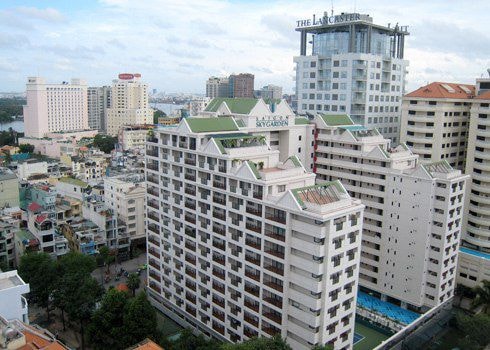 |
| Serviced apartments for rent are facing strong competition from luxury apartments for rent in Ho Chi Minh City. |
Another contradiction is that the development of social housing requires good quality housing at affordable prices to suit the affordability of low-income earners, making it unattractive to investors. This is also a reason why social housing projects are slow to be implemented.
Social housing projects are progressing slowly and are far from the city center, while apartment prices in central and surrounding areas are constantly rising. Do people feel the market is being manipulated by speculators making a comeback?
To say that the recovery of the real estate market with many transactions is due to speculation is incorrect, because we all know that the period from 2011-2013 was a frozen market period when there was little to no speculation.
At that time, solutions were implemented to address the difficulties in the real estate market, and one key perspective for its recovery was to link market thawing with the implementation of the national housing strategy.
Therefore, solutions are needed to restructure the market, restructure projects, and restructure real estate products to diversify products targeting consumers with different purchasing power levels, shifting from areas of surplus to areas of supply shortage.
Therefore, the real estate market has recovered, and we have also focused on developing social housing, thus helping to boost economic growth and address the issue of improving people's housing.
So, according to the Minister, with rising house prices in many areas and numerous banks aggressively pouring capital into the real estate market, is there a risk of a real estate bubble recurring?
When transactions increase, the possibility of speculation returning is inevitable. The main issue is controlling the market to prevent it from overheating and creating a real estate bubble. To achieve this, we first need to strengthen control over urban development and persistently implement solutions to control the real estate market in conjunction with the national housing strategy, which means balancing supply and demand.
The national housing strategy creates demand for improved housing for the people, and the real estate market must meet that demand; if it does, it will certainly develop sustainably.
Specifically, we must strengthen control over real estate projects and continue to restructure the market, projects, and real estate products so that these products are accessible to everyone. Therefore, we must strictly implement Government Decree 11 on urban development management, which requires urban development to be based on planning and a plan.
Therefore, localities should focus on building urban areas and establishing urban development management boards to balance resource needs and forecast housing development potential in each area. This will help us control and overcome the spontaneous, uncontrolled development that has occurred in the past, creating imbalances in supply and demand and difficulties for the real estate market.
According to the Minister, how can the poor and low-income earners acquire housing as soon as possible?
To accelerate the implementation of social housing, we must improve the legal system related to housing development, creating an environment that supports the development of social housing.
Secondly, there is the involvement of central agencies, especially the role of local authorities in formulating work programs and plans for the development of social housing, considering this a political task in the five-year and annual plans.
Local authorities need to focus on preparing land funds and creating favorable conditions for businesses employing workers, as well as real estate businesses, to invest in and develop social housing projects in the most convenient way possible.
At the same time, it also creates conditions for people to invest in developing social housing for officials and workers in industrial zones to rent, in order to improve their living conditions, which our law already permits.
By doing so, I am confident that, step by step, those in need of social housing will have access to and be able to improve their living conditions.
According to VnEconomy