

Russia and the EU are constantly exchanging retaliatory blows.
The EU has agreed to extend economic sanctions against Russia in connection with the annexation of Crimea by the Russian Federation last March.
Thus, despite goodwill from Russia's side, the tit-for-tat retaliations between the two sides since the outbreak of the crisis in Ukraine have yet to end.
The European Council (EC) announced yesterday that the 28 member states of the European Union, meeting in Brussels, Belgium, reiterated their condemnation of Russia's annexation of Crimea and the Sevastopol region, and pledged to maintain its full policy of non-recognition of the event's legitimacy.
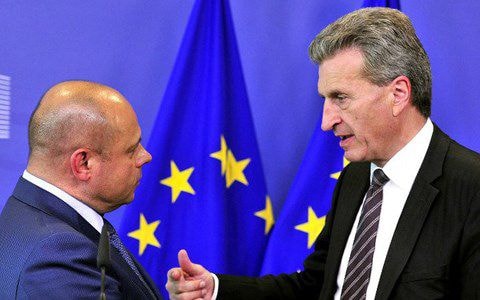 |
| The European Commission, meeting in Brussels, Belgium, continued to condemn Russia's impending annexation of Crimea. |
The agreement, which was reached by European Union ambassadors in Brussels, Belgium, is expected to be officially adopted at a meeting of EU foreign ministers in Luxembourg on June 22nd.
This decision by the European Union also includes sanctions agreed upon last June, including a ban on cruise ships operating in Crimean ports and restrictions on the export of telecommunications and transport equipment from the peninsula.
Meanwhile, on the Russian side, speaking at the St. Petersburg International Economic Forum last night, Russian President Vladimir Putin declared that Russia is open to the world and will cooperate with the West despite the persistent tensions related to the crisis in Ukraine.
He said: “Russia is open to the world. Our active cooperation with new growth centers around the world does not mean we want to reduce our attention to dialogue with traditional Western partners.”
Also at this forum, President Putin blamed the West, particularly the United States, for the crisis in Ukraine. He also suggested that the West needed to pressure Kyiv to help resolve the crisis.
Furthermore, the Russian leader affirmed that Moscow is ready to use its influence in eastern Ukraine to help the parties reach a compromise and ensure that the peace agreements reached in February are fully implemented.
He stated: “Some countries always argue that Russia should use its influence in southeastern Ukraine, but they don’t understand that it’s impossible to resolve the crisis through one-sided efforts alone. Influence also needs to be exerted on the Ukrainian government, which we cannot do. This is the job of the Western countries, of the United States and the European Union.”
Sanctions targeting Russia's energy, defense, and financial sectors were imposed by the European Union last July, following Russia's annexation of Crimea after a referendum in which an overwhelming majority of the population supported the annexation. As the conflict in Ukraine continued to escalate, the EU expanded economic sanctions against Russia, banning investment and imports of goods from Crimea.
During recent trips, the Russian president has expressed a desire for reconciliation with the West but maintains a hardline stance on the situation in Ukraine. This mutual refusal to compromise has resulted in economic losses for both sides.
According to VOV.VN