

The man who refused to hand over bin Laden
(Baonghean.vn) - His death is as mysterious as his life: Mullah Omar, one of the world's most wanted criminals, died at a hospital in Karachi, Pakistan, more than two years ago, according to Afghan government officials. US officials have stated they believe this is a "plausible" explanation.
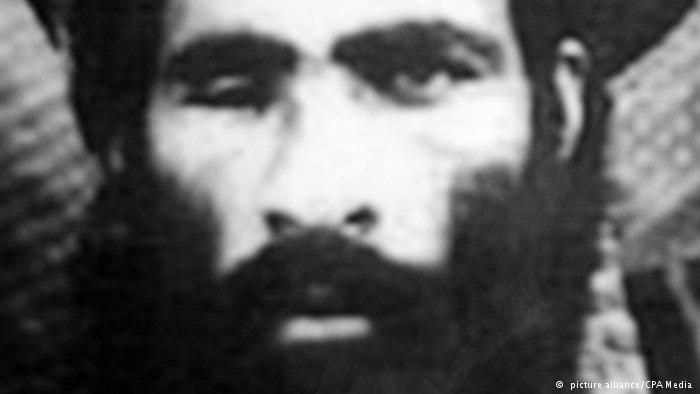 |
| Mullah Omar, the leader of the Taliban, is believed to have died in April 2013 in Pakistan. Photo: Internet. |
This is perfectly consistent with the life of Mullah Omar. From a Muslim cleric in an unknown village, he rose to become the leader of Afghanistan in the years leading up to the 9/11 attacks on the United States, yet he almost never appeared in public and photographs of him are rare.
Mullah Omar will be remembered in history as the man who refused to hand over Osama bin Laden after the 9/11 attacks. Immediately after these attacks, the Bush administration demanded that the Taliban hand over bin Laden.
Ten days after the 9/11 attacks, American radio interviewed Mullah Omar: "You won't hand over Osama bin Laden?" Omar replied: "No. We can't do that. If we did, it would mean we're not Muslims, and Islam would cease to exist. If we were afraid of being attacked, we would have surrendered and handed him over when threatened."
Mullah Omar explained to the Taliban insiders: “Islam says that when a believer asks for refuge, give him shelter and never hand him over to the enemy. And our Afghan tradition says that even if your enemy asks for shelter, forgive him and give him refuge. Osama helped the holy war in Afghanistan, he sided with us in times of difficulty, and I will not hand him over to anyone.”
Rahimullah Yusufzai, one of Pakistan's leading journalists, was one of the few people to have interviewed Mullah Omar. Before and after 9/11, the Taliban leader remained steadfast on the issue of handing bin Laden over to the Americans. According to Yusufzai, he once said: "I don't want to go down in history as a traitor to my guest. I am willing to sacrifice my life and my regime. Because we have given him refuge, I cannot now hand him over."
Omar also believed that the threats from Washington about serious consequences if bin Laden was not handed over were almost entirely empty threats. Abdul Salam Zaeef, the Taliban envoy to Pakistan, said that Mullah Omar simply believed that the US would not launch a military campaign in Afghanistan: “In Mullah Omar’s thinking, there is only a probability of less than 10% that the US would rely on anything other than threats, and therefore an attack is impossible.” Zaeef assured Mullah Omar that “the US will definitely attack Afghanistan.”
A bombastic statement, a limited worldview.
Mullah Omar's lack of understanding of the potential American reaction after 9/11 can be partly explained by the fact that he rarely met anyone outside his inner circle. His interactions with the press before 9/11 were infrequent and ceased afterward. He also almost never met with "apostates," that is, the majority of non-Muslims.
Despite his humble origins, in 1996 Mullah Omar proclaimed himself Amīr al-Mu'minīn, meaning "Commander of the Devout Believers," a title rarely used since the 7th century, implying that he was not only the leader of the Taliban, but also of Muslims everywhere.
To solidify his position as a leading Islamic figure destined for world history, Mullah Omar donned, both literally and figuratively, the “Prophet’s Robe,” a religious relic once worn by the Prophet Mohammed and kept in the southern Afghan city of Kandahar for centuries, almost never publicly displayed. Mullah Omar retrieved the robe from its storage and climbed to the top floor of a building, donning it before hundreds of cheering Taliban fighters.
Despite his eloquent pronouncements about becoming the Commander of the devout believers, this Taliban leader stubbornly operated in the provinces; during his five years in Afghanistan, he rarely set foot in the capital Kabul, viewing it as a place of debauchery and depravity.
Taliban authoritarianism
When the Taliban first emerged in Afghanistan under the leadership of Mullah Omar, the group enjoyed a high level of popularity and legitimacy in its early years, bringing order and peace to a country that had just endured 15 years of civil war.
Initially, the Taliban were also seen as relatively clean, and almost no one seemed interested in seizing power for themselves. However, the adage "power corrupts and absolute power corrupts absolutely" is almost a perfect description of how the Taliban regime developed over the years. The Taliban increasingly transformed their rule of law and order into something akin to a truly authoritarian Islamic state.
The Taliban banned soccer, kite flying, music, television, and prohibited women from attending school and working. Men were not allowed to shave or trim their beards. Women had to wear burqas and stay home unless accompanied by a male relative. Behavior deemed "deviant" by the Taliban was subject to medieval punishments. Taliban religious scholars sought answers to the question of how to deal with cases of homosexuality. Some suggested that such cases should be buried alive, while others argued that individuals deserved to be thrown from tall buildings.
Vahid Mojdeh, a former Taliban official, said: "The Taliban are cruel torturers; the method they most often use is beating people with electrical wires."
A model for IS
A decade and a half later, the Taliban served as a role model for the self-proclaimed Islamic State (IS).
The destruction of much of Iraq and Syria's cultural heritage by IS in recent months was foreshadowed by Mullah Omar's handling of the issue of the two colossal Buddha statues that had stood in the snow-covered Bamiyan Valley in central Afghanistan for over 1,500 years. In May 2001, the Taliban used explosives and tank fire to destroy Afghanistan's most famous tourist attraction.
Almost every country in the world, including many Muslim nations, has urgently pleaded with the Taliban not to interfere in this act of cultural destruction. Their desperate pleas, however, seem only to have strengthened Mullah Omar's resolve to blow up the statues. He told a visiting delegation of Pakistani officials that centuries of monsoon rains had created large craters near the statues' bases, which, in divine terms, were "where you should bury explosives" to destroy them.
Following the 9/11 attacks, U.S. officials quickly identified the operation as bin Laden's and knew he was in Afghanistan. On October 7, 2001, the day the U.S. began bombing the Taliban, Faraj Ismail, an Indian journalist, interviewed Mullah Omar in Kandahar. He assured them that bin Laden had no role in the attacks: “I control all of Afghanistan. I’m sure he didn’t do it.”
The US invasion of Afghanistan defeated the Taliban in just a few weeks, and on December 7, 2001, Mullah Omar left the city of Kandahar, where he had held absolute power for seven years.
The last time Mullah Omar released audio recordings was a decade ago, on [date].25/7/2005Since then, he has disappeared from public view, annually issuing written statements around the end of Ramadan, including one on July 15th. Of course, written statements are not “proof of life.”
Who represents the Taliban gangs?
So what does the death of Mullah Omar signify? It certainly raises significant doubts about the prospects of the ongoing peace negotiations between the Taliban and the Afghan government. After all, without a common leader, who represents the many factions within the Taliban?
According to Barnett Rubin, one of the world's leading experts on Afghanistan: "This raises doubts about who, if anyone, could represent the Taliban fighters on the ground in negotiations."
Hassan Abbas, a leading Taliban expert teaching at the National Defense University in Washington, shares this view: "None of the second-tier Taliban forces in Afghanistan have the prestige and status to replace Mullah Omar."
Both al-Qaeda leaders—including bin Laden and his successor Ayman al-Zawahiri—vowed allegiance to Mullah Omar as the spiritual leader of the global jihad. With Omar gone, to whom would al-Zawahiri pledge allegiance? Certainly not to the head of ISIS, Abu Bakr al-Baghdadi, with whom Zawahiri openly disagreed. Baghdadi was once a member of al-Qaeda but broke away to form ISIS.
Finally, news of Mullah Omar's death in Karachi, southern Pakistan, has raised some interesting questions for the local government. Senior U.S. military officials said in 2010 that, in their view, Mullah Omar had lived in Karachi for at least some time. How could one of the world's most wanted criminals have lived in Pakistan for years without being caught? Many have asked similar questions about Osama bin Laden.
Thu Giang
(According to CNN)
| RELATED NEWS |
|---|