

Hong Kong lawmakers reject electoral reform bill.
Hong Kong lawmakers voted on June 18 to reject a Beijing-backed electoral reform bill that pro-democracy activists said would only offer a “fake democracy.”
If passed, the draft law would allow Hong Kong residents to vote directly for the first time in the 2017 election to elect the chief executive of the special administrative region.
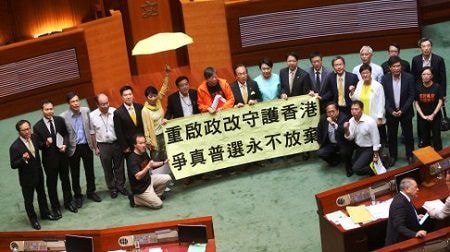 |
| Pro-democracy lawmakers call for "genuine" universal suffrage after voting against reform bill (Photo: SCMP). |
However, the candidates would have to be selected beforehand by a committee believed to be loyal to Beijing, which pro-democracy activists say offers only a “fake democracy.”
China insists that the reforms will still be implemented and remain legal regardless of the vote's outcome. Some in Hong Kong had hoped that if the draft were rejected, China would be forced to introduce more far-reaching reforms.
"The legal validity is unquestionable."
On August 31st last year, Beijing decided to control the selection of candidates for the 2017 Hong Kong Chief Executive election. This decision met with strong opposition, sparking numerous protests that drew more than 100,000 people to the streets.
The results of Thursday's election mean that Hong Kong's next leader could be chosen, as before, by a committee of 1,200 people, most of whom are now considered "pro-Beijing".
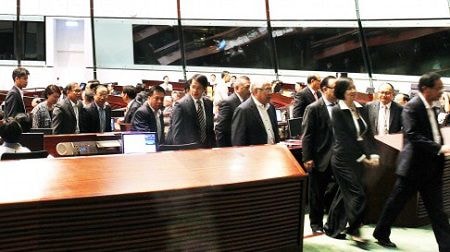 |
| Many pro-Beijing lawmakers left before voting (Photo: SCMP). |
Just before the vote on the afternoon of June 18, many pro-Beijing lawmakers left the chamber. Of the remaining 37 lawmakers, 28 voted against while only 8 voted in favor. To pass, the bill needed at least 47 affirmative votes.
A statement from China's legislature, published by Xinhua News Agency, affirmed: "Although the universal suffrage campaign was not approved, the orientation toward universal suffrage and the legal principles set forth must continue to be upheld in the future."
The announcement also stressed that the decision of August 31 last year “will continue to serve as the constitutional foundation for Hong Kong’s future” and that “its legal validity is unquestionable.”
(According to BBC/Dantri)
| RELATED NEWS |
|---|