

Training and licensing for automatic transmission cars will soon begin.
For the first time in Vietnam, the examination and issuance of driver's licenses for automatic cars are included in the draft of new regulations on training, testing, and issuing driver's licenses for motor vehicles, which are expected to be implemented from the beginning of 2016.
12 days shorter than learning to drive a manual transmission car.
Specifically, the Ministry of Transport is currently finalizing a draft of a new Circular to replace Circular No. 46/2012/TT-BGTVT dated November 7, 2012, issued by the Minister of Transport, which regulates the training, examination, and issuance of driver's licenses for road motor vehicles, as well as any amendments and supplements to this Circular. The new Circular is expected to take effect from January 1, 2016.
According to the draft, a Class B1 automatic driving license is issued to individuals who do not work as professional drivers, allowing them to operate automatic transmission passenger cars with up to 9 seats, including the driver's seat; and automatic transmission trucks, including specialized trucks, with a designed payload of less than 3500 kg. Holders of a Class B1 automatic driving license are not permitted to drive semi-automatic or manual transmission vehicles.
According to the draft, the training time for a B1 driver's license, specifically for automatic transmission vehicles, will be significantly reduced compared to manual transmission vehicles, to 476 and 556 hours respectively. Both types of driving have 136 hours of theoretical training, but the practical driving time for automatic transmission vehicles is only 340 hours per training vehicle, compared to 420 hours for manual transmission vehicles.
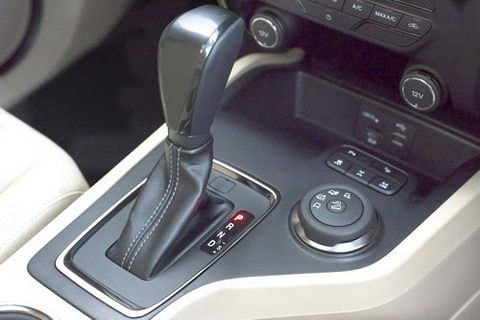 |
| Training and licensing for automatic transmission vehicles has become essential. |
According to regulations, each training vehicle for automatic transmission cars accommodates an average of 5 students, similar to manual transmission cars. Therefore, the practice time for each student is shortened from 84 hours for manual transmission cars to 68 hours for automatic transmission cars. The distance covered during driving practice is also reduced from 100 km to 1,000 km. Thus, to complete a training course, students learning to drive an automatic transmission car will spend 476 hours, even though the actual learning time for each student is only 204 hours.
If calculated in days, learning to drive an automatic car will only take 76.5 days (approximately 2.5 months, including weekends, holidays, opening and closing days), a reduction of 12 days compared to learning to drive a manual car, with the actual learning days alone reduced by 10 days to 59.5 days.
In a recent interview with Giao Thong Newspaper, Mr. Nguyen Thang Quan, Director of the Vehicle and Driver Management Department (Vietnam Road Administration - the unit in charge of drafting the new circular), stated that the reason the training time for automatic transmission vehicles is shorter than for manual transmission vehicles is because these vehicles do not carry a load. In addition, some subjects will no longer be mandatory for trainees and can be self-studied, such as vehicle structure, repair, and transportation operations. Regarding the driving test, for automatic transmission vehicles, the "hill start" test is unnecessary because automatic transmission vehicles do not roll back when going uphill, so it will be eliminated. Furthermore, training content such as handling engine stalling and shifting gears will also be removed.
However, to ensure quality and driving skills, the draft has added a parallel parking (reverse parking) exercise to reflect the reality that most automatic cars operate in cities, where parallel parking between two other cars requires advanced skills. Therefore, the driving test for automatic cars will have one more test compared to manual cars (from 10 to 11 tests).
Practice sessions are also graded automatically.
It is known that when taking the driving license test, candidates must follow the correct procedure and drive the vehicle through the test exercises arranged at the testing center, such as: starting, stopping to yield to pedestrians, stopping and starting on a slope, driving over tire tracks and right-angle turns, driving through intersections with traffic lights, driving through winding roads, parking (parallel parking for B1, B2 and C categories; perpendicular parking for B1, B2 and D, E categories), and temporarily stopping at a railway crossing.
Specifically, the draft of the new Circular stipulates that practical driving tests on the road for categories B1, B2, C, D, and E must use automatic scoring equipment to limit negative practices and subjective human influence on the test results. In addition, the new Circular stipulates that examiners who are instructors at driving schools (public or private) must have at least 5 years of continuous teaching experience and insurance contributions at their current training facility; they are not allowed to conduct tests for students directly trained by their facility.
It is known that a B1 driver's license is valid until the driver reaches the age of 55 for women and 60 for men; in the case of drivers over 45 for women and over 50 for men, the license is issued with a validity period of 10 years from the date of issuance. (The B2 driver's license retains its current 10-year validity period).
According to VnMedia