

Trying to drive when you're almost out of gas - a habit you should break.
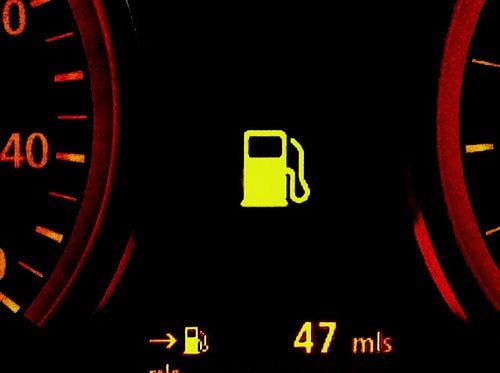
Driving when the fuel gauge is low or the fuel warning light is on can damage engine components.
The habit of driving with low fuel and the fuel warning light on is common among many drivers. According to Dailymail, statistics from an insurance company show that approximately 827,000 people in the UK ignore the fuel warning light each year.
Approximately 25% said they believed they could drive another 64 km after the light came on. Nearly 2 million drivers admitted that they would ignore the light if it came on, hoping to find a cheaper gas station. Men were more confident, thinking they could travel an additional 50 km, while women were more cautious, thinking only about 38 km.
 |
| So, is it harmful to drive when the fuel tank is low? |
First of all, the method of measuring fuel in both old and modern cars requires a fuel float. This float determines the fuel level and sends the information to the ECU via an electronic system or wiring in older cars.
Therefore, the fuel gauge reading may vary, showing a higher or lower reading when the car is parked on a slope for an extended period, either facing downhill or uphill. Thus, the fuel level displayed is simply a general indicator.
Driving until the fuel is nearly empty is bad for the engine or its mechanical parts. According to Ray Sparrow, a mechanic with 40 years of experience, engines, especially diesel engines, are easily damaged if they run out of fuel. This is because some engine parts are designed to be submerged in fuel and cannot withstand corrosion from air entering, such as fuel injectors, pumps, and seals.
The impact on gasoline engines is less severe, but that doesn't mean the car won't be damaged. If the fuel runs out completely, air can enter the fuel system, preventing the engine from receiving enough fuel, which will then require repair.
The next reason is that leftover fuel isn't ideal for the engine. "Imagine a fuel tank as low as a nearly empty bottle of red wine," Sparrow compares. Sediment usually accumulates at the bottom of the tank, entering the engine, reducing combustion efficiency, and damaging parts.
Ultimately, there's no guarantee that simply driving on will lead to a gas station, especially on long journeys or in unfamiliar areas. A car breaking down in the middle of the road due to running out of gas not only wastes the driver's time but is also dangerous because the power steering, brakes, and other systems become less effective, particularly at high speeds.
According to VnExpress