

To get an abortion, do I need to prove I was raped?
Many argue that the draft Population Law, which allows abortions after 12 weeks of gestation due to rape or incest, is impractical.
The draft Population Law, intended to replace the Population Ordinance, is currently being circulated for public comment. The draft proposes allowing abortion by choice if the pregnancy is under 12 weeks, except in cases of sex selection or abortion that would have serious health consequences for women. Additionally, women may be allowed abortions due to incest or rape if the pregnancy is 12 weeks or more.
On the afternoon of October 7th, in an interview with Pháp Luật TP.HCM (Ho Chi Minh City Law Newspaper), Mr. Tran Dinh Bach, Director of the Legal Affairs and Inspection Department of the General Department of Population and Family Planning (Ministry of Health), stated that in the two cases of rape or incest, if abortions were not performed, they would have negative social and human consequences; therefore, the law allows these individuals to have abortions.
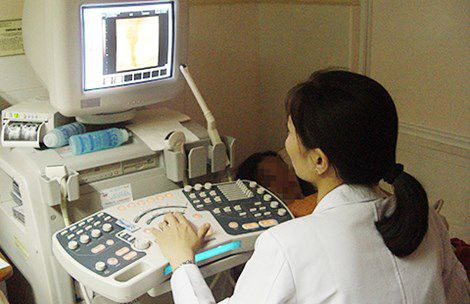 |
| Ultrasound examination of fetal health at a hospital. Photo: HTD |
There are differing opinions.
Responding to concerns about proving incest or rape, a sensitive issue that is not easy to prove, and even if proven, the fetus may be too large to be aborted, Mr. Bach stated: “Looking at this particular case, it seems complicated, but if we consider all cases of abortion, including those involving minors and unmarried young people, whether the pregnancy is under or over 12 weeks, abortions are permitted. Therefore, minors and unmarried young people are excluded from this category because they are all eligible for abortion. Filtering out incest and rape regulations leaves only those who are married. Thus, the scope of eligible individuals is narrowed.”
Mr. Bach also acknowledged that this is an issue with differing opinions. When including it in the draft, the drafting agency also suspected that those involved in these cases might not want to disclose them but would prefer to keep them secret. For example, incest between a father and his wife's stepdaughter, or a father-in-law and daughter-in-law... no one wants to bring it up.
"In terms of timing, a pregnancy should be detected at 12 weeks, but by the time the authorities complete the verification, the pregnancy may be 16 or 17 weeks old, or even too large to be terminated. This is a question being raised by the public: is this regulation practical and effective? However, it must still be included in the draft, as it is part of the overall regulations on the conditions for abortion or termination," Mr. Bach said.
The assessment agency and its conclusion are unclear.
Mr. Bach also stated that which agency will assess and conclude on this matter, and how to ensure its feasibility, still requires further research and discussion before issuing sub-legal guidelines such as decrees.
Responding to the question of whether abortions can be performed under the pretext of being unmarried or for sex selection, and how to monitor this, Mr. Bach said: "The responsibility for ensuring accuracy and preventing abuse rests with the abortion facility and the regulatory agency."
Regarding the question of whether fetal sex can only be determined after 12 weeks of gestation, Mr. Bach acknowledged that previously, fetal sex could be determined by ultrasound after 12 weeks, but now, besides ultrasound, it can be determined by many other methods such as through maternal blood cells, urine tests, or other invasive tests such as amniocentesis or placental aspiration... And it is possible to determine the sex before 12 weeks of gestation.
Concluding the discussion, Mr. Bach emphasized: "Setting conditions for abortion is not entirely aimed at restricting gender determination, but primarily at protecting the health and future happiness of girls and women." However, Mr. Bach also expressed concern that those who are pregnant for more than 12 weeks and are prohibited from having abortions might seek out illegal facilities. The consequences could include infections, infertility, and even uterine perforation and life-threatening hemorrhages.
It's a waste of time. The number of abortions in our country has decreased significantly. In 1992, this number reached 1.33 million, but in 2014 it was only over 0.3 million, a decrease of 77%. This proves that it is still possible to drastically reduce abortions without "tightening the conditions." What factors have contributed to the decrease in abortions in our country? I believe it is the dissemination of information and education, and the provision of adequate and timely contraceptive methods. Therefore, regulations should be based on respecting women's abortion needs, and we need to continue to improve the dissemination of information, education, and the provision of adequate contraceptive methods. Currently, the draft law divides abortion conditions into those for pregnancies under 12 weeks and those for pregnancies over 12 weeks, with various purposes, including preventing sex selection of the fetus. This is explained by the fact that the sex of the fetus can only be determined after 12 weeks. However, with advancements in science and technology, this timeframe is being shortened. Therefore, a rigid regulation would be outdated. While the regulation only allowing abortions after 12 weeks in cases of incest or rape seems reasonable, verifying and authenticating these sensitive reasons is time-consuming, troublesome, and not easy. Professor Nguyen Dinh Cu, Chairman of the Scientific Council (Institute for Population, Family and Children Research) I'm hesitant to confirm it for fear of trouble. The draft proposal suggesting that abortions after 12 weeks of gestation must be proven as rape is, in my opinion, impractical. It's difficult to find someone to testify that the fetus was conceived as a result of rape. Furthermore, to confirm that a pregnancy is the result of rape, the witness must clearly state who the rapist was, the time and place of the rape… Without clear evidence, the witness could be sued by the alleged rapist. Due to these complications, no one would dare to testify that a pregnancy is the result of rape. Unless it can be proven that the pregnancy, if over 12 weeks old, resulted from rape, a medical facility cannot perform an abortion. In this case, it cannot be ruled out that the pregnant woman may seek out illegal abortion clinics. Dr. Tran Van Tri, Head of the Population and Family Planning Department - Tran Ngoc wrote A step backward in protecting women's rights. In my opinion, the regulation should stipulate that one of the conditions for abortion after 12 weeks of gestation is that the pregnancy resulted from rape. Is proof mandatory, or is a statement sufficient? Regardless, this regulation directly affects the health and psychology of women. Current abortion cases often involve individuals facing economic hardship and limited awareness. Therefore, mechanically tightening this regulation would only address the symptoms, while the socio-economic consequences would outweigh any benefits the regulation might offer. Current laws already prioritize protecting women in all aspects of life. Now, requiring legal action only in cases of rape, in my opinion, is a step backward in protecting women's rights. MSc. DONG MANH HUNG (Pham Nghiem Law Firm) |
Legal
| RELATED NEWS |
|---|