

Are Toyota and Honda cars now only 300 million VND?
Raising the excise tax to 150% would double the price of million-dollar luxury cars. Reducing this tax to 20% for budget cars would make them incredibly cheap. Popular small cars from Toyota and Honda in Vietnam could cost only 150-300 million VND in the next few years.
Small cars are dirt cheap.
In contrast to the potential for sharp price increases in luxury cars, small cars in Vietnam will enjoy extremely attractive prices. In particular, most of these small cars are imported from preferential markets such as ASEAN, China, and South Korea. In fact, many popular Japanese brands in Vietnam, which hold a large market share, such as Toyota and Honda, are actually imported from Thailand.
With an average CIF price of $5,000, since 2018, when import taxes were reduced to 0%, if the excise tax is only 20%, the cost of goods sold for these vehicles would be only $6,600; if the tax is 25%, the import cost would be just over $6,800; and if the tax is 30%, the cost of goods sold would be $7,150.
Compared to the current cost of these budget-friendly car models, which is $11,900, the above prices are 39-44% cheaper.
Even if manufacturers add high profit margins, the retail price of small cars in Vietnam in the next few years will likely hover around 150-300 million VND.
car, car price, supercar, car, American car, Japanese car, Chinese car, ASEAN car, diplomatic car, car tax, special consumption tax, Ministry of Industry and Trade, Ministry of Finance, car, car-price, supercar, car, American-car, Japanese-car, Chinese-car, ASEAN-car, diplomatic-car, car-tax, special-consumption-tax
 |
| Will luxury cars be extremely expensive and small cars extremely cheap? |
However, the fact that luxury cars will be extremely expensive and small cars will be extremely cheap is a cause for concern for both domestic and import car manufacturers.
According to Mr. Pham Anh Tuan, secretary of the Vietnam Automobile Manufacturers Association (VAMA), vehicles with engines over 3.0 liters account for less than 5% of the market. If engine sizes are further divided and taxes are increased for this segment, the number of vehicles will decrease significantly, and consequently, it will not increase budget revenue as expected by the ministries.
"Furthermore, this could also increase the risk of Vietnam being sued for discriminatory practices within the WTO, as vehicles with engines over 3.0 liters are mostly imported," Mr. Tuan said.
According to him, this scenario could be entirely similar to what happened a few years ago, when American businesses petitioned for a 20% excise tax on motorcycles over 150cc.
With the proposed deep tax reductions on small-engine vehicles, this association also does not support it. In a letter sent to the Ministries of Industry and Trade and Finance, VAMA expressed concern that imported cars would then benefit doubly from the tax reductions, while the cost of producing cars in other countries is up to 20% lower than in Vietnam. In that case, imported cars would experience even stronger growth than domestically produced cars.
This association proposes applying a uniform tax rate of 25%, a 15% reduction from the current rate, and persistently advocates for a reduction in the tax base for special consumption tax on domestically produced automobiles instead of increasing the tax base based on the retail price, as the Ministry of Finance is currently drafting.
The price of supercars will double.
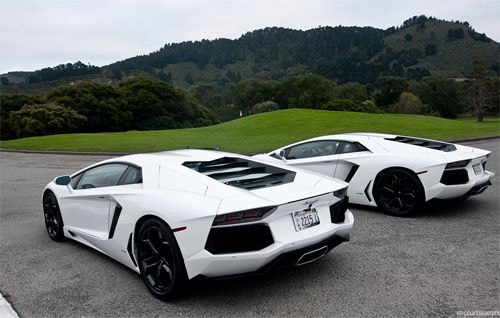
In Hanoi, a Lamborghini Aventador is being offered for sale at $1.2 million. The import price for this car was only $400,000.
Immediately after the Government Office sought opinions on a proposal to increase the special consumption tax by up to 150% for vehicles over 6.0 liters, owners of luxury car dealerships expressed concern about the risk of a sudden and significant doubling of car prices.
car, car price, supercar, car, American car, Japanese car, Chinese car, ASEAN car, diplomatic car, car tax, special consumption tax, Ministry of Industry and Trade, Ministry of Finance, car, car-price, supercar, car, American-car, Japanese-car, Chinese-car, ASEAN-car, diplomatic-car, car-tax, special-consumption-tax
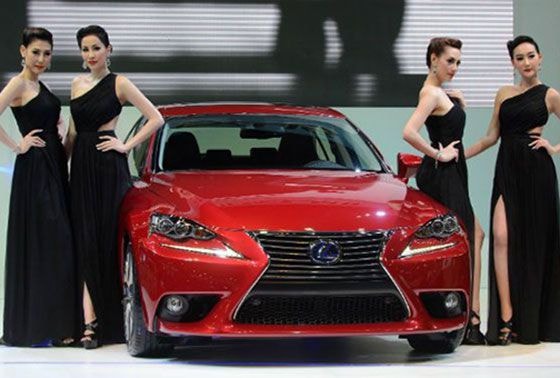 |
| The drastic increase in excise tax will undoubtedly have a significant impact on a range of high-end and luxury car brands with exorbitant prices. |
Currently, the import tax on this car is 70%, according to the Most Favored Nation (MFN) policy in the WTO. The cost of this car, including the CIF price, the 60% special consumption tax, and all other estimated taxes, amounts to $1.196 million.
In 2019, import tariffs on automobiles within the WTO were reduced to just 52%.
When applying the 1.5-fold increase in excise tax as mentioned above, plus 10% VAT, the Lamborghini Aventador would have an import cost of $1.672 million, an increase of 39.7% compared to the current price.
Certainly, if you add in about 20% for distribution, sales, and profit, the price of that car would inevitably reach $2 million, a 66% increase compared to the current price.
Of course, if a similar luxury car were imported from the ASEAN market, with import taxes reduced to 0%, then even with a 150% increase in excise tax, the import cost including taxes for the Lamborghini Aventador would still be the same as the current price of $1.1 million, and the retail price could be $1.3-$1.4 million.
According to statistics from the Ministry of Industry and Trade, the average import price for vehicles with engines over 3.0 liters is $46,350 per vehicle. This is also the common price for the popular luxury car segment under 6.0 liters today.
For these types of vehicles imported from markets outside ASEAN, the cost price is currently around 138,600 USD.
If the special consumption tax increases of approximately 90-110-130% are applied to vehicles with engines from 3.0 liters to under 6.0 liters, combined with a reduction in import tax to 52%, the cost of importing these vehicles would be $147,200, $162,700, and $178,200 respectively. These prices represent increases of 6.2%, 16.8%, and a maximum increase of 28.5% compared to the current cost of import.
Conversely, the cost of these vehicles, when imported from ASEAN, is currently around $122,000. Even with a sharp increase in excise tax at the three levels mentioned above, the cost of these vehicles would still be 4-21% cheaper than the current level.
The sudden increase in excise tax will certainly have a strong impact on a range of high-end and luxury car brands with exorbitant prices such as BMW, Audi, Mercedes, Porsche, Bentley, Lexus, etc.
Vietnam is preparing to sign a Free Trade Agreement (FTA) with the EU. Under this agreement, import tariffs on automobiles from Europe are committed to being reduced to 0% over a 9-10 year period. Therefore, a significant increase in tariffs may not necessarily lead to a substantial rise in the retail price of these high-end cars.
According to vietnamnet