
Gift-giving culture
(Baonghean) - Affection and mutual respect are the two most important things in gift-giving culture, and both the giver and the receiver must possess them.
(Baonghean) - Affection and mutual respect are the two most important things in gift-giving culture, and both the giver and the receiver must possess them.
When I was in school, I was always thrilled to be invited to a classmate's birthday party. I'd dress up nicely, my hair neatly styled, and bring a beautifully wrapped little gift that I'd spent all day searching for…but what I cared about most was always the birthday card.
Don't think of greeting cards as something secondary, just a "decorative" item for a gift. Choosing a gift is sometimes much easier than writing a greeting card. After all, if it were simply a matter of hastily writing "Happy Birthday," people wouldn't bother buying cards and carefully writing them themselves. Bookstores are overflowing with pre-printed "Happy Birthday" cards, even in a few other languages. But no, for gifts meant for someone we truly love, we want to pour all our heart and soul into it, even if it's just a small card. In return, when we are the recipients, the invitation card is the first thing we open and it sparks more curiosity and excitement than the beautiful gift itself.
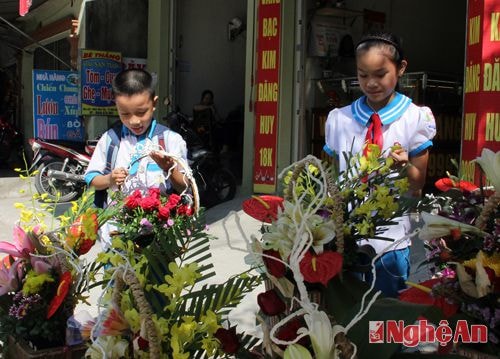 |
| Choosing flowers to give to teachers on November 20th. Photo: Huu Vi |
Mutual affection and respect are the two most important aspects of gift-giving culture, and both the giver and the receiver must possess them. Sadly, however, in modern society, perhaps due to busy schedules, the culture of gift-giving is sometimes neglected, even "simplified" to the point of deviating from its original good intentions. A prime example is the giving of gifts and flowers to teachers on Vietnamese Teachers' Day, November 20th. I've witnessed parents, while dropping off and picking up their children from school, hastily slip an envelope into the teacher's hand – no flowers, no card, no proper congratulatory message. It made me feel sad – sad for the giver, the receiver, and the students.
Where is the noble meaning of a holiday that reflects the Vietnamese tradition of valuing education and respecting teachers, when people's understanding of gifts and gestures of gratitude towards teachers is distorted by a materialistic and pragmatic lifestyle? I used to hear my parents, even my grandparents, tell stories about how, in the old days, during holidays and Tet (Vietnamese New Year), when visiting teachers, sometimes a whole group of students would simply give gifts like a bag of cookies or a packet of candy.
On occasions like Tet (Vietnamese New Year) or when visiting elderly teachers, the most extravagant gifts are usually just a chicken or a few kilograms of fruit. Though simple, teachers and students always greet each other with joy and excitement, chatting endlessly. And then, the chicken brought as a gift is often prepared that same afternoon for the teachers to treat their students…
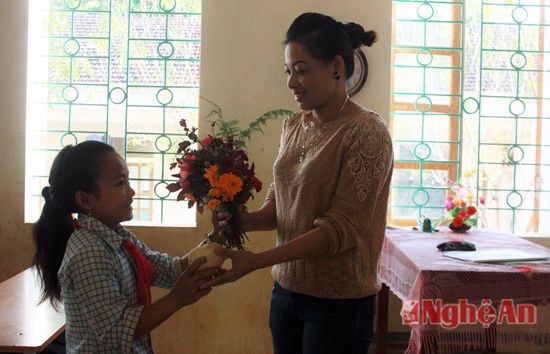 |
| A simple gift of wildflowers and jicama from a highland student to his teacher. Photo: Dao Tho |
The culture of gift-giving is like that; it's not about value or fancy presentation, but about the sincerity and affection people convey to each other. How sad it would be if people only looked for an excuse to give gifts as a mere obligation or a social formality. A gift, wrapped beautifully, feels cold and lifeless, yet completely devoid of genuine feelings or sincerity. At such times, we should ask ourselves: who are we giving this gift to, and for what purpose? Then we are shocked to realize that we treat gifts as something commonplace, mass-produced. Giving it to anyone, for any purpose, is acceptable. If such a gift were given to ourselves, how many would truly be happy?
As our children grow up and develop a culture of "instant" gift-giving, their feelings of love and hate will also fade. A gift is one of the tangible ways to express our affection for someone. Reflecting on this gift-giving culture, we should ask ourselves: Have we given gifts to the right people who truly care about us?
Hai Trieu
| RELATED NEWS |
|---|