

The National Assembly begins questioning members of the Government.
This morning, November 16th, the National Assembly began its fifth week of work with the questioning of members of the Government.
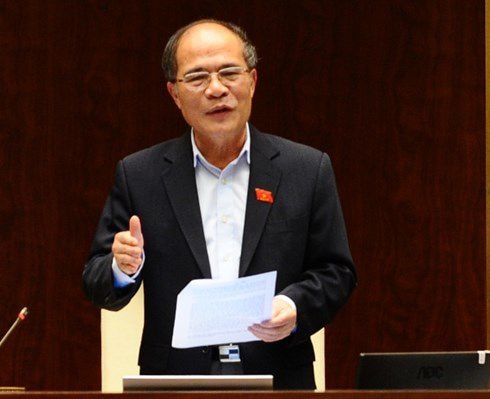 |
| National Assembly Chairman Nguyen Sinh Hung presided over the question-and-answer session. |
A new form of questioning
The question-and-answer session, taking place over two and a half days from November 16-18, will see the Prime Minister, Ministers, the Chief Justice of the Supreme People's Court, and the Prosecutor General of the Supreme People's Procuracy answering questions on various issues related to the country's socio-economic situation, the implementation of National Assembly resolutions on specialized supervision activities, and more.
This morning, November 16th, the National Assembly will hear reports from Deputy Prime Minister Nguyen Xuan Phuc, along with the Chief Justice of the Supreme People's Court and the Prosecutor General of the Supreme People's Procuracy, on the implementation of National Assembly resolutions regarding specialized supervision and questioning activities from the beginning of the 13th term to 2015.
After hearing reports from the Government and relevant agencies on the implementation of National Assembly resolutions on questioning and thematic supervision from the beginning of the term to the present, the delegates will discuss and question this matter. The questioning aims to clarify the responsibilities of Ministers and heads of agencies regarding what has been accomplished as well as what has not been accomplished during the entire term.
Next, the verification report of the National Assembly's Ethnic Council and Committees was presented by the Head of the Office, Nguyen Hanh Phuc, followed by the report on the results of monitoring the resolution of voters' petitions submitted to the 9th session of the National Assembly and a summary of the results of resolving voters' petitions from the beginning of the 13th National Assembly term to 2015, presented by the Head of the People's Petition Committee, Nguyen Duc Hien.
Each delegate has 7 minutes to discuss and question the reports, and 2 minutes if they only ask questions without discussion. Questions related to the responsibilities of the head of a particular agency will be answered directly by that person under the direction of the chairperson.
Questions relating to the overall responsibility of the Government or responsibility belonging to multiple ministries and agencies will be answered directly by Deputy Prime Minister Nguyen Xuan Phuc.
At the end of the questioning session, the National Assembly will allocate 75 minutes for Prime Minister Nguyen Tan Dung to further clarify some related issues and directly answer questions from delegates if any. According to the detailed program, the time allocated for the Prime Minister is scheduled from 10:00 AM to 11:15 AM on November 18th. Therefore, the head of government will have 75 minutes to both speak and directly answer questions from delegates.
In addition, during this working week, the National Assembly will vote on the draft laws on cybersecurity; the law on the supervisory activities of the National Assembly and People's Councils; the amended accounting law; and continue to discuss and provide feedback on several other draft laws, etc.
Groups of questions
The session's secretariat suggested four groups of issues that should be focused on for discussion, including:
Firstly, assess the impact of the National Assembly's resolution on the governance and management of the Government, central and local ministries and agencies in political-economic, cultural-social, and national defense-security matters.
Secondly, assess the performance of the Government, the Supreme People's Court, and the Supreme People's Procuratorate in comparison to the requirements of the National Assembly's resolutions and the commitments made by the Government and central ministries and agencies when answering questions at the sessions.
Thirdly, the limitations, especially those issues that are progressing slowly, and the requirements for implementation in the coming period.
Fourth, the necessity of post-implementation oversight of National Assembly resolutions and lessons learned to improve oversight effectiveness in the future.
According to Congly/VOV
| RELATED NEWS |
|---|