

"Four-safe" shrimp farming
(Baonghean) - The Vietnamese Good Aquaculture Practices (GAP) process (including shrimp farming) was issued and implemented in Nghe An province in 2011. After more than four years of implementation, despite some difficulties, shrimp farming according to VietGAP has brought economic benefits to farmers and is also safe for the community, and therefore needs to be widely replicated…
Currently, shrimp farming in particular and aquaculture in general according to VietGAP is encompassed within:"4 an"To beFood safety, disease safety, occupational safety during the farming process, and social safety and security.Unlike conventional shrimp farming, shrimp farming according to VietGAP has the advantage of a managed and controlled process from water intake and drainage, pond treatment, to stocking; providing feed for shrimp and handling outbreaks of diseases, all carried out according to very strict and rigorous procedures...
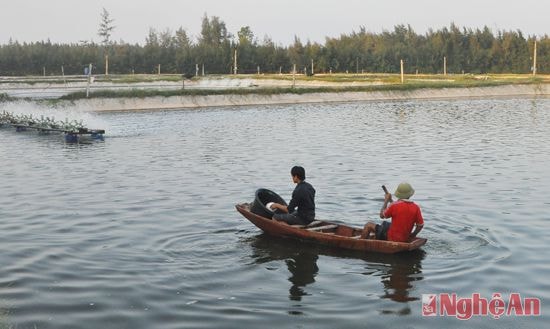 |
| Mr. Ngo Xuan Dai's shrimp farming model according to VietGAP standards in Hamlet 4, Dien Trung Commune (Dien Chau District). |
Currently, the entire province has 7 areas raising shrimp according to VietGAP standards, with a total area of 240 hectares.According to the plan, from now until 2020, Nghe An strives to have the area of shrimp farming under VietGAP standards account for over 50% of the total area (over 1,000 hectares). Some areas currently implementing the program will be inspected and certified in 2016-2017, and will continue to become key areas for expanding the farming area in the future…
However, to sustainably expand shrimp farming areas under VietGAP standards, there are still limitations and obstacles that need to be overcome. Currently, some VietGAP farming areas have a mindset of waiting for government projects to be implemented instead of taking initiative. To ensure the safety of the farming model, although many farmers have learned and applied some stages and regulations of VietGAP, they still have a half-hearted attitude; they do not fully comply with the recommendations of technical experts, such as stocking too densely, not building settling ponds, using biological products and chemicals outside the approved list or using them improperly…
To successfully raise shrimp according to VietGAP standards, in addition to a comprehensive master plan, each model must have a relatively independent location. The reason why VietGAP-certified shrimp farming models in our province meet the standards and are successful is because they have independent farming areas, allowing for proactive water treatment and implementation of farming processes. To change habits, according to Mr. Ngo Xuan Dai, from Hamlet 4, Dien Trung Commune (Dien Chau District): Shrimp farmers following VietGAP standards should not focus too much on productivity and demand higher prices than conventionally raised shrimp. The main goal of VietGAP-certified shrimp farming is to ensure safety, reduce disease outbreaks, and maintain a sustainable farming environment.
Mr. Dai has nearly 10 years of experience raising shrimp using conventional methods, with more failures than successes. However, since switching to VietGAP-certified shrimp farming, the risks have been significantly reduced. In recent years, the shrimp have only suffered from one disease, white feces syndrome, which he can proactively manage. Furthermore, with proper planning, extending the second crop can yield whiteleg shrimp at 30-40 shrimp per kilogram, fetching prices comparable to tiger shrimp (250,000 VND/kg). Using this method, with only 4 hectares of ponds, including 1 hectare for settling ponds, Mr. Dai harvests over 40 tons of shrimp annually, earning a profit of approximately 2-3 billion VND.
At a recent workshop on VietGAP-compliant shrimp farming in 9 northern provinces held in Nghe An, a representative from the General Department of Fisheries stated that, in the near future, along with further refining the VietGAP criteria, the Ministry of Agriculture and Rural Development will more strictly regulate the process of using chemicals in aquaculture and livestock farming, addressing the current uncontrolled supply and use. It is hoped that with these solutions, the goal of expanding VietGAP-compliant shrimp farming in our province will be quickly achieved; bringing Nghe An's shrimp products to a wider market, benefiting farmers, and contributing to community safety.
Nguyen Hai