

Doctor with a prescription without antibiotics.
Children with runny nose, cough, diarrhea, conjunctivitis, etc., are often suffering from viral infections. Antibiotics are not necessary; treatment only involves managing symptoms such as coughs, using expectorants and cough suppressants, and reducing fever when needed.
 |
As one of the first people in Vietnam to write a book on antibiotics, Associate Professor, Dr. Nguyen Tien Dung, former head of the Pediatrics Department at Bach Mai Hospital, Hanoi, believes that "antibiotics should only be used when absolutely necessary." He is widely known for his expertise in treating respiratory illnesses, asthma, and antibiotic use. A noticeable feature of his prescriptions is the very low presence of antibiotics.
"Prescribing antibiotics for children is much easier and less strenuous for doctors, but it's not good for children," shared Dr. Dung. With over 30 years of experience in pediatrics, he has observed that antibiotics are the most effective weapon in saving children from pneumonia. However, this also leads to a very serious and extremely dangerous consequence: antibiotic abuse.
There are many reasons for prescribing antibiotics. First, according to Associate Professor Dung, it's often because the patient's family requests them. Many people consider antibiotics a "cure-all": sore throat, fever, runny nose... they immediately think of using them. In addition, doctors may have limited time for examinations, leading to uncertain diagnoses or insufficient time to explain to the family why antibiotics aren't necessary.
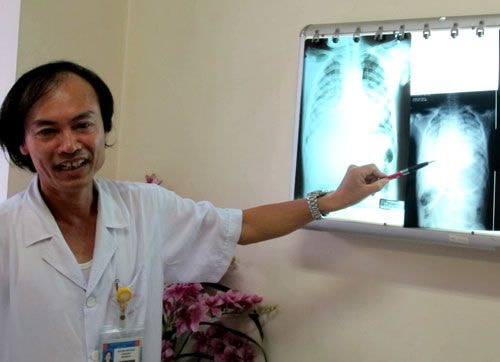 |
Associate Professor, Dr. Nguyen Tien Dung, former head of the Pediatrics Department, Bach Mai Hospital, Hanoi. Photo: NP |
In fact, many studies worldwide have concluded that if the cause of the illness is viral, using antibiotics does not help the disease subside faster and may even make children tired, lose their appetite, and potentially lead to prolonged diarrhea, allergies, etc.
Respiratory illnesses are very common in young children, with viruses being the main cause, accounting for about two-thirds of cases. Therefore, it is the doctor's responsibility to accurately diagnose the illness, determining whether it is infectious or non-infectious. If it is infectious, it must be due to bacteria or a virus. For example, a fever may be caused by a viral infection, which may not require antibiotics. However, in cases of pneumonia or urinary tract infections, antibiotics are mandatory.
"Children with coughs don't necessarily need antibiotics; in many cases, symptomatic treatment is enough to cure the illness quickly. For coughs, use expectorants or cough suppressants, or for runny or stuffy noses, use saline solution, vasoconstrictors, and antihistamines. If there's a fever and sore throat, give paracetamol, rest, and drink plenty of fluids," Associate Professor Dung emphasized.
According to him, the causative agents of nasopharyngitis in children can be viruses or bacteria. Doctors can completely rely on clinical symptoms and tests to differentiate between viral and bacterial infections (70-80% are viral). If it is viral, the patient may have symptoms such as conjunctivitis, runny nose, cough, diarrhea, viral-like rash, etc. If it is bacterial, common symptoms include fever above 38.5 degrees Celsius, swollen and painful lymph nodes in the neck, headache, petechiae on the palate, abdominal pain, sudden onset (less than 12 hours), secretions in the throat and tonsils, etc.
For children with otitis media, antibiotics may be necessary in some cases, such as in children under 6 months; children 6 months to 2 years old if the diagnosis is certain or uncertain but the illness is severe; and children over 2 years old with a certain diagnosis and severe illness. In other cases, only symptomatic treatment is needed, and if the condition does not improve after 2 days, antibiotics are only used. Maintaining good nasal and throat hygiene is important; in some cases, nasal suctioning alone may be sufficient, as a clean nose leads to a dry ear.
“Comparative clinical evidence shows that 60% of patients with sinusitis lasting more than 10 days are due to bacterial infection. Otitis media with effusion in children is mostly not due to bacterial infection. Upper respiratory tract infections of unknown location and acute bronchitis in previously healthy individuals are mainly caused by viruses. However, not everyone knows this, or they know but still use antibiotics, even doctors,” Associate Professor Dung emphasized.
TAccording to this expert, many mothers place too much trust in using antibiotics without knowing the dangers behind them, as they have many different side effects.
The first side effect that all doctors fear is an allergic reaction. Allergies can cause anaphylactic shock, which occurs extremely quickly and can be fatal without warning. Even delayed allergic reactions are extremely dangerous, leading to severe antibiotic toxicity and death within 1-2 weeks. The second side effect is diarrhea – this is the most common.
A third, lesser-known side effect is the development of antibiotic resistance. Antibiotic resistance renders antibiotics ineffective in treatment. Professor Dung himself has encountered many cases of children whose illnesses worsened, even leading to death, due to antibiotic abuse.
“Many children suffer from severe pneumonia, and doctors have tried all kinds of antibiotics, from old to new, but none have worked. Patients die because the bacteria become resistant to all antibiotics. In addition, many children suffer side effects from antibiotic abuse, such as diarrhea, which can take 2-3 months to stop. Antibiotics are considered a 'reserve' to be used in truly critical cases, so they should not be overused,” Associate Professor Dung shared.
According to VnExpress
| RELATED NEWS |
|---|