
Mistakes to avoid when driving a manual transmission car.
Disengaging the clutch when cornering, shifting to neutral when going downhill, or using the clutch first and then the brake are incorrect habits of many drivers of manual transmission cars.
Disengaging the clutch when cornering, shifting to neutral when going downhill, or using the clutch first and then the brake are incorrect habits of many drivers of manual transmission cars.
With automatic cars becoming increasingly popular, replacing manual transmissions in all segments, the number of drivers proficient in driving manual cars is gradually decreasing. Driving a manual car requires the skillful coordination of both hands and feet to control the accelerator, brake, shift gears, and steer appropriately. In fact, Askmen magazine once wrote that real men drive manual cars.
There are several incorrect habits that many drivers still use when driving manual transmission cars. Below are some common mistakes.
1. Disengage the clutch when cornering.
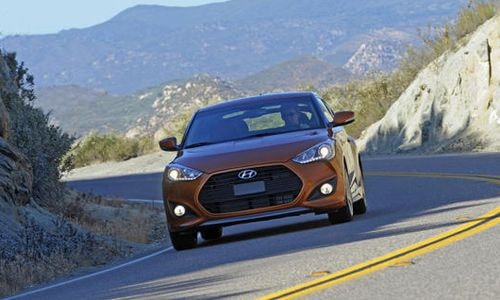 |
When disengaging the clutch, the car only moves by inertia without being slowed down by the engine, giving the feeling of smooth driving and a seamless turn when cornering, which many drivers prefer. However, this is a dangerous habit.
When the vehicle is only rolling by inertia, the braking system becomes less effective, requiring a longer braking distance, making it difficult for the driver to control speed if they oversteer or understeer. In addition, the wheels lose traction, increasing the risk of losing control.
2. Regarding North when going downhill
Shifting to neutral (N) when going downhill is similar to disengaging the clutch when cornering, but even more dangerous. This is because the steep slope increases the gravitational force acting on the vehicle, causing inertia to increase rapidly. Steep roads are often found in hilly or mountainous terrain, with continuous curves requiring frequent steering maneuvers. Shifting to neutral increases the risk more than ever. In this case, it's necessary to shift to a lower gear to use engine braking, following the principle of "use the same gear going down as going up."
3. Clutch in front, brake in the back.
The habit of disengaging the clutch first and then the brake is most common among new drivers, but sometimes also occurs in experienced drivers, due to the fear of stalling. At low speeds, this doesn't have a significant impact because the vehicle's inertia is low. However, if the vehicle is traveling at high speed and the driver wants to stop but disengages the clutch first, it will render the brakes ineffective and cause the vehicle to lose traction, similar to the case of disengaging the clutch while cornering.
The correct procedure in all situations is to apply the front brake, and when you feel the vehicle is about to stall, depress the clutch to disengage before shifting gears or continuing to drive. (>>See details)
4. Too lazy to shift gears.
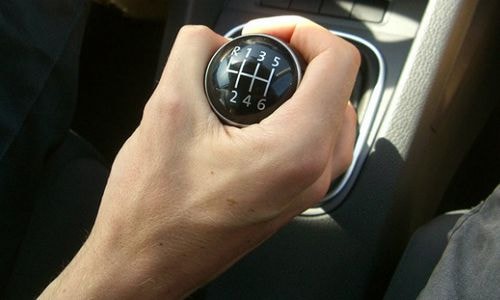 |
Neglecting to shift gears occurs when drivers encounter situations requiring them to slow down, follow behind other vehicles, or need momentum to overtake. Many drivers have a "single-gear" driving style, meaning they rarely shift to lower gears and overuse the accelerator pedal.
When overtaking, for example, drivers should ideally shift to gear 3 to ensure maximum traction for faster acceleration, but some drivers still leave it in gear 5 or only shift to gear 4, causing the car to be sluggish, prolonging the overtaking time, and potentially leading to danger.
5. More economical than automatic transmission.
The notion that manual transmission cars are more fuel-efficient than automatic transmission cars was only true in the past, when automatic transmissions were not yet common and the new technology meant they consumed more fuel. However, nowadays, automatic transmission cars make up the majority of the market, and technology is constantly improving, resulting in fuel consumption being equal to or even less than that of a comparable manual transmission car.
Whether a car is fuel-efficient or not depends on driving skill. With a manual transmission, you need to use the appropriate gear and shift gears frequently to maintain engine longevity. If your driving skills aren't proficient, then any transmission will consume the same amount of fuel.
According to VnExpress