

China will push for reforms to the yuan exchange rate.
Chinese President Xi Jinping said the world's second-largest economy is facing slowdown pressure but is still growing within an appropriate range.
In an interview with the Wall Street Journal on September 22, Xi Jinping stated that developing capital markets is a key objective in China's reform efforts and will not change simply because of current market fluctuations.
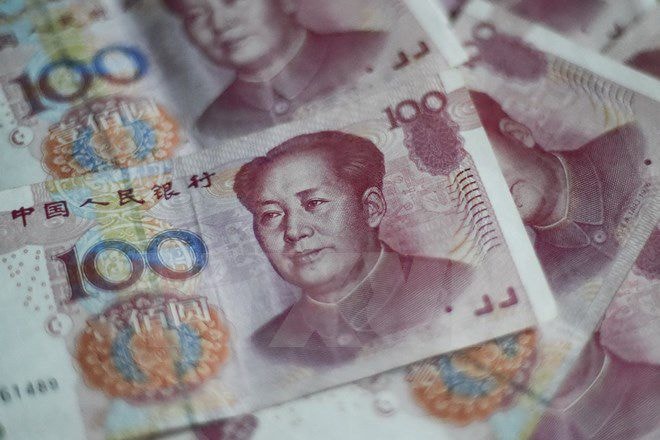 |
| A 100 yuan (US$15.5) banknote in Beijing on August 25. Photo: AFP/VNA |
Furthermore, Xi Jinping also stated that reforms to the exchange rate mechanism towards a market-oriented system will continue to be implemented, and there is currently no basis for the yuan to continue depreciating in the long term.
According to Xi Jinping, China is pushing for changes that will allow the yuan to be converted in a stable and orderly manner.
Furthermore, China's foreign exchange reserves have decreased at a "moderate and manageable" rate and remain quite substantial by international standards.
In recent times, China has attempted to maintain the stability of the yuan's value (after its earlier unexpected devaluation), and its foreign exchange reserves fell by a record $94 billion in August 2015 to $3.56 trillion.
Nevertheless, China's foreign exchange reserves remain the highest in the world, even though they have decreased by $436 billion (about 11%) from their peak of $3.999 trillion in June 2014.
News reports indicate that the Chinese President affirmed that cyberattacks, theft of trade secrets, and attacks on government network systems are all illegal; they are criminal acts and should be punished according to the law and relevant international agreements.
According to Xi Jinping, China and the United States share common concerns about cybersecurity and are ready to strengthen cooperation to address the issue.