

Japan is once again embroiled in internal conflict over a US military base.
(Baonghean) - The Okinawa Prefectural Government of Japan has filed a lawsuit against the Japanese government over the revocation of the construction permit for a US military base in the Henoko coastal area of Okinawa, filed with the Central and Local Government Dispute Settlement Committee under the Ministry of Internal Affairs. These developments once again put Japanese Prime Minister Shinzo Abe in a difficult position, forcing him to balance the interests of the Okinawan government and its people with those of its close ally, the United States.
"Those above give orders, but those below don't listen."
For nearly two decades, protests by Okinawan residents against the presence of the Futenma military base have been commonplace. The constant noise and risk of plane crashes from American fighter jets filling the skies are a constant threat to the lives of the local people. These concerns are not unfounded, as just last August, a US military aircraft crashed on the island, injuring seven crew members.
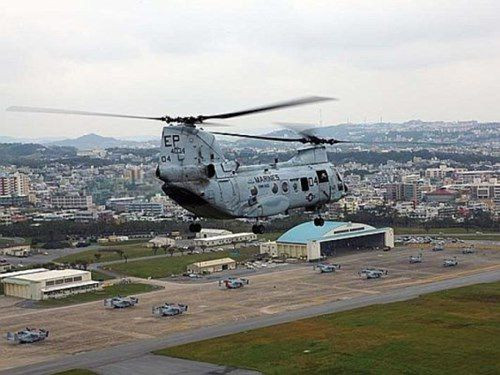 |
| The U.S. military base Futenma in Okinawa. |
According to a plan between the Japanese and US governments, Futenma Air Base will be relocated from Ginowan to the less populated coastal area of Henoko. However, the people of Okinawa have not accepted the relocation plan, demanding a complete withdrawal from the area, specifically to Guam.
The stance of "removing Futenma from Okinawa" was further strengthened after Takeshi Onaga was elected Governor of Okinawa last December with a promise to "eliminate the dangers that have caused suffering to the people here." Onaga's resolve was most clearly demonstrated by his decision to revoke the construction permit at the Futenma base on October 13th, following a month-long consultation between the central and local governments.
However, the meeting ended without an agreement. While Okinawa requested that construction conditions be set to ensure no negative impact on the area's environment, the central government refused, arguing that appropriate conditions had already been agreed upon during the tenure of the previous governor, Hirokazu Nakaima.
After Governor Onaga decided to revoke his predecessor's permit, the central government responded by instructing the Ministry of Territories to reject the decision, arguing that the regional administrative body had no authority to issue such directives. At the same time, the central government continued to have workers clear the material staging area in preparation for the relocation.
Onaga's decision to sue the central government on November 2nd was intended to demonstrate his earlier statement about "taking all necessary measures to prevent the progress of the Futenma base relocation plan."
Prime Minister Shinzo Abe's determination
Approved by both countries in 1996, the delay in the construction of the U.S. Marine Corps' Futenma Air Base has become a major obstacle in U.S.-Japan relations. For the past two decades, the dispute over relocating the base has caused headaches for previous Japanese Prime Ministers such as Naoto Kan and Yukio Hatoyama, who have been caught between the people of Okinawa and their American ally. But this time, Prime Minister Shinzo Abe is clearly determined to push forward with the relocation plan.
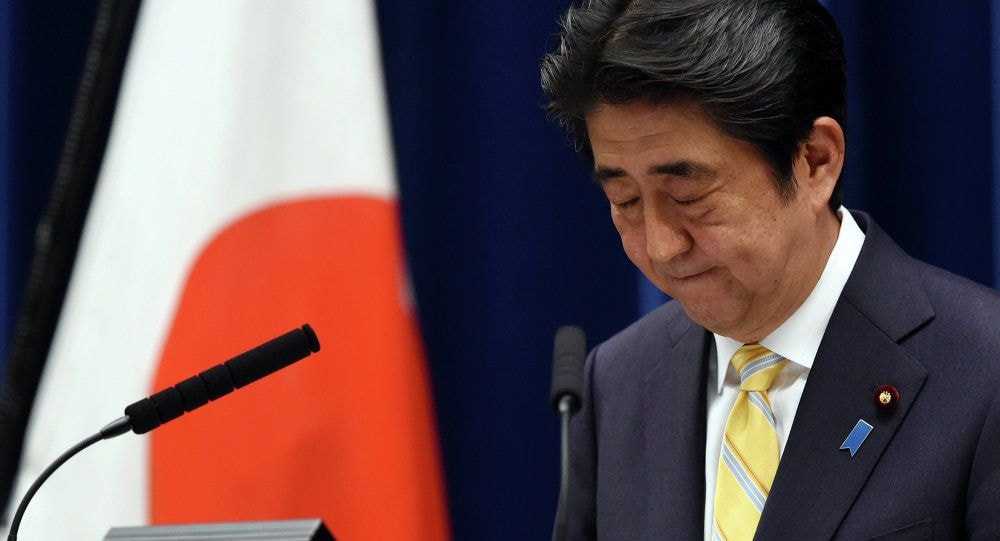 |
| Shinzo Abe is in a difficult position. Photo: Sputnik. |
Futenma is currently the most important US military base in Japan. Relocating this base from Okinawa – for example, to Guam – could be seen as a setback in the pivot to the Asia-Pacific. As a close ally of the US, Japan is unlikely to allow this scenario to happen, especially since Japan also desperately needs US support to counter its rising rival, China, in the region.
Furthermore, the financial aspect is also a major issue that the Japanese government must consider, as this cost will be borne by the Japanese government. After more than half a century of being built as a massive military fortress with many complex systems, the plan to relocate Futenma to a location outside of Okinawa will cost significantly more than the 500 billion yen estimated for moving it from Ginowan to Henoko.
Despite Shinzo Abe's strategic calculations, which identified Futenma as a strategic outpost protecting the Senkaku/Diaoyu Islands in the sovereignty dispute with China, the people of Okinawa have not accepted the relocation plan that had been approved under Hirokazu Nakaima. After the local government filed a lawsuit against the central and local governments with the Central and Local Government Dispute Settlement Commission, Governor Onaga expressed his hope that the commission would consider Okinawa's lawsuit neutrally and fairly.
However, according to analysts, the committee's decision is unlikely to be favorable to Okinawa, and the plan to relocate the Futenma base will likely proceed. This also means Shinzo Abe will face a stronger wave of resistance in the coming period, affecting his already diminished credibility after pushing through the new security bill. But perhaps that is the price Shinzo Abe is willing to pay for the goal of a more prominent Japan in the region with the support of its ally, the United States.
Thuy Ngoc
| RELATED NEWS |
|---|