

Does Thu Phuong deserve the title of the 5th Vietnamese diva?
Is the title of fifth diva a source of pressure for Thu Phuong?
From the lingering effects of the diva concert…
The recent The Master of Symphony concert left a deep impression on the audience as, for the first time, all five leading contemporary Vietnamese pop singers took to the stage together to perform.
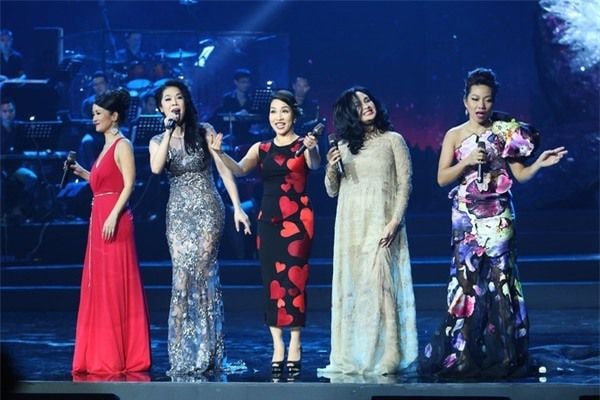 |
| Images from The Master of Symphony program. |
Many viewers believe that, with that milestone, Thu Phuong fully deserves to be the fifth diva. Some even say that Thu Phuong has been a diva for a long time already, it's just that she moved to America so she's not mentioned as often.
However, many also argue that Thu Phuong is not yet a diva. This has sparked heated debates, especially between Thu Phuong's fans and those who hold opposing views.
The controversy was further fueled by an article titled "Ha Tran: Thu Phuong is not a diva, just a nightclub star."
In fact, Ha Tran didn't mention whether Thu Phuong was a diva or not, only asserting that she wasn't influenced by Thu Phuong. But regardless, the article caused a stir in public opinion.
...to the story of Thu Phuong as a diva.
Thu Phuong is a great singer, talented and with significant contributions. But if we compare her to Thanh Lam, Hong Nhung, My Linh, and Ha Tran, there is still a difference.
While Thanh Lam, Hong Nhung, My Linh, and Ha Tran received countless accolades from music professionals, especially renowned composers like Trinh Cong Son, Duong Thu, Thanh Tung, Phu Quang, Le Minh Son, Quoc Trung, Ngoc Dai, Do Bao, and Thuan Yen, Thu Phuong's situation is far less favorable, even though she has also sung many songs by these composers beautifully.
In terms of influence and contribution, it's clear that Thu Phuong is significantly smaller than the other four, especially in terms of vocal ability, technique, and singing style.
When mentioning Thanh Lam, people immediately think of her popularization of Western vocal techniques, resonant singing styles, and intense, fiery, and passionate singing into Vietnamese music from the early 1990s. Mentioning Ha Tran brings to mind her immense technical foundation, innovative contemporary folk singing style, and her explorations of experimental music since 2000.
Although Hồng Nhung's technique was slightly less refined than the other three, she was instrumental in modernizing and rejuvenating Trịnh's music. "Cô Bống" also, along with Thanh Lam, shaped Vietnamese pop music from the early 1990s.
My Linh is famous for her exceptionally beautiful voice, excellent technique, and her efforts in bringing R&B to the Vietnamese pop scene from the latter half of the 1990s onwards. In addition, she is a pioneer in infusing Vietnamese spirit into the timeless classical works of great composers such as Mozart and Beethoven.
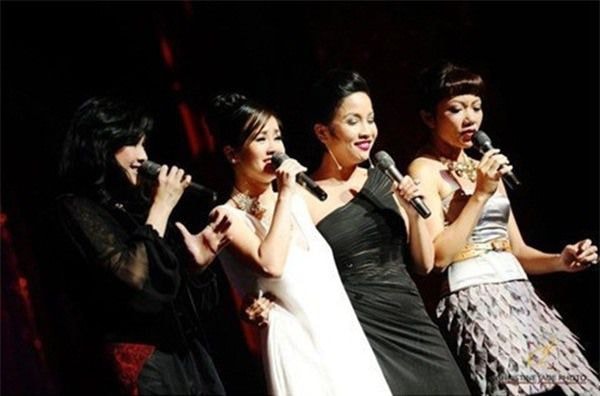 |
| Thanh Lam, Hong Nhung, My Linh, Ha Tran |
With their individual contributions, all four have influenced many generations of younger singers such as Tung Duong, Uyen Linh, Hoang Quyen, My Tam, Van Mai Huong, Huong Tram, Le Quyen… Many young singers openly admire and consider one of the four singers as their idol.
When Thu Phuong is mentioned, audiences hardly remember her contributions in terms of singing style, technique, or music production. People also don't know which younger generations she may have influenced.
In terms of vocals, Thu Phuong possesses a rich, beautiful, dark, and deep mezzo-soprano voice. But this is not enough, as there are many singers with equally beautiful voices; in the mezzo-soprano or bass range, there are My Hanh, Hoang Quyen, Uyen Linh, Ngoc Anh, and in the high range, there are Siu Black, Ho Quynh Huong…
Technically, Thu Phuong has just enough vocal ability to sing like any other singer, without any outstanding strengths. Her biggest weakness is her weak vibrato, which is fundamental for a pop diva. Thu Phuong sings powerfully and confidently, but she doesn't know how to create resonance, causing her voice to sometimes sound muffled and constricted. Compared to the other four, Thu Phuong's technique is perhaps not particularly impressive.
The difference was evident when she sang with them in the recent performance. Thu Phương's singing style was much simpler and smoother, and her handling of rhythm was easier, not too difficult. Notably, despite having the darkest and deepest vocal tone, she didn't handle the lower register as well as the mezzo-sopranos with brighter vocal tones like Hồng Nhung and Mỹ Linh.
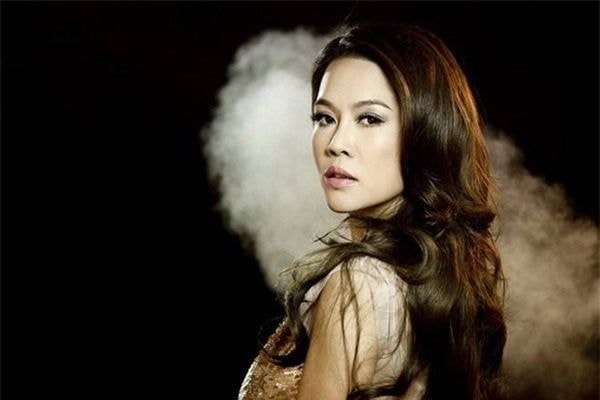 |
| Let's evaluate Thu Phuong in a fairer and more realistic way. |
However, Thu Phuong also has the advantage of knowing how to articulate words skillfully and subtly, handling songs well and with emotion. This is perhaps the key point that has led to her being hailed as the fifth diva.
However, emotions vary from listener to listener; they cannot be measured, and there are no standards for accurate evaluation. Any singer can sing emotionally with their chosen genre.
Thu Phương's way of singing sentimental songs is no better than that of her contemporaries like Ngọc Anh and Mỹ Hạnh.
If Thu Phuong is the 5th diva, then there will be many singers who are the 6th, 7th, and 8th divas, such as Phuong Thanh, Siu Black, Thu Minh, etc., because they also have their own contributions, strengths, and advantages in vocal technique.
Some even argue that, compared to some singers of their time, Siu Black and Thu Minh deserve to be called the fifth diva more than Thu Phuong because they have better voices, techniques, dedication, and more unique singing and performing styles.
For example, Siu Black possesses a rare full lirico soprano voice in Vietnam, excellent mixed voice technique, a resonant, generous, wild, and untamed singing style, and a natural yet unique performance that was almost unprecedented in Vietnamese music before, bringing a new color to the era alongside Thu Phương.
Thu Minh also brought new trends to Vietnamese music with her vocal performances, modern, Westernized techniques, and unique application of dance music. In particular, Thu Minh contributed significantly more to promoting the "diva genre" than other singers.
Many believe that Thu Phuong was at a disadvantage in achieving the status of a diva because she moved to the US at a young age. However, in reality, moving to the US actually created greater opportunities for Thu Phuong, allowing her to work with the Thuy Nga center and redefine her musical style, delve deeper into musical genres, and refine her technique, instead of singing all kinds of music, even club music, as she did before in her homeland.
In particular, domestic audiences have a preference for overseas singers. For them, overseas singers are generally considered to be of higher quality, more sophisticated, and sing more refined music than domestic singers, so becoming an overseas singer greatly increased Thu Phương's value when she returned to Vietnam.
Thus, objectively speaking, the recent glorification of Thu Phuong as the fifth diva is merely an overhype by the media and the public due to the effect of the Vietnam's Got Talent program.
Clearly, before returning to Vietnam to sit on The Voice, very few viewers remembered Thu Phuong. Even when her name appeared on the list of four coaches, many were confused and asked who she was. But after only a few months of airing, Thu Phuong effortlessly became a well-known name in the entertainment industry.
The immense popularity of music game shows like The Voice Vietnam has attracted many young fans to Thu Phuong, the majority of whom are bandwagon fans. These are fans who follow trends, admiring whoever is popular and only listening to a few of the singer's most popular songs without bothering to learn about their entire career.
These seemingly superficial fans, though their fandom was short-lived, were incredibly enthusiastic and devoted to their idol. They readily praised Thu Phương everywhere, refuting opposing opinions, which naturally earned her the reputation of being the fifth diva.
Furthermore, the audience's preference for foreign music and their lack of information, knowledge, and musical taste easily lead to media manipulation, creating fads and trends.
Suppose, instead of Thu Phuong, it was an overseas singer like Ngoc Anh, My Hanh, Ngoc Ha, or Nhu Quynh who came to Vietnam to sit on The Voice and then performed alongside the other four divas; they would also be hailed as the fifth diva.
Ultimately, Thu Phuong never claimed to be the fifth diva. It was all orchestrated by the media and followed by the audience. Therefore, whenever controversy erupts regarding this title, she is always the one who suffers and faces negative publicity. These debates inadvertently create conflict between the singer and the public.
Regardless, Thu Phuong remains a talented artist with a beautiful voice and a strong reputation in the Vietnamese music industry. Audiences should allow her to be a wonderful artist as she is, to continue contributing to music, instead of associating her with others in ways that lead to unnecessary controversies.
According to VietNamNet
| RELATED NEWS |
|---|