

Hospital fees will increase nationwide starting in March 2016.
After several postponements, the Ministry of Health has officially decided to increase hospital fees starting in March 2016, with fees rising by 2 to 7 times compared to before.
On January 20th, Mr. Nguyen Nam Lien, Director of the Planning and Finance Department of the Ministry of Health, announced that the Ministry of Health and the Ministry of Finance have jointly issued a Circular stipulating the unified pricing of medical examination and treatment services covered by health insurance among hospitals of the same category nationwide.
Accordingly, the price of medical examination and treatment services includes: the price of medical examination and treatment services, the price of inpatient treatment days, and the price of technical services. Currently, the price of medical examination and treatment services includes four factors: Direct costs (medicines, intravenous fluids, chemicals, consumables, replacement materials, electricity, water, fuel, waste treatment, environmental sanitation); Maintenance and repair costs of equipment, purchase and replacement of tools and instruments; On-call allowances, surgical and procedural allowances; and Salaries. However, currently only three factors are considered (excluding allowances and salaries).
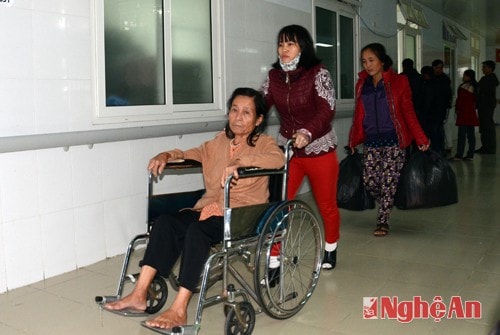 |
| The new, modern facilities of the Provincial Friendship General Hospital meet the healthcare needs of the people. |
As planned since 2015, this time more than 1,800 medical services will see price increases, ranging from 2 to 7 times. Specifically, the maximum consultation fee at a first-class hospital is 20,000 VND/visit, the new price will be 40,000 VND/visit.
At level 3 and 4 hospitals, the consultation fee is currently 7,000 VND/visit, the new price will be 30,000 VND/visit. The price for a type 1 inpatient bed in level 1 hospitals is currently 80,000 VND/bed/day, the new price will be 215,000 VND/bed/day, and in level 4 hospitals it will increase from 55,000 VND/bed/day to 165,000 VND/bed/day. Intensive care beds in specialized hospitals will increase from 335,000 VND/bed/day to 677,000 VND/bed/day. The price for gastric lavage services will increase from 30,000 VND/session to 106,000 VND/session. Peritoneal dialysis services for kidney failure patients will increase from 300,000 VND/session to 379,000 VND/session.
In addition to costs for medicines, intravenous fluids, consumables, electricity, water, fuel, waste treatment, equipment maintenance, and the purchase/replacement of instruments, the price of medical examination and treatment services also includes specific allowances, salaries based on rank and position, other allowances, and contributions as stipulated by the State.
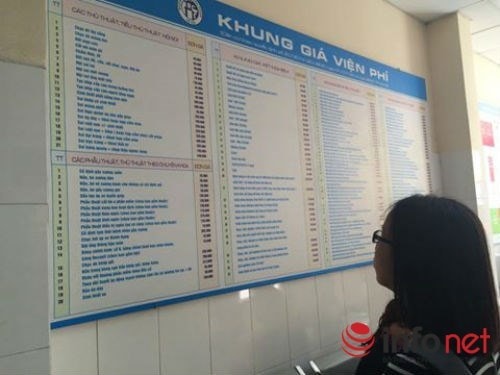 |
| Hospital fees have increased from 2 to 7 times depending on the service. |
The price level including direct costs and specific allowances has been in effect since March 1, 2016, while the price level including direct costs, specific allowances, and salaries has been in effect since July 1, 2016. Private healthcare facilities have also been implementing the price level including direct costs, specific allowances, and salaries since March 1, 2016.
For people who are not yet enrolled in health insurance, in the coming period (from March 1st), the cost of medical examination and treatment services will be lower than for patients with health insurance cards, as they will still be reimbursed at the old price (excluding salary and allowance costs). The Ministry of Health believes that immediately increasing medical examination and treatment fees for those without health insurance cards would place a significant burden on them when they fall ill, and also wants to allow time to encourage them to purchase health insurance cards.
In the near future, the Ministry of Health is expected to issue a price list for medical examination and treatment services for patients not covered by health insurance. This list will include not only direct costs and salaries but also administrative costs and depreciation costs of fixed assets. Those without health insurance will be most affected, as they will have to pay for components of the price that were previously subsidized by the state.
According to Infonet
| RELATED NEWS |
|---|