

The Fed's interest rate hike impacts the business community.
Following the US Federal Reserve's (Fed) interest rate hike, the USD has impacted the foreign exchange market and businesses.
On December 17th, at commercial banks in Ho Chi Minh City, the US dollar exchange rate increased to its maximum level, with the listed rate at the banks being 22,547 VND/USD.
Meanwhile, in the free market, the USD price as of the afternoon of December 17th was 22,785 VND/USD, an increase of 25 to 30 VND/USD compared to yesterday, with a difference of nearly 150 VND/USD compared to the bank exchange rate.
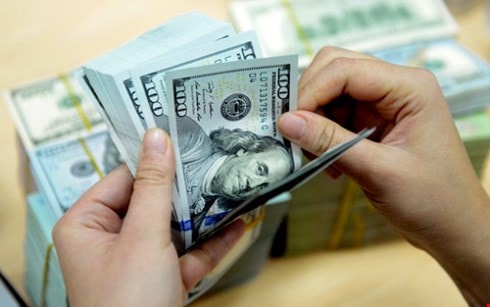 |
| Illustrative image |
With the Fed's latest interest rate hike, many import and export businesses believe they benefit from exporting; however, imports are facing difficulties due to rising prices of machinery, equipment, and raw materials. Thai Son Corporation, which imports $2-3 million worth of plastic resins monthly for the production of plastic products, is experiencing a significant increase in its raw material import costs, ranging from 150 to 200 million VND per month.
Mr. Tran Viet Anh, General Director of Thai Son Corporation, said that this exchange rate change is putting pressure on revenue and costs. At this time, negotiations with some raw material suppliers are also leading to price increases as the US dollar appreciates.
According to Mr. Son, at this time, the State Bank of Vietnam must find a way to release its dollar reserves to balance the market and prevent the dollar from appreciating further.
Following the Fed's interest rate hike on the US dollar, many businesses are eagerly awaiting the State Bank of Vietnam's monetary policy and USD exchange rate adjustments. This will impact their production and business development plans in the coming period.
Economist Bui Chi Hieu said: “This is something everyone is very concerned about: how will we handle such immense pressure? The State Bank of Vietnam is committed to not increasing the exchange rate from now until the beginning of the year. The State Bank is persistently pursuing that goal, but the question is how we will cope with that pressure and what the cost will be. The cost is that we constantly sell foreign currency to intervene in the market. However, how much foreign currency does the State Bank of Vietnam still have to intervene in the market?”
Some people are also worried that rising USD interest rates will affect the flow of indirect investment capital into emerging markets, including Vietnam. Investors will gradually withdraw this capital and return it to the US market. However, many believe that this is not a cause for concern.
According to VOV
| RELATED NEWS |
|---|