

4 "deadly" delicacies you should avoid during Tet.
There are certain dishes that are popular Tet (Lunar New Year) specialties, but they can pose significant health risks..
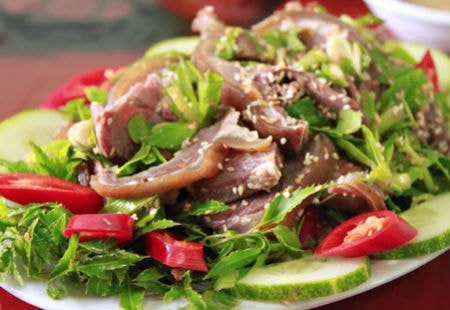 |
| Raw or undercooked dishes are popular but pose a very high risk of illness, even leading to death. |
Blood pudding
Blood pudding is a dish made from animal blood. This dish has been very popular in Vietnamese cuisine from ancient times to the present day.
Blood pudding is a favorite dish for many people. Especially during the Lunar New Year, many families still maintain the tradition of "sharing a pig" (meaning several families share the slaughter of one pig) and eating blood pudding and pig offal in their New Year's Eve dinner.
However, the habit of eating this dish should be abandoned because although blood pudding is delicious, the potential health risks are too great, potentially leading to dangerous diseases and even death.
According to scientific research, each bowl of blood pudding is a breeding ground for disease, containing around 10 types of bacteria harmful to humans. Furthermore, if the animal is infected, this number will multiply.
In recent years, the number of people infected with Streptococcus suis due to eating raw blood pudding has been increasing. When a person is infected with Streptococcus suis, the disease can progress very rapidly.
Just about 12 hours after consuming blood pudding or pig's offal, the body shows symptoms such as fever, chills, skin rash, followed by lethargy, drowsiness, coma, shock, hypotension, and the appearance of necrotic lesions on the skin… and the risk of death is very high.
In addition, consuming raw blood pudding also carries the risk of Staphylococcus aureus infection. Staphylococcus aureus is a type of bacteria that contaminates food during the slaughtering process.
This type of staphylococcus can produce a large amount of toxins within 4-5 hours, which penetrate the mucous membranes of the stomach and intestines, and affect the nervous system, leading to symptoms of poisoning, vomiting, diarrhea, etc. If not treated promptly, the patient may die.
Consuming raw blood soup can also lead to infection with Salmonella bacteria, causing blood infections and destroying internal organs, as well as Shigella bacteria... and carries a very high risk of contracting avian influenza.
Animal blood dishes can also contain viruses that cause hepatitis A (with a detection time of 28-30 days) and hepatitis E (within 40 days).
Another very dangerous virus is the enterovirus (Polyo), which causes paralysis and lifelong disability. The Astrovirus destroys the intestinal lining and causes gastritis in humans…
There are quite a few cases of people contracting parasitic infections from eating raw blood soup. Some of the most common parasites are liver flukes, hookworms, and trichinella.
Trichinosis is a dangerous disease that causes prolonged high fever and can lead to vision loss, paralysis of the limbs, and other complications.
Eating raw pig blood can also cause cerebral cysticercosis; patients infected with pork tapeworm will experience epilepsy and seizures because the tapeworms press on the brain, causing brain damage.
Thus, the potential health risks from eating raw blood are very high, even though for many people, raw blood is a favorite dish that is "visually appealing and delicious," but it is extremely dangerous.
One should not assume that because the pigs, chickens, ducks, and geese are raised at home, they are safe and therefore consume raw blood dishes and other unprocessed foods.
Raw dishes
Beef and goat meat marinated in lime juice, raw fish salad, fermented pork rolls... are common Vietnamese dishes, but they pose a very high risk of causing illness, even leading to death.
According to scientific research, approximately 50 types of parasitic worms are found in aquatic animals, some of which can be fatal. Worm eggs are present in rivers, seas, ponds, and lakes, then transmitted through snails, shrimp, and crabs before burrowing deep into the flesh of fish.
In dishes like raw meat salads, parasite eggs can remain alive in the meat and enter the human body through the digestive tract.
These larvae will then hatch into worms and begin to cause disease.
Besides the risk of parasitic infections, raw or undercooked dishes, if prepared from food containing Staphylococcus, Streptococcus, or E. coli bacteria, can lead to many dangerous diseases.
When infected with this disease, patients may experience abdominal pain and acute diarrhea, with blood in the stool, and may also have fever or vomiting.
In some severe cases, hemolytic uremic syndrome with acute renal failure develops, which is the leading cause of death (commonly seen in young children and the elderly).
In addition, the risk of contracting Streptococcus suis from eating undercooked or raw processed foods is also becoming increasingly common.
Nem chua
Nem chua is also a traditional dish loved by many. The ingredients for making nem chua are fermented raw meat along with a few other spices, without undergoing any heat treatment.
The microorganisms that help the fermented pork sausage (nem) ripen develop in the fuel and in the wrapping leaves. These microorganisms are divided into two groups: beneficial and harmful. The lactic acid fermentation process helps the beneficial microorganisms to grow and inhibits the harmful ones.
According to experts, fermented pork sausage (nem chua) contains putrefactive bacteria, pathogenic bacteria, and parasites such as worms.
Although their activity is suppressed, they do not die but will multiply when conditions are favorable, posing a danger to human health.
Pathogenic organisms that can be found in fermented pork sausage include: Salmonella, Shigella, E. coli, E. coli, etc.
When eating fermented pork sausage (nem chua), if the sausage is moldy, or if the wrapping leaves are moldy and come into direct contact with the sausage, it should not be consumed, as toxins from the mold may have transferred to the meat. It is best to grill or fry the fermented pork sausage before eating.
Fresh bamboo shoots
Fresh bamboo shoots contain very high levels of cyanide, approximately 230mg/kg of bamboo shoot.
When people consume bamboo shoots containing high levels of cyanide, under the action of digestive enzymes, the cyanide immediately transforms into hydrocyanic acid (HCN), a highly toxic substance to the body.
Each kilogram of bamboo shoots contains approximately 230mg of cyanide, which can be instantly fatal to two children over one year old.
According to Health and Life
| RELATED NEWS |
|---|