

Genetically modified plants adapt to climate change.
(Baonghean.vn) - American researchers recently published in the renowned scientific journal Trends in Biotechnology a new method to enhance the resilience of crops against drought, climate change, and saline intrusion occurring on a large scale.
Associate Professor Roberto Gaxiola of the ASU School of Natural Sciences said this discovery could be a breakthrough in agriculture by improving sustainability and crop performance.
"We have been studying how to convert the expression of a gene code through a plant proton pump," said Gaxiola.
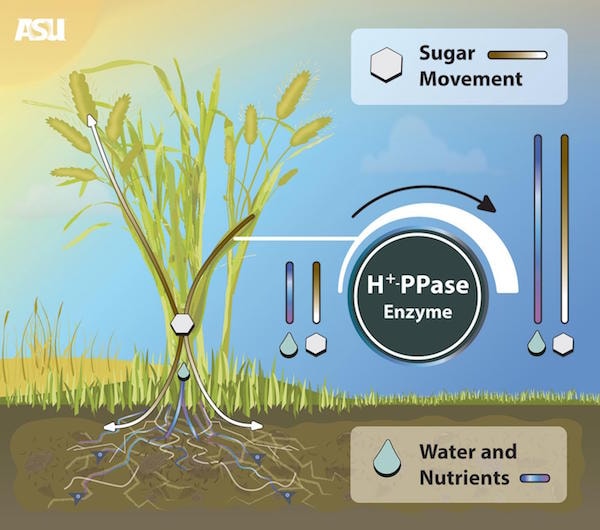 |
| A new, advanced technology announced by ASU enhances plant tolerance through the direct delivery of the H+-PPase enzyme to the stem and roots. |
"The artificial gene will help move photosyntheses—molecules formed by photosynthesis in leaves—to where the plant needs them to grow, such as roots, fruits, and young leaves, more effectively. This gene has a similar structure to the natural 1H+-PPase gene found in plants."
The current widespread and often misused method in agriculture, using fertilizers, causes environmental problems such as water pollution and soil erosion.
By improving water and nutrient absorption efficiency, farmers will be able to save on farming costs.
"Larger plant roots allow for better absorption of nutrients and water. We can optimize input costs and minimize environmental impacts," Gaxiola said.
Currently, this genetic modification method is being applied to rice, corn, barley, wheat, tomatoes, lettuce, and cotton. These crops have shown a significant increase in water absorption and salt tolerance.
Thanh Hien
(According to EurekAlert)
| RELATED NEWS |
|---|