
This type of cancer is more common in smokers.
Lung cancer, colorectal cancer, and lip cancer are among the 16 types of cancer that smokers are at risk of developing.
Lung cancer, colorectal cancer, and lip cancer are among the 16 types of cancer that smokers are at risk of developing.
Cigarettes contain over 600 dangerous components that cause many diseases, including cancer. Medical Daily lists 16 types of cancer that smokers are more likely to develop.
Lung cancer
Lung cancer is the most common cancer caused by tobacco. Tobacco is the cause of 80-90% of lung cancer deaths in both women and men, and is the number one risk factor for the disease.
Colorectal cancer
Some studies suggest that long-term tobacco use is associated with a 20-60% increased risk of colorectal cancer. However, it is unclear whether this is a direct causal relationship or if it is also influenced by diet.
Cervical cancer
Besides sexually transmitted diseases, cervical cancer can also be caused by smoking.Reports from the American College of Surgeons in 1989 and 1990 indicated that women who smoked were more susceptible to cervical cancer, but fortunately, the risk decreased if they quit the habit.
Lip cancer
According to Healthline, lip cancer is the most common form of oral cancer. The risk of oral cancer increases with age, but tobacco use accelerates its progression. The American Cancer Treatment Center reports that 80% of oral cancer patients, including those with lip, tongue, cheek, throat, and sinus cancers, have a history of tobacco use, whether in cigarette, chewing, or snuff form.
 |
Smoking is one of the factors that lead to lip cancer. Photo: Medical Daily. |
Throat cancer
Throat cancer is usually caused by a tumor developing in the throat, larynx, or tonsils. Compared to other diseases, throat cancer is rare, with an incidence rate of less than 2%, but this increases in smokers.
Skin cancer
If you smoke, your risk of skin cancer is quite high, even if you don't sunbathe or tan.A 2012 study found that smoking increased the risk of squamous cell carcinoma by 52%. This disease is curable but can be life-threatening if not diagnosed promptly.
Ung thư thận
Theo Hiệp hội Nghiên cứu Ung thư Anh, nguy cơ mắc bệnh ung thư thận của người không hút thuốc là 2%, của người hút thuốc là 50%. Nghiên cứu năm 2011 của Đại học Y Duke (Mỹ) còn chỉ ra thuốc lá gây ra các dạng nguy hiểm nhất của ung thư thận. "Cơ chế tác động đến tiến triển ung thư của thuốc lá hiện chưa rõ ràng", tiến sĩ Matvey Tsivian, tác giả công trình cho biết. "Nếu bạn ngừng hút thuốc, nguy cơ sẽ giảm xuống".
Ung thư vú
Năm 2013, Hiệp hội Ung thư Mỹ kết luận hút thuốc làm tăng nguy cơ ung thư vú. Các chuyên gia nhận thấy so với chị em không hút thuốc, tỷ lệ ung thư vú xâm lấn ở phụ nữ hút thuốc chủ động cao hơn 24%. Khi bỏ thuốc, rủi ro giảm xuống 13%.
Ung thư bàng quang
Hút thuốc là nguyên nhân chủ yếu dẫn đến ung thư bàng quang. Trên thực tế, một nửa số trường hợp ung thư bàng quang ở hai phái do thuốc lá. Bên cạnh đó, nguy cơ mắc bệnh của người hút thuốc cao hơn ít nhất 3 lần so với người không hút.
Ung thư gan
Không chỉ rượu mà thuốc lá cũng tác động tiêu cực đến cơ quan lớn nhất cơ thể người. Năm 2014, các bác sĩ Mỹ lđưa ung thư gan vào danh mục bệnh liên quan đến thuốc lá.
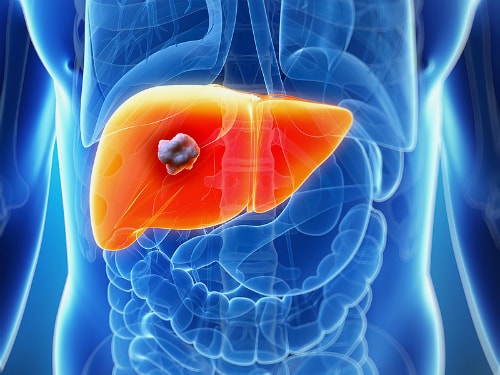 |
Smoking can lead to liver cancer. Photo: medscape.com. |
Pancreatic cancer
Pancreatic cancer has a very high mortality rate due to a lack of diagnostic tools in the early stages when surgical removal of the tumor is still feasible. Patients with kidney cancer often receive a poor prognosis.
In the US, 20-30% of kidney cancer cases stem from smoking habits. Smokers have twice the risk of developing the disease.
Stomach cancer
Stomach cancer commonly occurs in older people or young people who smoke.
Esophageal cancer
Smokers are five times more likely to develop esophageal cancer than non-smokers.
Acute myeloid leukemia
Acute myeloid leukemia is a type of blood and bone marrow cancer in which the number of white blood cells increases dramatically. Only 0.5% of healthy individuals develop this disease, but smoking increases the risk by 2-3 times.
Tracheal cancer
While the exact cause of tracheal cancer remains unclear, scientists have discovered that the most common form is squamous cell carcinoma, which is often associated with tobacco use.
Ovarian cancer
Several studies have indicated a link between smoking and ovarian cancer. The risk of developing the disease doubles if you smoke.
According to VNE