

Decisive action to eliminate corrupt public officials.
The Ministry of Interior will prioritize six key tasks in the coming period. However, streamlining the workforce and improving the quality of civil servants is one of the top priorities of the Ministry of Interior. Minister of Interior Le Vinh Tan affirmed this to Dai Doan Ket newspaper.
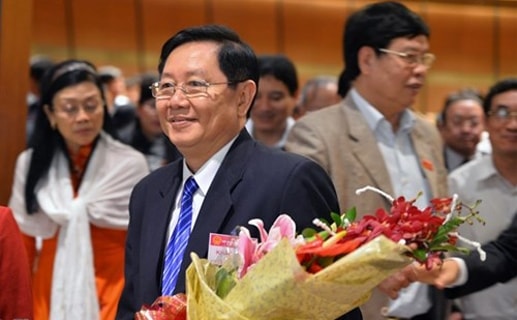 |
| Minister of Home Affairs Le Vinh Tan. |
Strengthening discipline and order in the management of civil servants.
PVMr. Minister, success or failure ultimately depends on people. As the ministry responsible for the operation of the state apparatus, what tasks will you focus on in your upcoming action plan?
Minister Le Vinh Tan:We are focusing on implementing the Government's six operational priorities in the coming period. Specifically, the Ministry of Interior will implement comprehensive solutions to combat bureaucracy, harassment, and corruption; ensure transparency and accountability of leaders and individual officials; and consider these as key areas of work, contributing to building a clean and strong Ministry of Interior, and enhancing the capacity, effectiveness, and efficiency of the state apparatus.
Focus on administrative reform towards a proactive and developmental state; the main focus is building a socialist rule of law state and a government that better serves the needs of the people. Strengthen discipline and order in the management of state officials and civil servants. Implement downsizing and restructuring of the civil servant workforce.
Implement the Law on Organization of Local Government immediately in 2016, ensuring stronger and clearer decentralization between the central and local governments, and between different levels of local government, in the direction of "Assigning tasks and authority to the level that can manage and resolve issues more effectively and practically"; improving the effectiveness, efficiency, unity, and smooth operation of local governments at all levels.
Mr. Minister, during the past term, the Ministry of Interior was assigned by the Politburo and the Secretariat to develop and implement many important projects and programs. The Ministry also drafted, supplemented, and amended several major draft laws. Does this constitute "pressure" for you during your term?
- I believe that in the coming time, the Ministry of Interior will focus on developing high-quality, progressive projects assigned to the Ministry by the Politburo, the Secretariat, the Government, and the Prime Minister. In the immediate future, it is necessary to urgently finalize and promptly submit the projects (Resolutions of the Standing Committee of the National Assembly, Decrees of the Government) to implement the Law on Government Organization and the Law on Local Government Organization. The Ministry of Interior will continue to do a good job in institutional building, serving the requirements of state management in the fields assigned to it.
Streamlining staffing and improving workforce quality.
Government Decree 108 stipulates that agencies, organizations, and units are only allowed to utilize 50% of the personnel whose staff has been streamlined and whose retirement or termination of employment is in accordance with the law; the remaining staff will be cut and placed in the reserve staff under the management of the competent authority for use in establishing new organizations or implementing new tasks assigned by the competent authority. It also stipulates that the head of each unit is responsible for the results of the personnel streamlining within their assigned area of responsibility. |
Mr. Minister, a very difficult task awaits you: implementing Resolution 39 of the Politburo and Decree 108 of the Government on downsizing the workforce to improve the quality of civil servants. How will you carry out this task so that the people no longer worry that "the more we downsize, the more the bureaucracy expands"?
- Government Decree 108 stipulates that agencies, organizations, and units are only allowed to utilize 50% of the personnel whose positions have been streamlined and whose retirement or termination of employment has been processed according to the law; the remaining positions are cut and placed in the reserve personnel under the management of competent authorities for use in establishing new organizations or implementing new tasks assigned by competent authorities.
Simultaneously, the regulations stipulate that the head of the unit must be responsible for the results of implementing personnel reduction within the unit under their management and authority. The results of organizing and implementing personnel reduction are linked to the annual performance evaluation of the head of the agency, organization, or unit.
To effectively streamline staffing and restructure the workforce, Resolution No. 39 and Decision No. 2218/QD-TTg have outlined five groups of solutions, each containing specific measures to address the issue of staff reduction. Accordingly, the Ministry of Interior will expedite the completion of job position identification within agencies, organizations, and units as a basis for determining appropriate staffing levels.
Simultaneously, restructure the staff of civil servants and public employees according to ranks, professional titles, job positions, and training levels suitable to their functions and tasks, ensuring an appropriate structure in terms of women and ethnic minorities; perfect the system of standards for titles and positions of civil servants and public employees from Deputy Minister, expert, senior specialist and equivalent positions downwards, focusing on qualities, qualifications, and capabilities...
In the coming period, the Ministry of Interior requests that the leaders of agencies, organizations, and units seriously implement the Politburo's, Government's, and Prime Minister's policies on downsizing the workforce. I am confident that the implementation will yield results.
Mr. Minister, our method of evaluating officials is not realistic, which is why there are public concerns that over 30% of civil servants are "carrying umbrellas" (i.e., not fulfilling their duties), while the Ministry of Interior claims that only 1% of officials fail to complete their tasks. In the future, what fundamental solutions will the Ministry of Interior implement to accurately assess the capabilities of officials, so that the public no longer feels frustrated that there are still many incompetent people in the system?
- It's true that our personnel evaluation system isn't yet realistic, which makes it difficult to streamline staffing and improve the quality of the workforce. Therefore, reforming the mechanism for evaluating and classifying civil servants and public employees is something that needs to be done decisively. Evaluating civil servants and public employees according to the principle of superiors evaluating and classifying subordinates; heads of departments evaluating and classifying civil servants and public employees under their management; and direct superiors evaluating and classifying heads of departments will accurately assess the capabilities of the staff.
In particular, the Ministry of Interior, in coordination with ministries managing sectors and fields, has issued 59 standards for civil servant ranks and 37 sets of standards for public employee positions for 113 professional positions for public employees. Furthermore, 63 out of 63 provinces and centrally-administered cities, and 19 out of 22 ministries and sectors have completed the appraisal and approval of the Project on determining job positions and civil servant structure.
Based on the standards for civil servant ranks and professional titles; the list of job positions and the structure of civil servants; regulations on the evaluation and classification of civil servants; and the close guidance of Party committees and governments at all levels from the central to local levels, as well as the serious implementation by the heads of agencies, the problem of downsizing the workforce by removing civil servants who fail to complete their tasks or meet job requirements can be solved.
Thank you very much, Minister!
Our current system for evaluating officials is not yet realistic, making it difficult to streamline staffing and improve the quality of the workforce. Therefore, reforming the mechanism for evaluating and classifying civil servants and public employees is a crucial step. The evaluation of civil servants and public employees should follow the principle of superiors evaluating and classifying subordinates; and heads of departments evaluating and classifying civil servants and public employees under their management authority. Direct superiors evaluating and classifying heads of departments will provide a more accurate assessment of the officials' capabilities. |
According to Dai Doan Ket