

How does Japan adapt to earthquakes?
(Baonghean.vn) - Japan is one of the most earthquake-prone countries in the world. Recently, two consecutive earthquakes on Kyushu Island claimed the lives of 41 people, injured thousands, and caused significant property damage. To cope with earthquakes that can occur at any time, Japan has implemented various measures to adapt and minimize losses caused by earthquakes.
Tokyo, the capital of Japan, is ranked as the world's second-highest risk city for natural disasters. Therefore, the Japanese government places strict requirements on high-rise buildings there.
Eighty-seven percent of buildings in Tokyo are constructed to special standards to withstand earthquakes. These houses are built with foundations containing a special liquid-filled rubber that can absorb the force of seismic activity.
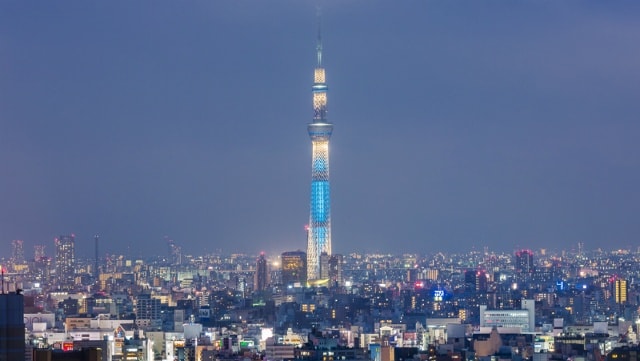 |
| The Tokyo Skytree, the world's tallest tower, utilizes many earthquake-resistant techniques learned from ancient Chinese temples. |
A prime example is the Tokyo Skytree, the world's tallest tower, built in 2012. At 634 meters tall, this tower was designed by 100 engineers, architects, and planners to ensure absolute safety in the event of an earthquake.
In addition to its central axis made of reinforced concrete buried 50 meters deep in the ground, the interior structure of Tokyo Skytree is built to resemble the shape of ancient wooden temples famous for their resilience against earthquakes and typhoons.
In the suburbs of Tokyo, beneath a soccer field and ice skating park lies a 6.5-kilometer-long, five-tiered underground drainage system designed to capture floodwater from tsunamis and storms, then safely discharge it into the Edo River.
According to CNN, this system cost $3 billion and took 13 years to build. But it provides safety for the local people against natural hazards.
In terms of public transportation infrastructure, Japan has also invested heavily in earthquake-resistant solutions for its railways, especially subways and high-speed trains – a source of pride for the Japanese worldwide.
During the historic 9.0 magnitude earthquake in 2011, Japan had 27 high-speed trains in operation. Thanks to a vast network of earthquake sensors across the country, all trains were brought to an emergency halt just before the disaster struck. No one died or was injured while traveling on trains during that earthquake.
Japan has invested $1 billion in earthquake warning systems. Upon receiving an earthquake threat, the gas supply is automatically shut off within 80 seconds. However, beyond these warning systems, human awareness and behavior during an earthquake are far more important.
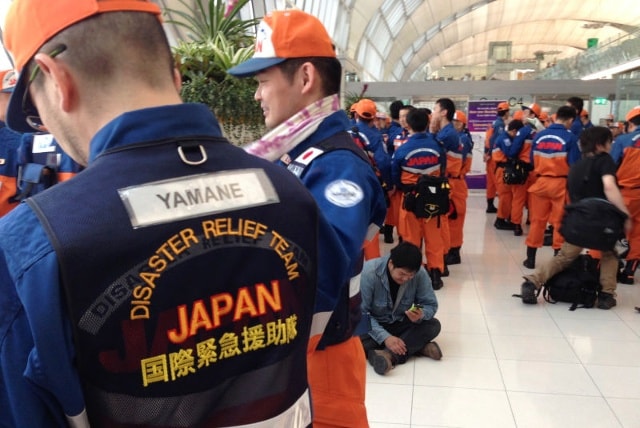 |
| Japanese rescue teams are professionally trained and always ready in the event of an earthquake. |
All Japanese people know by heart how to cope with an earthquake. If an earthquake suddenly occurs, you must not run and panic. If there are children in the house, the first thing to do is find the children, then hide under the bed or similar structures until the ground stops shaking.
The devastating effects of nature continue to inflict heavy damage on Japan from earthquakes. However, Japan's earthquake preparedness systems and measures are among the most advanced in the world; even the United States has to learn from Japan regarding earthquake-resistant construction.
The Japanese government is still working to find and test new measures and upgrade older structures to better withstand earthquakes.
Thanh Hien
(According to Gizmodo)
| RELATED NEWS |
|---|