
Concerns about rising water prices
(Baonghean.vn) - Following the increase of 670 VND/liter in gasoline prices from 4:30 PM on March 21st - the first increase since October 2015 - debates predicting increases or decreases in the prices of basic living expenses such as electricity and water have begun to heat up again in public opinion.
(Baonghean.vn) - Following the increase of 670 VND/liter in gasoline prices from 4:30 PM on March 21st - the first increase since October 2015 - debates predicting increases or decreases in the prices of basic living expenses such as electricity and water have begun to heat up again in public opinion.
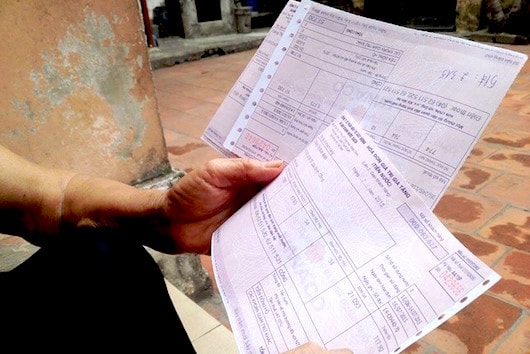 |
| Water bills, electricity bills... The cost of essential living expenses is a constant concern for people. Photo: Family & Society |
From October 1st, 2015, Hanoi allowed water supply companies in the city to increase the price of clean water by 20% compared to the old price. The pricing remains based on a progressive tiered system for consumption. Accordingly, the price of water sold to households after the increase will be: approximately 6,000 VND/m³ for the first 10m³, over 7,000 VND/m³ for 10m³ - 20m³, nearly 8,700 VND/m³ for 20m³ - 30m³, and 16,000 VND/m³ for 30m³ and above.
Meanwhile, the proposal to increase water prices in Ho Chi Minh City was first put forward for public consultation on January 20, 2015, and continued to be discussed at a meeting organized by the Ho Chi Minh City People's Council on April 21, 2015. Specifically, the Saigon Water Supply Corporation (Sawaco) proposed an increase of approximately 10.5% per year, to be implemented during the period 2015-2019. Thus, after 5 years, the price of clean water in Ho Chi Minh City would increase by nearly 50%, reaching approximately 30,000 VND/person/m3. To date, Sawaco's proposal to increase clean water prices has not yet been approved.
Water prices for residential use in several provinces and cities nationwide. (Reported by: Thuc Anh)
Following the announcement of a water price increase, there have been many conflicting opinions among experts and the public.
The reasons for the water price increase are a question of great concern to many. In Hanoi, the adjustment of clean water prices has been planned since 2013 based on a proposal from inter-agency bodies. Therefore, both water businesses and users have been prepared. The price adjustment in October was also calculated to avoid impacting the consumer price index.
The 20% increase in clean water prices in Hanoi is explained as insufficient to offset investment costs and ensure profitability for suppliers. This is because the groundwater supply is declining by an average of 2-3% per year, while water demand is increasing. As a result, the average water shortage in Hanoi during hot weather is approximately 40,000-60,000 m³/day. At its peak, the Da River clean water pipeline experienced 13 incidents, leaving tens of thousands of households without water for several days.
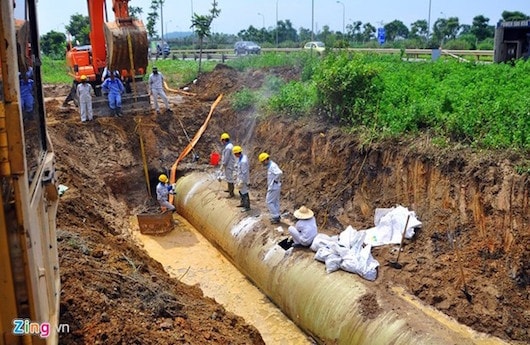 |
| The Da River water pipeline burst for the 13th time in 2015, in August. |
Meanwhile, the proposed "steady" increase of 10.5% per year in Ho Chi Minh City has faced much opposition, with many arguing that this is too high. The price increase is explained as a way to increase investment in developing water sources and networks, installing new meters, and increasing the percentage of people with access to clean water.
This reason is considered unconvincing because, alongside the proposed water price increase, Sawaco's proposed roadmap for reducing water loss seems rather "modest": reducing the loss rate from the current 32% to 25% by 2025 (a reduction of 1-2% per year). Many believe that the water price increase is essentially intended to "cover" billions of dong in losses from over half a million cubic meters of clean water lost every day.
What scenarios will unfold after water prices rise? This is another question many people are asking. Will water quality improve? Will supply be guaranteed? Will infrastructure be upgraded?
Ultimately, consumers' biggest concern remains: will the cost of living, as well as the prices of services and production, increase in a domino effect? If so, will the minimum wage increase, balancing the income and expenditure of society?
Thuc Anh