
Thanksgiving of the Khmu people
(Baonghean) - The Thanksgiving ceremony, also known as the gratitude ceremony of the Khơ Mú people, is usually held during periods of agricultural inactivity. This is a ceremony where the son-in-law expresses gratitude to his wife's family for having children, owning a house, and achieving prosperity.
(Baonghean) - The Thanksgiving ceremony, also known as the gratitude ceremony of the Khơ Mú people, is usually held during periods of agricultural inactivity. This is a ceremony where the son-in-law expresses gratitude to his wife's family for having children, owning a house, and achieving prosperity.
At that time, the son-in-law and his wife would prepare pigs, chickens, and wine to hold a thanksgiving ceremony for the wife's parents for giving them life. At the Thanksgiving ceremony, all relatives and everyone in the village were invited to come and celebrate together.
The offerings that are significant and indispensable in Thanksgiving are a pig and two jars of rice wine. The size of the pig depends on the economic conditions of each couple, including the son-in-law. When performing the thanksgiving ceremony, only the head, a small amount of the entrails, the hindquarters, and the tail of the animal are used.
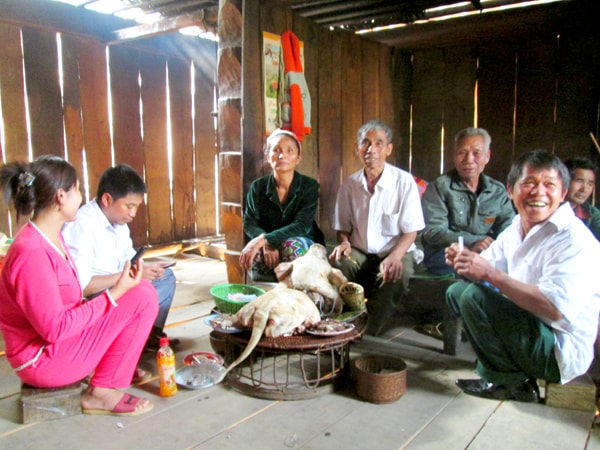 |
| Offerings for Thanksgiving. |
The beauty of Thanksgiving lies not only in its profound meaning, but also in the fact that people can "make the celebration" according to their economic circumstances, and there are no mandatory time constraints. A couple can be married for 2 years, 3 years, or even 10 years; they can hold a Thanksgiving celebration for their wife's parents whenever they have the means.
While the rituals of the Hmong or Thai people require the assistance of a shaman, the Thanksgiving Ceremony of the Khmu people is performed by the son-in-law himself. Wine is poured into four cups, after which the son-in-law blesses his wife's family and offers two cups to each of his parents-in-law. He also ties a white thread around the left wrists of his parents-in-law, while relatives and guests offer blessings by placing small balls of sticky rice on the hands of the parents-in-law. The more people present, the larger the balls of rice, symbolizing good health and happiness for the couple. In return for this gesture, the son-in-law pours wine for the guests.
The location for the Thanksgiving ceremony is also highly valued by the people; it must be the kitchen, specifically the one with a small attic, which, according to the Khmu people's beliefs, is the dwelling place of their ancestors. After the Thanksgiving rituals conclude, relatives and everyone else will celebrate together around a jar of rice wine right in the kitchen.
Lu Phu