
Lives with no way out?
(Baonghean) - Unsafe food isn't about sellers poisoning consumers, but about us poisoning ourselves. If there are lives without a way out, meals filled with uncertainty in this era of unsafe food, look no further.
(Baonghean) - Unsafe food isn't about sellers poisoning consumers, but about us poisoning ourselves. If there are lives without a way out, meals filled with uncertainty in this era of unsafe food, look no further.
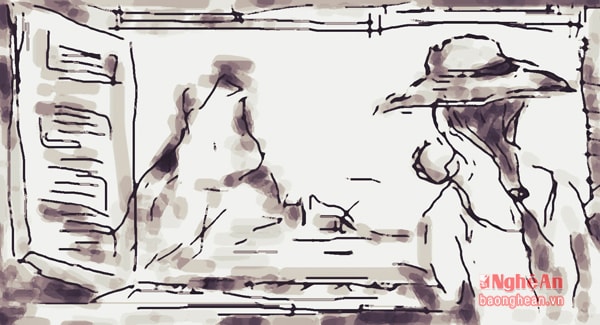
1.One afternoon over 15 years ago, in a hotel with a window overlooking Ha Long Bay, I was captivated by a Chinese girl eating an apple.
The Chinese girl works as a tour guide, leading groups of tourists to Vietnam every week. The apples she eats are so fragrant; she bought them from a supermarket in China. She only needs to rinse them once under the hotel tap and she can happily eat them, peel on or off.
It's completely different from the Chinese apples that Vietnamese people are selling in Vietnam. It's the same apple, but even the aroma is full of chemicals, the skin is coated with a transparent wax to keep it firm, and it's treated to the point of completely losing its fresh taste. And yet, this fruit, placed on the altar for a month, shows no signs of spoilage on the skin!
But why would a Chinese girl carry a piece of fruit thousands of kilometers to Vietnam just to eat it? Why does she know perfectly well that this fruit, grown safely in China, should never be bought in Vietnam? And what nationality are the traders who poison tens of thousands of tons of fruit on its way from the farm to the Vietnamese consumer?
I always thought that those unscrupulous traders who profit from contaminated food were the hidden butchers of the century! Until…
 |
| Illustration: Nam Phong |
2.Ten years ago in Taipei, I often wandered aimlessly through the vast, well-stocked Carrefour supermarket on weekends, buying nothing. Or I would stand lost in thought in a tiny Seven-Eleven convenience store during my lunch break. Because I missed home terribly!
Every type of fruit and vegetable here clearly states its origin, traceable back to the farm. Imported meat and food products undergo rigorous inspection and are guaranteed to meet quality standards as stated on the packaging. Each office lunch box has a label clearly indicating the ingredients, origin, and calorie count, allowing customers to accurately measure and feel confident in any food they consume.
And I remember those street food vendors in Hanoi carrying so much dust. The dirty, spoiled, and rotten food that consumers turn their backs on, yet these food stalls are willing to buy it cheaply!
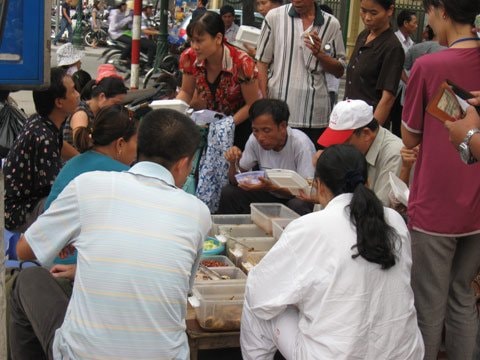 |
| Are street food stalls safe? (Image: Internet) |
And when we bring home vegetables and beans bought from the market, we anxiously pick and wash them, worrying about pesticide residue. For many years, my family has even completely eliminated certain foods like green beans and string beans from our meals to avoid becoming victims of greedy farmers.
But in Taipei, if contaminated food is discovered, people don't blame the farmers; they condemn the market regulators! And if food shows signs of poor quality, restaurants and suppliers turn their backs on it, even issuing warnings to the public beforehand!
And many office lunch spots and family dinner restaurants have done something even more significant than I've ever experienced: They encourage customers to bring their own chopsticks and spoons! This not only reassures customers about the cleanliness of the utensils but also helps reduce the overuse of disposable wooden chopsticks and plastic spoons, contributing to environmental protection and cleaner air!
The actions of those "private traders" made me realize that the fight against unsafe food is not just between buyers and sellers! It must be the responsibility of the state authorities. Until…
3.Five years ago, my sister had to close her sandwich shop on a small street corner in Hanoi. Simply because she was too kind and committed to clean food. She made each sandwich as if she were making one for her own family, not the dirty, fake sandwiches made by street vendors.
That small bakery uses fresh and expensive ingredients, no less expensive than those found in star-rated hotels. The fresh vegetables are washed with boiled and cooled water, and even the milk used to soak the ingredients for the pâté must be the finest pasteurized milk in Vietnam, 100% real cow's milk. They don't use the kind of fresh milk that's heavily advertised but is actually reconstituted from Chinese milk powder.
And if he sold at the market price of other shops, and sold out his entire display case of bread in one morning, my brother would only make a profit of 36,000 dong! Meanwhile, the shops next door make five or seven times that profit! No one sees the kindness of a street bread vendor. And it's only worth 36,000 dong! Who will believe in the conscience of a bread vendor, that he's not selling contaminated food?
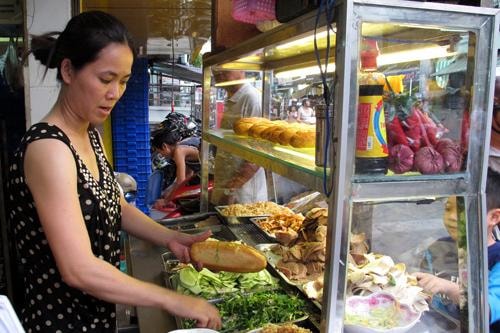 |
| Does the cleanliness of food depend on the conscience of the seller? (Illustrative image) |
And we will always nod in approval at delicious, reasonably priced, and beautifully colored food. On the one hand, we demand clean food, and on the other hand, we calmly destroy those who sell clean food!
We demand clean vegetables, but we only choose to buy those that look good! We demand clean meat, but we refuse to pay for those "cleanliness guarantees"; we need to eat cheaply!
Around the world, there have been campaigns encouraging people to consume "ugly" food. This includes vegetables with worms, misshapen and small fruits and vegetables, stunted pigs, unappetizing chickens, and fish lacking appealing colors. However, consumers choosing to buy these "ugly" foods is a way to ensure food safety and prevent vendors from colluding with producers to chase the trend of "big, beautiful, cheap, and dirty" food!
It turns out that the kindness of the buyer is more important than anything else! Once the buyer is willing to kill the kindness of the seller! And the power of the decision of 80 million buyers is stronger than all regulations and calls for collective action for clean food.
4.But we still keep demanding big, beautiful, cheap, and dirty food, while on the other hand, condemning dirty food. My friend, every two days, drives a whole truckload of chilled vegetables and fruits from Da Lat straight to Hanoi, complaining about unsold stock and losses for the past two years. Because everyone who buys his vegetables complains they're ugly, wilted, or bruised.
Oh my God, if you bring high-quality, authentic Da Lat vegetables and fruits directly to Hanoi, how can they be as shiny and fresh as those vegetables and fruits sprayed with preservatives, growth hormones, and chemicals to keep flower petals glossy and prevent them from falling off—like what other stores are using?
My neighbor has a banana plantation, and he's often frustrated because he can't sell all the bunches he harvests at the market. Everyone complains that the bananas are too green, ripen too slowly, or are overripe. How can bananas ripen uniformly at the same time if they're naturally ripened, unless the whole bunch is dipped in a vat of chemicals to accelerate ripening?
I cannot answer those questions. Unsafe food isn't about sellers poisoning consumers; it's about us poisoning ourselves. If there are lives without escape, meals filled with uncertainty in this era of unsafe food, look no further. Those who only care about what's good/cheap/delicious for themselves, without considering society, are poisoning their own meals and the meals of those who, unknowingly, become victims of this food crisis.
Rumors say that some businessmen are building apartment complexes where people grow their own vegetables, and constructing boarding schools where students are housed alongside pigs raised for meat. They will make a lot of money by exploiting fear. But they represent kindness in an increasingly impoverished society. Ruralization of cities is never a viable governance strategy in a decent country.
Trang Ha
| RELATED NEWS |
|---|