
Does red tide really poison marine life?
(Baonghean.vn) - Red tide is a natural phenomenon that has been observed and documented for thousands of years. However, the sudden increase in this phenomenon in recent years has prompted scientists to reconsider its role.
(Baonghean.vn) - Red tide is a natural phenomenon that has been observed and documented for thousands of years. However, the sudden increase in this phenomenon in recent years has prompted scientists to reconsider its role.
Sometimes, in areas with relatively shallow water, one can observe the seawater changing color: it can be slightly pink, brown, bright red, orange, purple, yellow, or even turn dark blue or pitch black like sewage water…
That unusual color is due to pigments in the seaweed. When favorable growing conditions arise, some types of seaweed experience explosive growth, causing the seawater to change color.
Why do red tides occur?
The proliferation of microalgae is believed to depend on several factors: sunlight, seawater temperature, and the nutrient content of the seawater.
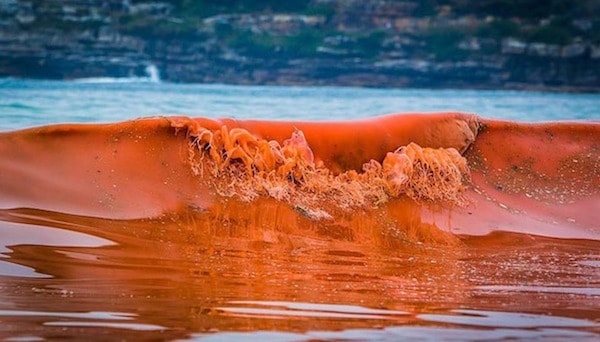 |
| Red tide – a mesmerizing sight, a natural phenomenon observed for thousands of years. Photo: Internet |
Considering natural conditions, the world in general and Vietnam in particular are being affected by the El Niño phenomenon – considered to be the strongest in the past 60 years. Warm ocean currents are causing sea surface temperatures to rise, and coupled with the fact that we are entering an early summer with abundant sunlight, these are favorable conditions for microalgae to thrive.
Meanwhile, human activities and industrial production can also indirectly cause red tides. Domestic and industrial wastewater can be toxic to most aquatic animals but is a rich source of nutrients for microalgae.
Furthermore, maritime transport activities that alter ocean currents can also cause algal blooms, or act as intermediaries in moving algal masses from one sea area to another.
Thuỷ triều đỏ tác động như thế nào đến hệ sinh thái?
Trong số 5.000 loài sinh vật phù du biển, 300 loài có khả năng bùng nổ về số lượng, gây đổi màu ở bề mặt nước biển - tức Thuỷ triều đỏ. Một trong số những hiện tượng đi kèm với Thuỷ triều đỏ dễ quan sát nhất là một bộ phận sinh vật biển chết đồng loạt.
Tuy nhiên, sinh vật biển chết khi xuất hiện Thuỷ triều đỏ vì nhiều lý do khác nhau.
Trong đa số trường hợp, sinh vật biển chết khi xuất hiện Thuỷ triều đỏ do không đủ oxy trong nước biển. Khi các vi tảo bùng nổ về số lượng, hoạt động phân huỷ của vi khuẩn trên khối tảo làm cạn kiệt Oxy trong thuỷ vực, gây chết sinh vật biển. Ngoài ra, một số loài vi tảo có khả năng làm tổn thương mang, ảnh hưởng đến hoạt động hô hấp của sinh vật biển.
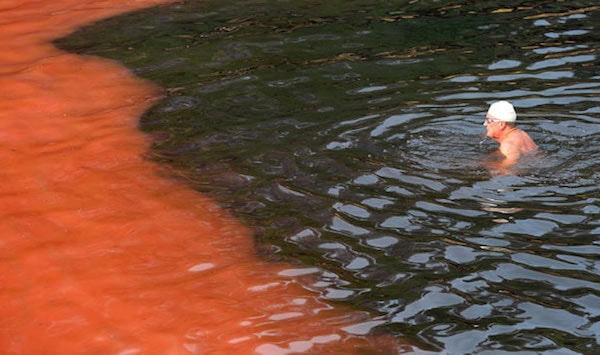 |
| Thuỷ triều đỏ do vi tảo không độc gây chết cá do làm suy giảm lượng Oxy, không gây hại cho sức khoẻ con người. Ảnh: Internet |
Như vậy, trong trường hợp này, sinh vật biển không chết vì nhiễm độc mà vì thiếu Oxy. Việc tiêu thụ các sinh vật này không dẫn đến nhiễm độc ở người.
Bên cạnh đó, trong số 300 loài vi tảo có khả năng gây ra Thuỷ triều đỏ, 80 loài có thể sản sinh độc tố, gây tác động sâu và rộng hơn đến hệ sinh thái biển. Vi tảo “đầu độc” chuỗi thức ăn qua 2 con đường:
Sản sinh độc tố gây chết trực tiếp động vật thuỷ sinh. Một số loại vi tảo “tử thần” thường được xướng tên là: Karenia brevis, Noctiluca scintillans, Alexandrium excavatum,…Độc tố do vi tảo tiết ra có thể là độc thần kinh hoặc các kim loại nặng tiết ra do quá trình trao đổi ion kim loại của tế bào tảo.
Trên thực tế, chất độc của tảo Karenia brevis mạnh đến nỗi đã từng giết chết hàng loạt cá thể hải ngưu trong vịnh Mexico.
In another instance, microalgae toxins can be absorbed and accumulate in the bodies of some aquatic animals without causing their death.Typically, mollusks such as oysters, clams, mussels, and some species of algae-eating fish are the most ideal intermediate hosts.
When these contaminated organisms are consumed in sufficiently large quantities, it can lead to poisoning in humans and organisms higher up in the food chain.
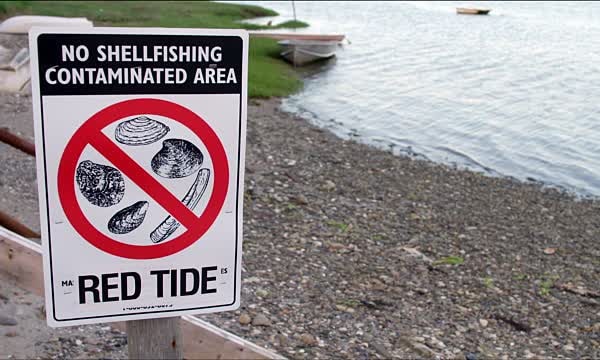 |
| A warning sign reads: "Do not harvest shellfish; area contaminated by red tide." Photo: Internet |
Conclude
Red tide is a natural phenomenon, but its dramatic increase in recent years has prompted scientists to reconsider its role. Human activities may indirectly cause red tides, or they may contribute to the phenomenon, causing broader and deeper impacts on marine ecosystems.
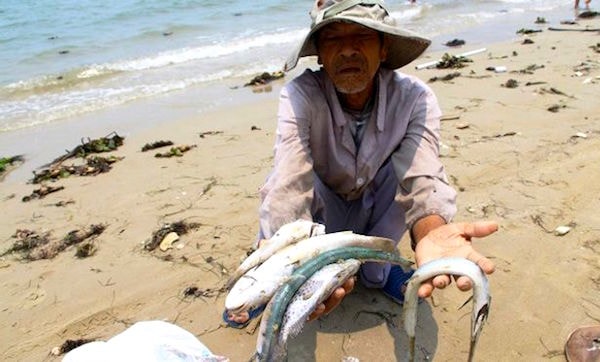 |
| When mass fish deaths occur, suspected to be related to red tide, testing is necessary to confirm the presence of microalgae and identify the species, including whether or not it contains toxins. |
To determine the nature of the phenomenon, it is necessary to analyze and identify the species of microalgae causing the red tide. Simultaneously, autopsy and testing of the dead marine organisms are needed to determine the species of microalgae, whether they secrete toxins, and whether the marine organisms died from poisoning or simply from lack of oxygen. Based on this, timely and effective remedial measures can be devised.
Hai Trieu