

The world and tightrope walking
(Baonghean) - A crisis is something no one wants; it disrupts the balance and stable order of society, politics, and the economy. However, a crisis can also create pressure to achieve new breakthroughs, leading us further than our initial starting point. Of course, it's a gamble of fate, a game of chance between gain and loss. A risky game on a tightrope…
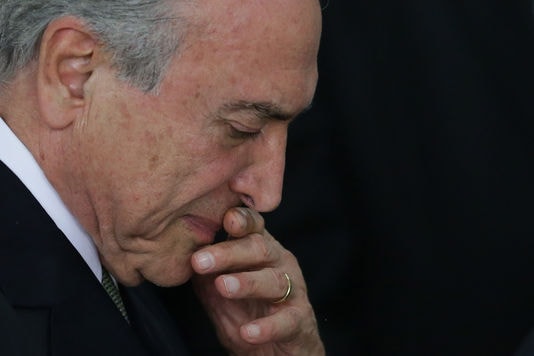 |
| Major challenges await Brazil's interim president, Michel Temer. Photo: AP. |
Brazil: When trust is lost
On Thursday, May 12th, Brazil's first female president, Dilma Rousseff, officially left office following a parliamentary vote. 55 out of 81 members of parliament voted to suspend Rousseff's term for six months. Her interim president is Michel Temer.
Of course, Rousseff's term didn't actually end so early – two years and seven months before its scheduled end. Her hopes of returning to the presidency weren't entirely dashed, as the cause of this situation wasn't actually a crime. Rousseff was criticized for concealing the severity of the state budget deficit during her 2014 election campaign to gain voter support – a rather familiar tactic in Western politics…
Perhaps things wouldn't have escalated to this point if the Brazilian economy hadn't plummeted. This is also considered the final straw for a political system unstable due to corruption and power-sharing between the left and right. Rousseff's departure marks the end of 13 years of rule by the center-left – the Workers' Party led by former President Lula da Silva. During those 13 years, Lula da Silva's Workers' Party accomplished many good things for the country, especially for the poorest segments of Brazilians. However, that was still not enough to pull this leading nation of Latin America out of its political and economic crisis.
Falling raw material prices, a stalled consumer index, a loss of investor confidence and reluctance to invest in Brazil, and widespread infrastructure deterioration… This paints a picture of Brazil's worst crisis in a century. It could be argued that these factors were decisive in Rousseff's downfall mid-term. And this is also the major challenge awaiting her interim successor, Michel Temer.
Many experts believe that Michel Temer is a "last resort" choice because the presidency cannot remain vacant. He himself is embroiled in financial scandals, such as being accused of exceeding spending limits for the 2014 election campaigns. Prosecutors at the Brazilian Electoral Court even stated that Michel Temer would become the first "ficha suja" president in the country's history. "Ficha suja" is a term used to describe delinquent debtors.
Furthermore, Michel Temer was a former "teammate" of Dilma Rousseff, so he is inevitably implicated in the financial scandals of the former president, including the infamous corruption case at the state-owned oil company Petrobras. If Dilma Rousseff is impeached in connection with these cases, Michel Temer will also be affected to some extent. This is extremely disadvantageous for the interim president.
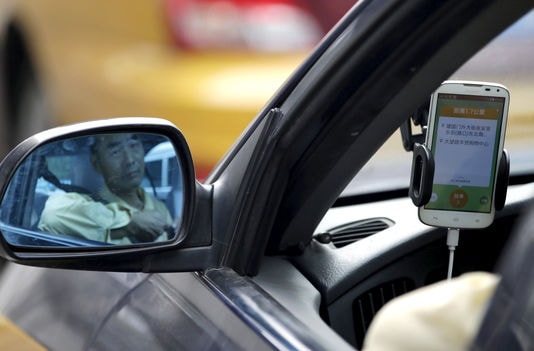 |
| Apple chooses Didi – Uber's rival in China – to start its "revolution"? Photo: Reuters |
Apple's unusual move
On Friday, May 13th, Apple announced a $1 billion investment in Didi Chuxing, a competitor to Uber in China. This came as a surprise to investors because Apple traditionally develops its own products and strategies and is not usually interested in startups. So, what caused Apple to change its approach?
Didi, considered a "rising star" in China, has seen its value increase to $10 billion in just one year, boasting 300 million customers and 14 million drivers operating across the country. On average, Didi handles 11 million passenger trips daily. Its services are also diverse and partnered with major players like the internet service giant Tencent and the e-commerce platform Alibaba.
For Apple, this would be its second-largest external development acquisition since the purchase of headphone manufacturer Beats in 2014. Apple CEO Tim Cook stated in a press release: “We are very impressed by what the founders of Didi and their outstanding management team have accomplished.” It’s noteworthy that Apple itself has long been involved in the transportation sector. They have a team of 1,000 employees working on a project to design a self-driving car, with the core element being the operating software – Apple’s core expertise.
Self-driving vehicles are also a target for Uber, General Motors, and Lyft. Some even plan to test their fleets of autonomous vehicles by the end of this year. Therefore, in this market, Apple is at a significant disadvantage, being both slower in technological development and lacking the existing infrastructure to operate within it, such as the market, customers, and services. This may be the reason why Apple decided to invest in Didi.
Clearly, Didi could open many promising doors for Apple. It's not just a stepping stone to enter the transportation and service sector and catch up with established competitors; it's also an opportunity for Apple to better connect with the vast Chinese market. In the first quarter of 2016, Apple's phone sales fell 26% – the first decline since 2007. Obstacles in the Chinese market were a significant contributing factor.
It's time to question Apple's dominant position in the mobile device sector in particular, and the technology world in general. Of course, once you reach that leading position, the strategic dilemma between stability and innovation is far from simple. Apple enthusiasts and competitors alike are eagerly awaiting to see how this giant will transform itself, or whether the legend of the Apple logo will become a thing of the past.
Thuc Anh