
Simple steps to raising clean aquatic animals.
(Baonghean) - To ensure that seafood products brought to market are safe for consumers, all stages of seafood production, from farm to table, must adhere to the correct procedures.
(Baonghean) - To ensure that seafood products brought to market are safe for consumers, all stages of seafood production, from farm to table, must adhere to the correct procedures.
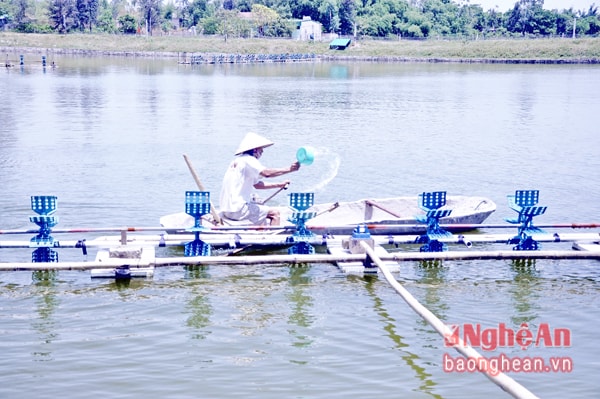 |
| Developing the aquaculture industry in Phuc Tho commune (Nghi Loc district). Photo: Thanh Le |
For aquaculture in particular, to ensure quality and food safety, it is necessary to apply the correct technical measures from the stages of seed production, commercial farming, harvesting, and product processing. To ensure food safety during the farming process, farmers need to pay attention to the following issues:
- The aquaculture site and facilities must be built in a planned area free from pollution by industrial and domestic waste. The facilities must be constructed according to proper technical standards, with separate water supply and drainage systems, settling ponds, treatment ponds, and sturdy, leak-proof embankments.
- Water must not be contaminated by untreated waste from livestock farms, domestic wastewater, or wastewater from factories and industrial zones, in order to control sources of contamination by microorganisms or chemicals. Water must be tested before being taken into and discharged into the environment.
- The feed is free from mold contamination, banned chemicals and antibiotics, and growth hormones. It adheres to four key principles: quantity, quality, location, and timing, ensuring optimal nutrient absorption by shrimp and fish.
- Manage the health of farmed shrimp and fish by regularly monitoring their growth rate and overall health. Implement disease prevention measures. When disease appears, address it promptly and consult with experts in aquaculture disease treatment.
- Sanitary facilities and auxiliary structures for workers must be located far from the farming area. Household and livestock waste must be properly disposed of to avoid contaminating the ponds. Tools such as nets, scoops, and machinery used in the ponds must be cleaned and properly stored after use.
- Apply good aquaculture practices such as GAP, CoC, etc. Participate in training on food safety and hygiene and aquaculture techniques. Stock according to the seasonal schedule recommended by the Department of Agriculture and Rural Development. Only stock with quarantined fry.
- Purchase veterinary medicines according to the instructions of a certified aquatic veterinary practitioner and only buy medicines and feed with complete labels. Store each type of feed and chemical separately in a dry place, avoiding mixing them.
- Before harvesting, take samples to test for residues of prohibited chemicals and antibiotics. Promptly notify the authorities of any disease outbreaks in the pond and surrounding areas. Upon harvesting, prepare a declaration of origin for farmed aquatic products and hand it over to the processing or purchasing facility along with the certificate of chemical and antibiotic residue testing.
- Maintain a logbook with complete information on feeding regimens, feed types, aquatic veterinary drugs, and chemicals used throughout the farming process, in order to provide traceability information for aquatic products. Coordinate with relevant authorities in investigating farming areas and taking samples to control residues of harmful substances.
In addition, to ensure the production of "clean" aquatic products, throughout the farming process, farmers need to pay attention to the following: Do not use substances on the list of banned chemicals and antibiotics of the Ministry of Agriculture and Rural Development; Do not overuse restricted chemicals and antibiotics to prevent and treat diseases in aquatic animals; Do not use moldy feed, expired veterinary drugs, or those of unknown origin or composition; Do not discharge untreated water and waste from the pond into the surrounding environment.
Le Hang
(Provincial Agricultural Extension Center)
[links()]