

Mistakes to avoid when using plastic wrap.
Plastic wrap is not only commonly used in large cities, but also in rural areas, especially during feasts and holidays. However, according to experts, the overuse of plastic wrap can have unpredictable consequences.
Using food wrap to preserve stored food is a "treasure" for housewives. To meet this demand, manufacturers offer various types of food wrap advertised as being made from 100% PVC or PE plastic, free of harmful chemicals, and suitable for all uses, from storage to processing…
However, many studies have shown that up to 50% of the film's composition consists of plasticizers with additives. PVC and PE plastics themselves are not as flexible as the films being advertised; they require plasticizers. Currently, the market offers many types of plasticizers such as DOP, CD, etc., all of which have been warned as harmful to human health.
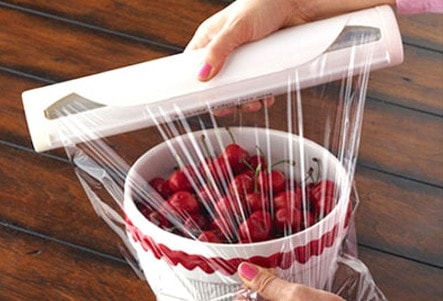 |
Due to its many advantages such as low cost, compactness, convenience, and attractive appearance, the demand for food wrap continues to grow. To minimize potential risks when using it, users should note the following:
Mistakes to avoid when using plastic wrap:
Not suitable for use in a microwave oven.
Heating food in the microwave with the plastic wrap still on is a dangerous mistake. This is because plastic wrap can contain chemicals such as phthalates and DEHA, which, when exposed to high temperatures, melt and transform into extremely dangerous carcinogenic substances.
Do not wrap greasy foods.
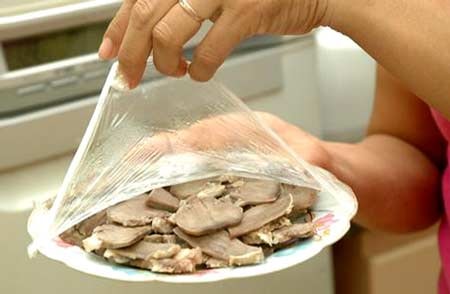
Plastic wrap should not be used to wrap cooked food, hot food, or foods containing oil and fat because after contact with these foods, the chemical components in the plastic wrap can easily leach into the food, causing various health problems.
Furthermore, avoid wrapping foods in acidic, alkaline, or high-temperature environments. These harmful substances can leach into the food, affecting the endocrine system, leading to premature development in girls, and impacting reproductive health in boys.
Do not wrap tightly around the food.
The plastic wrap should be at least 2.5 cm away from the food. If wrapped directly, harmful substances in the wrap can leach into the food, causing unpredictable harm to health. Therefore, food should be placed in a tall glass container before being wrapped with plastic wrap.
Additionally, avoid wrapping vegetables like carrots, cucumbers, and green beans in plastic wrap, as this will significantly reduce their vitamin C content.
Do not use if there is a strange odor.
After purchasing and using the plastic wrap, you need to store it in a place with an average temperature. Storing it in places with high or low temperatures can easily cause the plastic wrap to deteriorate and produce toxins. In particular, do not use plastic wrap that shows signs of mold, is shriveled, or has a strange odor.
 |
How to use plastic wrap in a non-toxic way.
– Food wrap should be sorted before use. PE wrap is for pre-processed food. PVC wrap is for preserving unprocessed food. Do not use aluminum foil for acidic foods.
– When storing food, wrap it at least 2.5 cm away from the food.
– Remove the plastic wrap when heating.
– Store plastic wrap at room temperature. Do not use plastic wrap that is moldy, wrinkled, or has been stored for too long.
– How to distinguish between PE and PVC film:
PE film: White, transparent, less sticky to the touch, tough, easy to peel. Flammable, burns evenly, does not extinguish, and has no foul odor.
PVC film: White or off-white in color, transparent, sticky to the touch, difficult to peel. Difficult to burn, only burns when exposed to fire, has a foul odor.
According to Family & Society
| RELATED NEWS |
|---|