
How to care for a child with cow's milk allergy
Cow's milk allergy in children can cause a lot of confusion for parents when caring for their children. The article below will provide you with useful information on this issue.
Cow's milk allergy in children can cause a lot of confusion for parents when caring for their children. The article below will provide you with useful information on this issue.

What is cow's milk allergy?
Cow's milk allergy occurs when your child's immune system reacts to proteins in cow's milk and dairy products. These proteins can also be present in formula or breast milk if the mother consumes cow's milk-based foods.
Token
Cow's milk allergy is the most common food allergy in children, affecting 7% of young children in the United States. Children are at higher risk of developing cow's milk allergy if there is a family history of the allergy. Many children allergic to the proteins in cow's milk will also react to the proteins in sheep's milk and goat's milk. Common symptoms include:
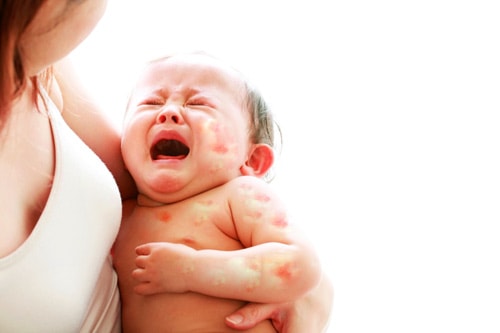 |
Redness or rash around the mouth
Itching or swelling all over the body
Facial swelling
Wheezing
Vomit
Diarrhea
Slow reaction
Many children may also have gradual reactions to cow's milk, including:
Vomiting milk
Crying
Constipation
Diarrhea
Loss of appetite
Eczema
Anaphylactic shock
Cow's milk rarely causes a severe reaction called anaphylaxis, which can be life-threatening. Symptoms of anaphylaxis can occur immediately after a child consumes milk or dairy products. You need to call emergency services immediately if your child shows any of the following signs:
Rash, skin swelling
Wheezing or shortness of breath
Swelling of the lips, mouth, tongue, or throat.
Body or limbs feeling weak or limp
Unconscious
Anaphylactic shock can develop very quickly and be life-threatening, so don't forget to call emergency services immediately.
Diagnose
Your child will be diagnosed with milk allergy by a doctor based on clinical symptoms and blood tests, as well as skin allergy tests.
A diet restricted from cow's milk may be recommended and then re-evaluated. Sometimes, delayed allergic reactions can be difficult to diagnose, so your child may need a special diet as recommended and supervised by a nutritionist.
Foods to avoid
If your child is allergic to the protein in cow's milk, they are also likely to be allergic to goat's milk and sheep's milk. Your doctor or a nutritionist may advise you to change their diet. Foods to avoid include: milk, yogurt, ice cream, butter, and cheese.
Milk can also be "hidden" in many other products, so you should check the labels of these products to see if they contain milk as an ingredient.
Milk sugar, lactose, condensed milk, milk protein, prepared milk
Casein and its salts, hydrolyzed protein
Lactbumin
Skimmed milk powder, non-fat condensed milk, butterfat.
According to food labeling regulations, foods containing milk must have a list of ingredients printed in bold.
Lactose intolerance
Some symptoms may appear similar to a cow's milk allergy, but they are actually signs of lactose intolerance, where the natural sugar in milk is not broken down. Lactose intolerance is less common in young children. It can cause diarrhea, stomach cramps, and bloating.
Is it just fussiness in infants or a cow's milk allergy?
The symptoms of fussiness in infants and milk allergy are quite similar and easily confused. If a child has a cow's milk allergy, it can also cause fussiness. When your child has a cow's milk allergy, in addition to symptoms like severe abdominal pain, crying, clenched fists, and arching of the back, it is often accompanied by:
Eczema
Diarrhea
Vomit
If you have any doubts or concerns, you should take your child to see a doctor for a proper diagnosis.
Breastfeeding and cow's milk allergy
Breastfeeding and maintaining a healthy, varied diet is best for both you and your baby. However, you may begin to notice your baby's reaction after you've eaten certain foods, such as dairy. Cow's milk protein passes into your breast milk, and it causes symptoms in babies with milk allergies, including:
Crying
Discomfort after breastfeeding
Difficulty sleeping
Digestive disorders, diarrhea or constipation
Symptoms include cold-like symptoms and wheezing.
Itchy, red eyes
Dry skin
Change the mother's diet.
If you notice your breastfeeding baby reacting to dairy products you consume, you should consult a doctor. They may advise you to avoid these foods for at least 2-3 weeks and monitor your baby's symptoms. If they are the cause, your baby's symptoms should improve within a few weeks. However, you don't need to completely avoid dairy products. Depending on the severity of your baby's reaction, your doctor will help you make appropriate adjustments to your diet.
Change the formula
Your doctor may recommend a different formula if your baby shows signs of cow's milk allergy. Options include hydrolyzed formula, where milk proteins have been broken down into smaller, more easily digestible, and less allergenic components. Alternatively, amino acid formulas, which don't contain any protein chains, may be used if your baby has difficulty with hydrolyzed formula or experiences severe symptoms.
The dangers of playing
Be extra vigilant if your child has a cow's milk allergy when they play with other children. They may come into contact with other children's dairy products. Inform childcare providers about your child's milk allergy when you are not with them.
Go see a doctor.
Your doctor can make the most appropriate adjustments, so please take note of the following information:
When and where does your child's reaction occur?
List of foods that cause reactions in children.
What are your child's symptoms: rash, wheezing…?
How long do these symptoms last?
What helps relieve my child's symptoms?
Controlling cow's milk allergy
The best way to manage symptoms of cow's milk allergy in children is to ensure your child completely avoids cow's milk proteins. If you are breastfeeding, discuss with your doctor about reducing or limiting dairy products in your diet. If you are formula-feeding, you will be advised to switch to a formula suitable for your child.
Many complex cases, such as allergies to multiple substances, difficult-to-diagnose conditions, severe reactions, or developmental delays, require diagnosis by specialists.
Prognosis
Fortunately, most children with cow's milk allergy outgrow it by age 15, but some may still experience reactions into adulthood. Don't try to do it alone or cut essential foods out of your child's diet. Talk to your doctor or a nutritionist to develop the most appropriate diet plan.
According to Health & Life
| RELATED NEWS |
|---|