

Vietnamese customers are advised to limit purchases of large luxury cars after July 1st.
The new special consumption tax rates have driven car prices up too high, causing luxury car brands to lose a significant number of customers in July.
After July 1st, when the new special consumption tax rates came into effect, many car manufacturers began adjusting prices in Vietnam. Small cars with engines under 1.5 liters saw price reductions, but the cuts were not significant and did not significantly impact consumer decisions. Conversely, in the luxury car segment, which mainly uses large engines, prices increased considerably, potentially by several billion dong per vehicle. This change led to a decline in sales in the segment.
According to data from the Vietnam Automobile Manufacturers Association (VAMA), total industry sales in July reached 28,004 vehicles, a 15% increase compared to June and a 38% increase compared to the same period in 2015. Of these, 20,726 vehicles were domestically assembled (a 15% increase compared to the previous month) and 7,728 vehicles were imported (a 14% increase compared to the previous month).
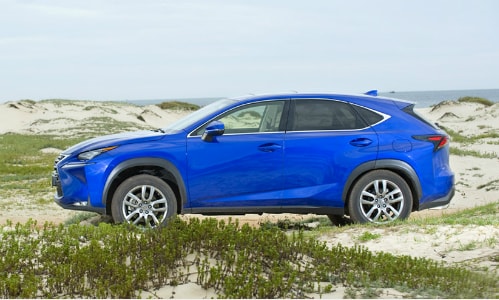 |
Lexus NX200t. |
The impact of taxes has a clear effect on Vietnamese people's car purchasing decisions. While the top 10 best-selling cars in the mainstream segment all saw sales increase compared to the previous month, the opposite was true for luxury cars.
Lexus, the Japanese luxury car brand with a strong presence in Vietnam, has recorded a significant drop in sales. In July, only 24 Lexus vehicles were delivered to customers, compared to 242 in June. This means July sales were only 10% of June's sales.
Meanwhile, its German rival, Mercedes, also saw a slight but insignificant decrease in sales. The three-pointed star brand's July sales totaled 489 vehicles, a slight drop from June's 502. Several other luxury car manufacturers did not release sales figures but also noted the impact of the market.
Lexus currently sells 7 models in Vietnam: ES, GS, LS, NX, RX, GX, and LX, with 9 variants. Of these, 6 variants have increased in price, while only three models – ES250, NX200t, and RX200t – retain their original prices because they use a 2-liter engine that is not subject to the tax increase. The remaining variants have seen price increases of at least 480 million VND and up to 2.3 billion VND.
| Car model | Old price | New price | Increase |
| ES250 | 2,280 | 2,280 | 0 |
| ES350 | 2,780 | 3,260 | 480 |
| GS350 | 3,815 | 4,470 | 655 |
| LS460L | 5,968 | 7,680 | 1,712 |
| NX200t | 2,577 | 2,577 | 0 |
| RX200t | 3,060 | 3,060 | 0 |
| RX350 AWD | 3,337 | 3,910 | 573 |
| GX460 | 4,040 | 5,200 | 1,160 |
| LX570 | 5,720 | 8.020 | 2,300 |
According to Hai Khang, a businessman importing luxury cars, the 90% drop in Lexus sales compared to the previous month was due to several reasons, with price changes being a major contributing factor.
For example, the LX570, which cost 5.7 billion VND before July, rose to 8 billion VND in July. "A 2.3 billion VND increase would make even the wealthiest buyers hesitate," Khang analyzed. With the new price, customers will be uncertain and switch to other options, perhaps a car from another brand or a smaller car from the same brand.
This source added that, besides the direct reason of customers switching to other cars due to the significant price increase, there are many other reasons related to how the market operates. Before July 1st, knowing that car prices would increase sharply, many customers tended to pre-order cars several months in advance to take advantage of the tax increase.
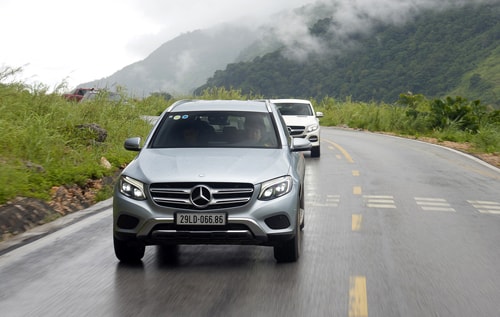 |
Mercedes GLC. |
Because of this mindset, many independent showrooms even import cars directly from the manufacturer and hoard them, or sell them immediately to customers with the advantage of not having to wait like with the manufacturer, and with smaller price increases to profit from the difference. Ultimately, customers who are still hesitant and not ready to buy a car will wait and see until the market stabilizes.
Mercedes only saw a slight price reduction because the company has an expanded product portfolio, many vehicles are assembled domestically, and the 2-liter engine did not increase in price. Furthermore, the models that saw the biggest price increases for Mercedes, such as the Maybach and AMG, are only for a select group of customers and are not the company's best-selling models.
The GLC is a model that contributes significantly to maintaining high sales for the brand. Currently, customers buying a GLC have to wait up to 6 months. The price increase from July 1st is only 20-120 million VND compared to before, depending on the version, so it doesn't significantly affect customers' purchasing decisions.
August marks the beginning of a slow shopping season, as is customary every year due to the seventh lunar month, a month traditionally considered unlucky for shopping in Vietnam. The market may experience low sales similar to July. Some budget car manufacturers are offering discounts to stimulate demand, but the luxury car market remains largely unchanged.
According to VNE
| RELATED NEWS |
|---|