

Wastefulness, misconduct, corruption: How many leaders have been held accountable?
Experience shows that the heads of some localities, agencies, and units have very extensive authority, but when problems arise, their accountability is not commensurate.
It can be seen that in the documents of the Party, the Government, as well as the Ministries, branches, agencies, and units, the phrase "head of the organization" has been mentioned increasingly often, especially in the requirement to promote the role and responsibility to overcome weaknesses and shortcomings.
Speaking at the first session of the 14th National Assembly, National Assembly delegate Phan Van Tuong (from Thai Nguyen province) also expressed his concern that, for a long time, perhaps the understanding of the responsibility of leaders has varied, and this has led to different interpretations in reports, but most reports cite the slogan "emphasize the responsibility of leaders." This slogan is widespread and frequently used in many fields.
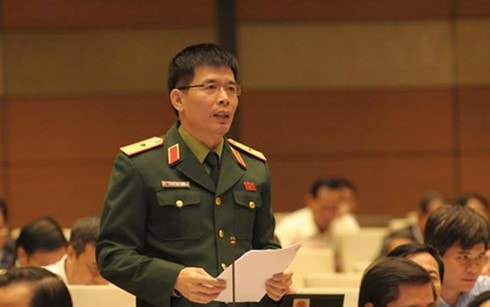 |
| National Assembly representative Phan Van Tuong: "The head of an organization has very great authority, but when problems arise, their responsibility is not commensurate with that authority." |
A report by the Central Committee of the Vietnam Fatherland Front, summarizing the opinions and recommendations of voters nationwide sent to the highest state power body, also clearly indicates that the mechanism for determining the responsibility of heads of state management agencies at all levels and heads of Party committees at the same level is unclear, which is a cause of stagnation in state management and corruption.
In reality, many heads of state-owned enterprises and units have incurred losses, causing the depletion of state capital and taxpayers' money, yet their responsibilities have not been clarified, and some have even been promoted more quickly, causing public outrage. Therefore, the Chairwoman of the Judiciary Committee, Le Thi Nga, after listing a series of stalled, loss-making projects and constructions facing bankruptcy, also requested that it be clearly stated where the heads of these units have been appointed, transferred, or assigned to other positions after leaving behind these consequences.
According to National Assembly representative Phan Van Tuong, the failure to clearly define the responsibilities of the leader also reflects the confusion in the unclear distinction between collective leadership and individual responsibility, and this loophole allows the mentality of "success is mine and failure is ours" to persist.
In some localities and agencies, the role of the leader has been proven, creating rapid positive changes and gaining recognition from the people and the National Assembly in a relatively short time. However, practice also shows that the leaders of some localities, agencies, and units have very extensive authority, almost making all decisions within their respective areas or sectors, either directly or indirectly. Yet, when problems arise, even very serious ones, their accountability is not commensurate with that authority.
This is clearly evident in the recent appointments of officials, where the ball of responsibility has been passed back and forth under the guise of "following the correct procedures," but in reality, often without meeting the required standards. In cases where violations are clearly identified, the responsibility of the head of government or Party committee is often attributed to a lack of thoroughness, insufficient advice, and then they simply offer a "deeply learned" lesson.
"The incompatibility between rights and responsibilities leads to many negative consequences, primarily abuse of power and shifting responsibility to the collective or to others. When rights are always intertwined but responsibilities are unclear, negativity inevitably occurs in the performance of public duties. Negative behavior, especially among leaders, will proliferate more rapidly in society," said Mr. Phan Van Tuong.
And perhaps, the vague issue of accountability for leaders also explains corruption and waste – one of the four major threats to the country identified decades ago, and which remains a complex and evolving threat to this day.
Great authority, yet personal responsibility "hides" within the collective – is being a "leader" such a privilege?
According to VOV