

Vietnamese interns in Japanese supermarkets.
The Lawson convenience store chain is training hundreds of Vietnamese students in Hanoi and Ho Chi Minh City so they can work for the company after studying in Japan.
Working in convenience stores is a popular part-time job for Japanese students. At the Lawson convenience store chain's training center, many young employees are learning how to greet customers before heading to the company's thousands of stores across Japan.
However, the difference is that these employees are Vietnamese, not Japanese. And they receive their training in Hanoi or Ho Chi Minh City, not Tokyo. They will be trained for about a month before going to Japan so they can both study and work part-time there.
The Japanese labor market is facing a severe shortage due to an aging population and Prime Minister Shinzo Abe's liberal policies, which have fueled increased demand for manpower. Therefore, Lawson began training Vietnamese students even before they left their home country.
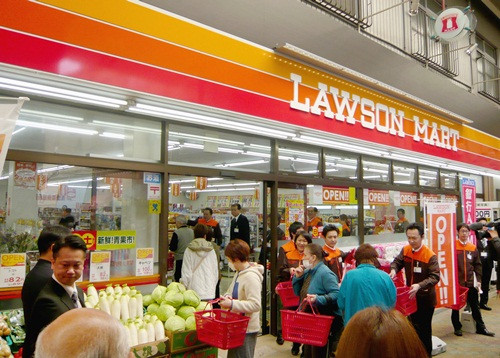 |
A Lawson store in Japan. Photo: Kyodo |
Their move reflects a result of the Abenomics stimulus campaign: an increasing number of people are coming to Japan on short-term visas.
Since Prime Minister Shinzo Abe took office in late 2012, the number of foreigners living in Japan has increased by nearly 10% to 2.2 million. Of these, the number of "technological trainees" alone has increased by 27% and the number of foreign students by 36%.
Although permanent immigration remains tightly controlled, these figures also demonstrate the efforts of Japanese companies to control wage inflation. The number of workers migrating to Japan now accounts for 10-15% of the total jobs created since Abenomics was implemented.
Lawson stated that they aim to recruit 100 Vietnamese students in the first year of the program. This number is expected to increase in the future. "Our goal is to help them easily find part-time jobs at Lawson once they arrive in Japan. Of course, they need some basic Japanese language skills beforehand," the company said.
Lawson said the program is one of the measures aimed at addressing Japan's labor shortage. When the unemployment rate falls below 3%, on average, there are 1.74 part-time jobs available for every applicant. The last time Japan had this rate was in 1992.
"In a way, I think the increase in immigration is the answer to the labor shortage here," said Mitsuhiro Fukao, a professor of economics at Keio University.
One of the areas attracting immigrants is the "tech trainee program." This visa allows workers from developing countries to come to Japan and receive training for up to three years at high-tech companies. Since Abenomics began, the number of these workers has increased from over 41,000 to over 192,000.
"Some are genuine trainees. But some are just cheap laborers in disguise," Fukao said. Nearly half of these come from China. But the number in Vietnam is also booming, tripling since 2012.
The number of students coming here has also increased sharply, from over 65,000 to over 246,000. And their visas also allow them to work part-time.
While short-term immigration has helped alleviate some pressure on the labor market, Japanese businesses are still keen to increase permanent immigration to compensate for the slow economic growth caused by a declining population.
This is a topic that remains controversial. Abe implemented several programs to allow highly skilled workers into Japan, but so far, they have only attracted a few thousand people. Politicians are also not enthusiastic about pushing further. However, the labor shortage, particularly in fields like nursing, could change this.
"I believe that anti-immigration sentiment is waning due to the domestic labor shortage," Fukao remarked. He suggested reinstating a plan previously discussed during former Prime Minister Junichiro Koizumi's administration – granting work visas based on applicants' Japanese language proficiency.
According to VNE