

The tragedy behind the most expensive coffee on the planet.
The civets are confined in cages, suffering pain from wire mesh cutting their legs, and are forced to eat coffee cherries constantly in order to produce high-quality coffee beans.
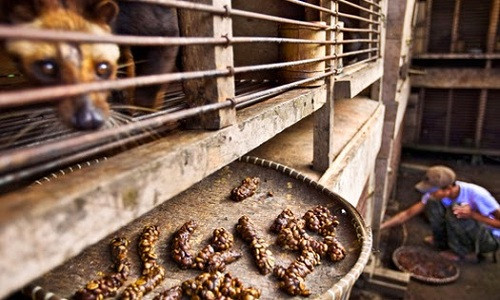 |
Wild civets are kept in cages to be used for their droppings. Photo: Blogspot. |
Civet coffee, also known as Kopi Luwak, is a rare and extremely expensive type of coffee, considered the most expensive in the world. It is produced from coffee beans that have been eaten and excreted by civets.Enzymes in their digestive tract alter the protein structure of coffee beans, reducing acidity and resulting in a more flavorful brew.A cup of civet coffee can sell for $80 in the US.
Found in Southeast Asia and sub-Saharan Africa, civets have long, monkey-like tails and stripes on their faces and bodies. They play an important role in the food chain, feeding on insects and small reptiles, along with fruits such as coffee beans and mangoes.
Initially, the civet coffee trade was very beneficial to civets. In Indonesia, civets are fruit-eating animals found on farms and are often considered pests. The development of the coffee industry prompted local people to protect civets.
However, as civet coffee became popular, many wild civets were captured and confined to cages on plantations, partly to serve coffee production and partly to attract tourists.
Experts at the Wildlife Conservation Research Unit of the University of Oxford, in collaboration with the World Wildlife Fund in London, assessed the living conditions of nearly 50 wild civets confined in cages from 16 plantations in Bali, Indonesia. The research results, published on April 28 in the journal Animal Welfare, paint a bleak picture of the lives of many of these civets.
None of the plantations met basic animal welfare requirements such as size, hygiene conditions, and the ability of civets to function normally in cages. "Some cages were only as small as rabbit hutches. Inside, there was urine and feces everywhere," said Neil D'Cruze, a member of the research team.
Some civets are very thin, fed only on coffee berries. Others are obese due to lack of freedom to roam.
According to D'Cruze, the most worrying aspect is the wire mesh floor design of the cages, which the civets are exposed to all day long. "If you stand on the wire mesh for a long time, you'll get sore feet and chafing. The civets have nowhere else to hide. The wire mesh is constantly causing them pain and discomfort," D'Cruze said.
Furthermore, many civets lack access to clean water and opportunities to interact with their own kind. These nocturnal animals are also affected by noise from traffic and tourists.
According to experts, what makes civet coffee special is that wild civets choose the best coffee cherries to eat. Keeping civets in cages and feeding them old coffee cherries results in a lower-quality product.
According to VNE
| RELATED NEWS |
|---|