

Children learning to draw offers wonderful benefits.
Developing memory, observation skills, and fostering emotions and creativity are some of the wonderful benefits of teaching children to draw.
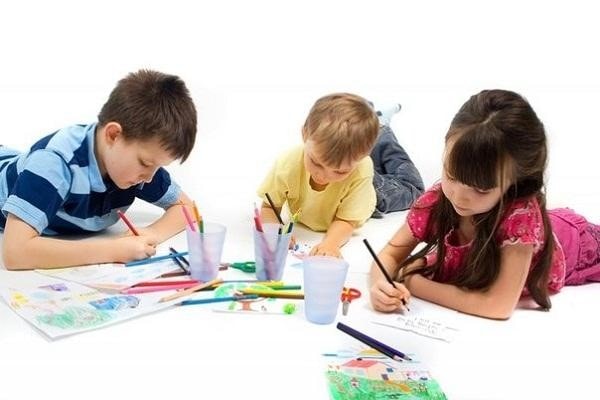 |
According to psychologists, children who enjoy drawing and those who are taught to draw offer wonderful benefits:
Help children improve their memory.Drawing helps children develop their visual skills and ability to observe the world around them, enabling them to retain information about objects and phenomena. Drawing helps children remember things longer as they express their thoughts through drawing, and they will form accurate judgments about objects and phenomena.
Improve observation skillsChildren's drawings are often difficult to understand. However, if mothers pay close attention, they will notice unusual details that stand out in their children's drawings. Psychologists believe this reflects the world through the child's memory. In fact, this is how children demonstrate their daily observational skills, noticing details that adults overlook.
Abstract thinking arises when children want to redraw something they've seen: Their world is a fairy tale with strange details. Furthermore, the use of color will further highlight their imagination.
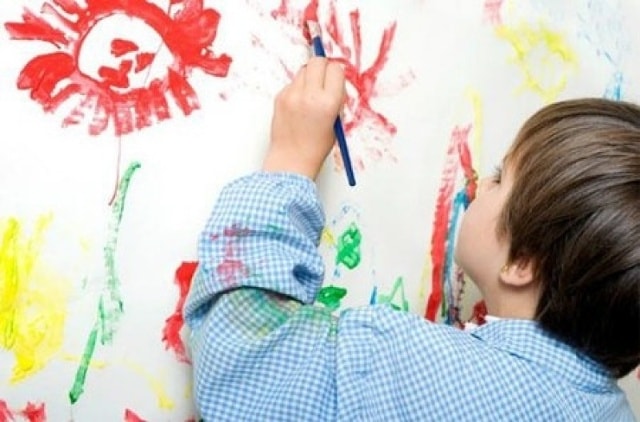 |
Develop multidimensional thinking:We can learn so much from children's drawings. The use of colors and shapes helps to enhance memory and stimulate observation skills, nurturing imagination. This is visual thinking, movement, and creativity that children cannot learn without drawing.
The painting expresses emotion.Like music and dance, painting is an art form that expresses human emotions from within. By looking at the artwork, parents can see their child's mood and thoughts.
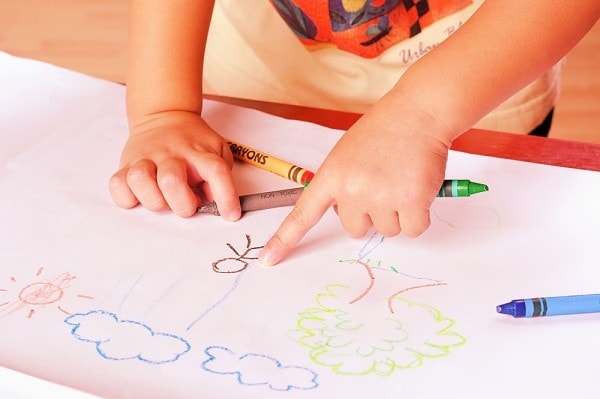 |
Given the benefits mentioned above, before teaching children to draw, experts suggest several ways to help them become familiar with colors and their hands: Regularly teaching children to draw also helps them improve their observation skills and attention to detail in a whole. It helps children develop motor skills as they control the drawing pen according to their own will. It helps them develop logical thinking about what to draw first, what to draw next, or from left to right, from top to bottom. It helps children appreciate beauty. Drawing is an activity for relaxation, concentration training, self-discovery, and a healthy hobby instead of playing video games or watching television...
Introduce your child to colors first:Use colorful jellies so your baby can learn about colors while eating. They'll learn about colors and the soft, chewy texture, and you can teach them to separate the layers of the jelly while eating – it'll be fun!
Use your fingers:This game is for children aged 2 and up. If your child isn't yet proficient at holding a pen but loves to draw, remember to choose safe colors (food-grade colors) and lay down a mat before letting them play to prevent messes. Just seeing their fingers create colorful shapes on the paper is enough to bring joy to your child.
Use your hands skillfully.Children often love sand and modeling clay. Instead of going to the toy store and buying expensive modeling clay, try making your own safe modeling clay for your child, adding some clean sand, and your child will have tons of new games to play!
Practice memory skills with your child.Mothers can help children improve their memory through paper-tearing and paper-pasting games. It's inexpensive, and tearing and pasting paper into different shapes helps children develop fine motor skills, improve color coordination, and is also a great way to improve their memory if the mother knows how. For example, mothers can help their children create shapes of national flags, naming each flag as they complete a section. Children will surely remember which flag belongs to which country after completing each section!
According to PNVN