
9 first aid methods that increase danger
You should only help someone in need when you are absolutely certain you are capable of doing so.
You should only help someone in need when you are absolutely certain you are capable of doing so.
Almost all of us remember some basic first aid principles for accidents and injuries. However, our knowledge is sometimes inaccurate. Ilya Boyko, a first aid expert, explains common mistakes that can be dangerous to others. These are:
1. Trying to make yourself sweat when you have a fever is a bad idea.
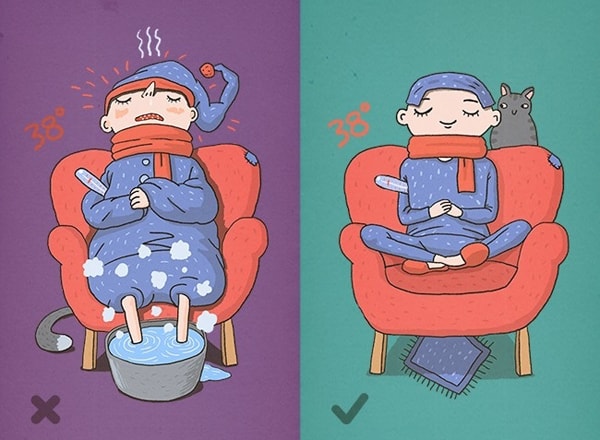 |
When you're sick, you'll feel a burning sensation all over your body, but your hands and feet will tremble, and your body temperature will rise. If you try to keep yourself warm with layers of clothing or blankets, the temperature will increase even faster. Although the body releases heat as a response to fight infection, temperatures above 38 degrees Celsius are more harmful than beneficial. Therefore, if you experience high body temperature accompanied by convulsions, you need to cool down instead of warming yourself up.
2. Do not put anything in the mouth of someone who is having a seizure.
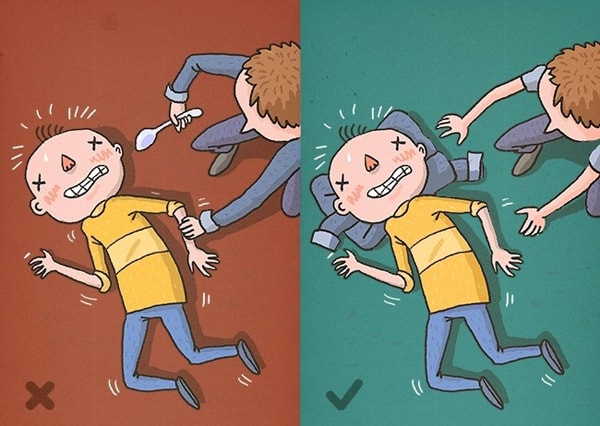 |
You could break someone's teeth if you try to put something under them to prevent someone having an epileptic seizure from biting their tongue. In reality, they might bite their tongue a little, but it won't cause serious harm. The best thing you can do is place a soft pillow or towel under their head, as this will help protect them from brain concussion.
3. Do not apply cream immediately to the burn.
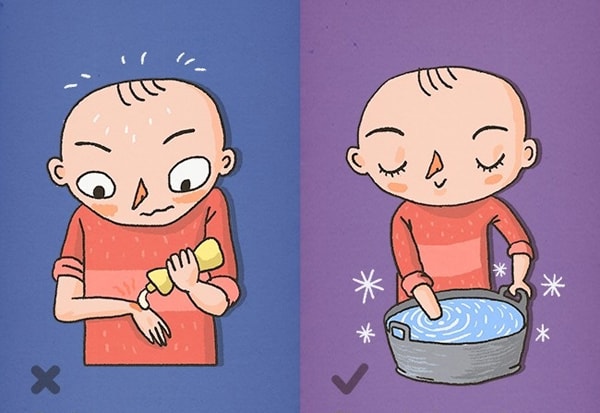 |
When skin is burned, heat penetrates deeper into the tissues. The best thing to do in this situation is to immerse the burned area in cold water for about 15 minutes. This helps to cool the burn. Do not apply cream immediately after a burn; only do so after 20 minutes or more.
4. Do not move an injured person without the presence of medical professionals.
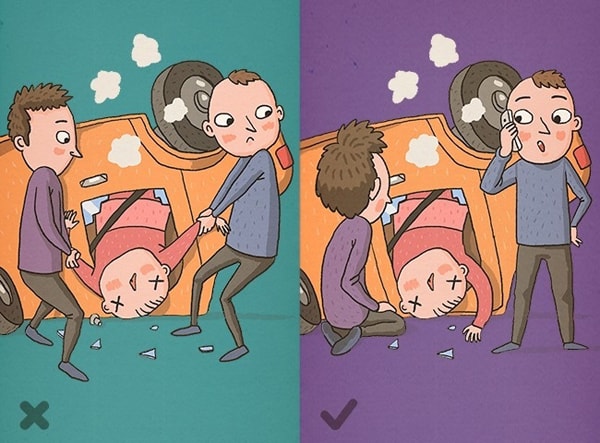 |
If an accident happens on the road, you shouldn't move an injured person and certainly don't try to pull them out of the car. Doing so will only make things worse. This principle can be disregarded in the most extreme situations, for example, if the car is on fire.
The recommended course of action in the event of an accident is:
- Call an ambulance
If possible, turn off the car's engine and disconnect the battery.
- Stop the bleeding
- Help the victim calm down.
5. If someone is choking, do not pat them on the back.
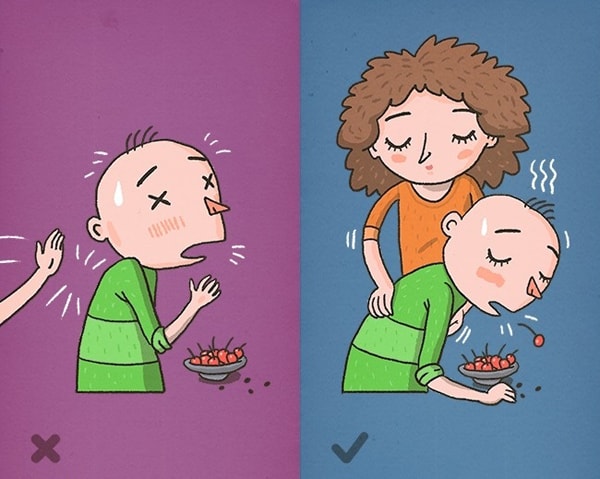 |
What you need to do is help them calm down, tell them to breathe deeply and slowly. This will help relieve choking and dislodge any objects obstructing their airway.
6. Do not attempt to pull the tongue of someone who has fallen from a height and is unconscious.
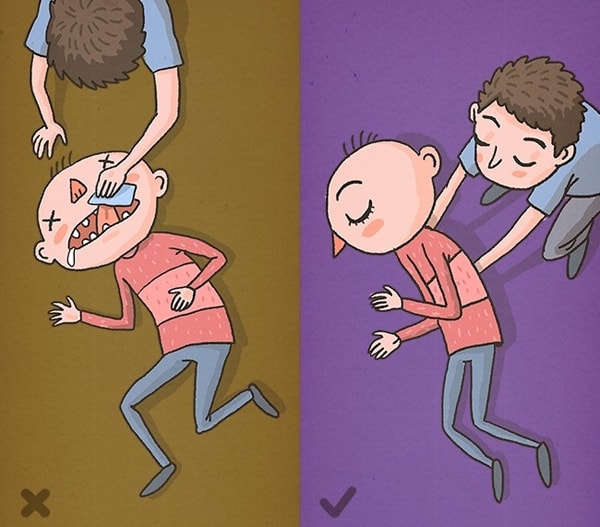 |
It's dangerous to place an unconscious person on their back because their tongue could fall back in and block their airway. To ensure this doesn't happen, simply lay them on their side or turn their head and don't try to pull their tongue out.
7. Do not apply a tourniquet to a bleeding arterial wound.
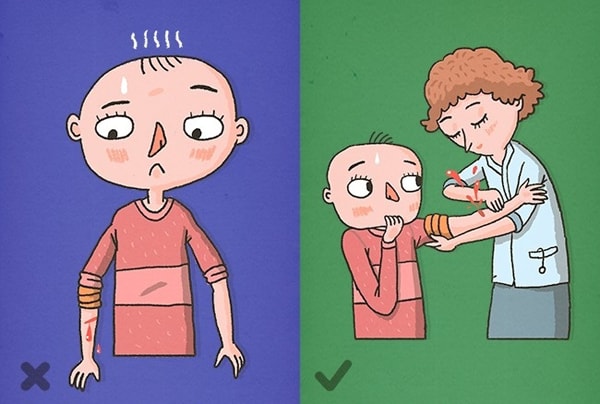 |
In arteries, blood is pumped at high speed under great pressure, so blood flowing from a wound is not a small stream but a gush like a fountain. In such cases, you need to immediately place a piece of cloth over the wound and press firmly to create pressure. Using a tourniquet to stop the bleeding is a last resort and should only be used when pressure alone fails, as it can damage intact cells.
8. Don't rub the numb areas of your body.
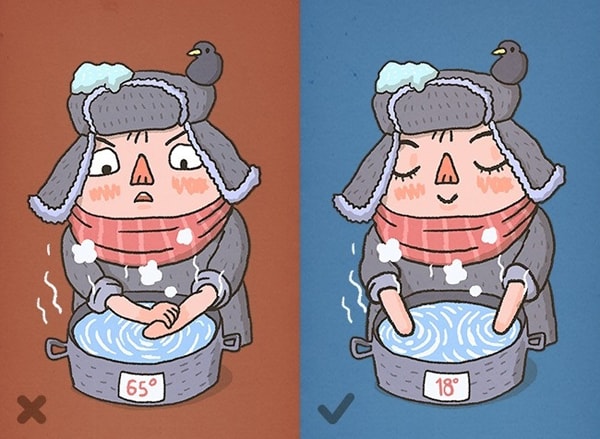 |
Rubbing the numb area can damage capillaries and worsen the situation. Soaking in hot water is also not a good idea. If you have numbness, try warming your body slowly by placing your hands in cold water and gradually increasing the water temperature.
9. Don't put yourself in danger.
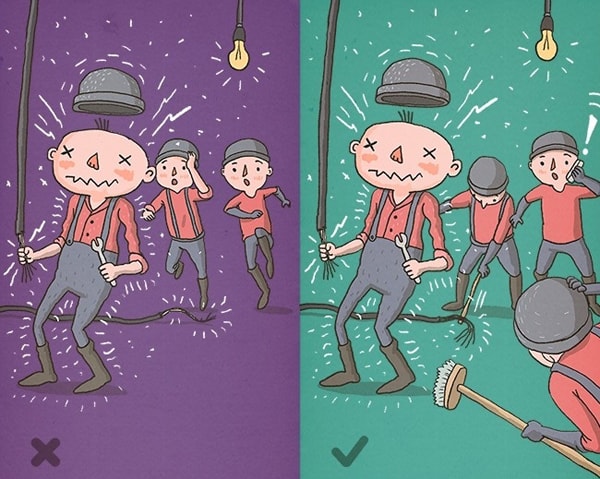 |
In an emergency, always consider actions that are safe for yourself and help you survive. For example, if you touch someone who has been electrocuted, both of you will be harmed instead of one. In this case, you need to turn off the power or use wood to separate the victim from the power source.
Remember that in an emergency, taking action that endangers both you and the victim is worse than doing nothing. You should only help if you are certain you can and always call emergency services directly.
According to Ngoisao.net
| RELATED NEWS |
|---|