

The turning point that helped Thomas Edison's mother turn her son into a genius.
"My mother is the one who created me," Thomas Edison said of the woman who transformed him from a seemingly dull child into the greatest inventor of all time.
Many stories of questionable authenticity surround the childhood of the inventor of the electric light bulb, but all are based on Thomas Edison's (February 11, 1847 - October 18, 1931) diligent study and research, and the role of his great mother.
An anecdote recounts the moment Thomas Edison's elementary school teacher wrote a letter to his mother. After giving the letter to his mother, Edison asked her about its contents, and her eyes welled up with tears as she read each word aloud to him: "Your son is a genius. This school is too small and does not have teachers good enough to educate him. Please let him teach himself."
Many years later, after his mother had passed away and Edison had become one of the greatest inventors of the century, he was looking through old family belongings. Suddenly, he found a folded piece of paper in the corner of a desk drawer. He unfolded it and saw the words written on it: "Your son is an idiot. We will not let him go to school anymore."
Edison wept for hours, then wrote in his diary: "Thomas Alva Edison was a dull child, who, thanks to his heroic mother, became the genius of the century."
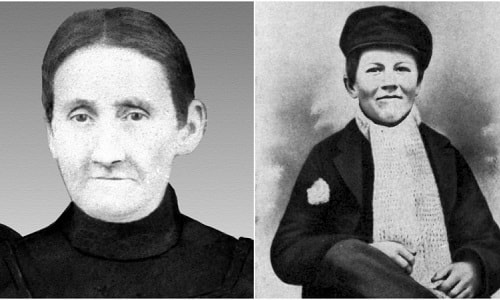 |
| Edison received his homeschooling under his mother's guidance after leaving school. |
Thomas Edison knew his teachers considered him to have a mental problem. In the classrooms of the 1800s, Thomas Edison struggled with learning because of his dyslexia. Very few people knew about this condition at the time. It wasn't until the early 1900s, decades after Edison left school, that the first studies on dyslexia were conducted.
According to records from the Foundation for Economic Education, in 1854, Reverend GB Engle insulted seven-year-old Thomas Alva Edison, calling him a dullard and mentally ill. Edison left Port Huron School in Michigan, his first formal school.
His mother, Nancy Edison, brought him back the following day to discuss the matter with the Reverend, but she was angered by his rigidity. She decided to homeschool her son, abandoning the school Edison had attended for only three months. Although Edison appears to have attended two other schools briefly, the genius spent most of his childhood homeschooled under his mother's guidance.
In her biography "Thomas Alva Edison: The Great American Inventor," Louise Betts goes into detail explaining why Edison had problems with his teacher Reverend's teaching style. According to her, for a child who usually explored things in his own way and played alone outdoors all day, sitting still in a classroom was a real ordeal.
Reverend G. Engle, Edison's teacher, and his wife taught the children to memorize lessons by reading aloud. When a child forgot an answer or didn't memorize well enough, the Reverend would whip them. His wife also approved of this method of education, believing that corporal punishment would help instill good study habits in the children. Her whipping was even harsher than her husband's.
Edison was perplexed by this teaching method. He couldn't learn in fear. Nor could he sit still and memorize. He preferred to observe everything around him and ask questions. But Reverend Engle was annoyed by Edison's questions. For this reason, he learned very little from school in the first few months and consistently received poor grades.
Later, when sharing about his learning experiences, he said: "I remember that I never made any progress in school. I was always at the bottom of the class, felt that the teachers didn't like me, and my father thought I was really stupid."
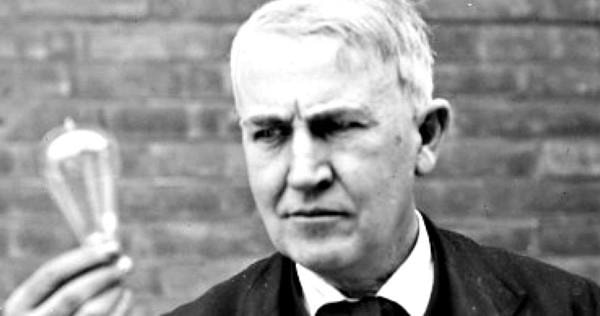 |
| Thomas Edison |
However, according to the same biography, when Edison told his mother about his teacher calling him stupid, they both went to the school to seek an apology. "My son isn't going backward, I believe that," Mrs. Edison said. Despite her efforts, the Reverend couple didn't change their minds about their student. Finally, Mrs. Edison realized what she should do. "Okay, I'll teach him at home myself," she declared.
Edison couldn't believe his ears. He looked at his mother, the woman who had placed her faith in him, and promised himself he would make her proud. At the end of his life, Edison said: "My mother created me. She gave me the motivation to live, she was the one who always made me strive not to disappoint her.".
According to VNE