

The transformation of market management models still faces many shortcomings.
(Baonghean) - Transforming the management, operation, and business model of markets is considered a solution to improve operational efficiency and align with the trend of civilized commercial development. However, after more than 9 years of implementing this transformation policy, many shortcomings still exist...
Effectiveness after conversion
Vinh City is a leading locality in implementing the transformation of market management models, with 12 out of 29 markets in the area having been transformed. For example, the Tay Vinh Agricultural Market, built under the BOT (Build-Operate-Transfer) model, has been in operation for over a year, becoming a central market for purchasing and selling agricultural products for farmers in the province.
"How is Da Nang market different from Nghe An market?"
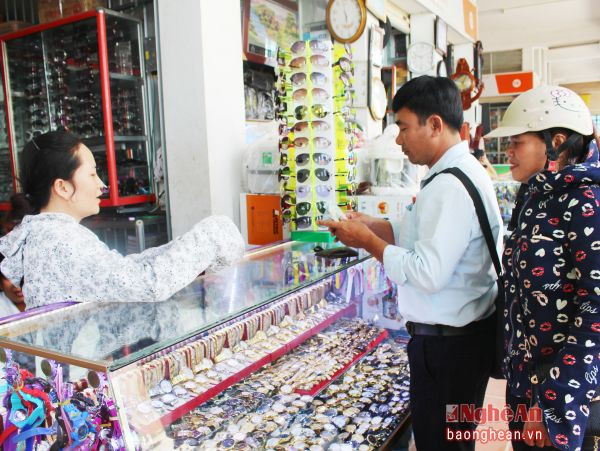 |
| Giát Market (Quỳnh Lưu district), after being transformed into a business-managed model, has become a bustling trading center of the district. |
Since the market opened, it has resolved the problem of uncontrolled street vending in the area of Hong Son Street, in front of Vinh Market, improving urban aesthetics, order, and traffic safety. The market has provided stable business locations for nearly 500 small traders.
Previously, Giát Market (Quỳnh Lưu) was cramped and unsightly, with vendors spilling out onto the street. However, since 2009, the market has been transformed into a business-managed model, receiving investment for expansion and the construction of a spacious two-story building, attracting over 820 vendors.
Mr. Nguyen Son Ha, Head of the Economic and Infrastructure Department of Quynh Luu District, said: "Previously, the market contributed only about 1 billion VND/year to the local budget, but in recent years it has increased to 30-40%. In addition, the managing enterprise ensures investment in upgrading and renovating the market, fire prevention and control, security and order, and food safety and hygiene..."
There are still obstacles in all directions.
However, according to assessments, Nghe An is one of the localities that has been slowest in the country in implementing the transformation of market management models.
Since the policy of transforming market management models was implemented in 2007, only 16 out of 405 markets have undergone this transformation. Therefore, the system of revenue collection remains inconsistent, leading to budget losses.
Those entrusted with managing the market have not paid attention to investing in its renovation and upgrading. As a result, the market's infrastructure is increasingly deteriorating, especially in terms of fire safety and food hygiene.
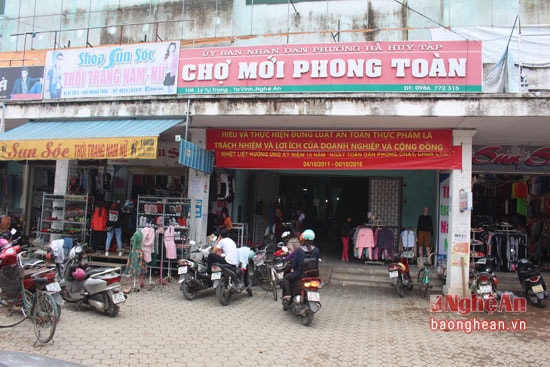 |
| Phong Toan Market (Vinh City) was transformed and is now managed by a cooperative, but it has only attracted 160 business households out of a total of 400 kiosks. |
The common problem for many market management cooperatives is that the number of members is still small, and they have not been able to recruit many members among the traders doing business in the market, resulting in low capital mobilization and low business efficiency.
For example, Phong Toan Market (Vinh City), located in a fairly convenient location, received an investment of over 20 billion VND, was built as a spacious two-story building, and is managed by a cooperative. However, to date, the second floor of the market remains unused; only 160 out of 400 stalls are currently occupied.
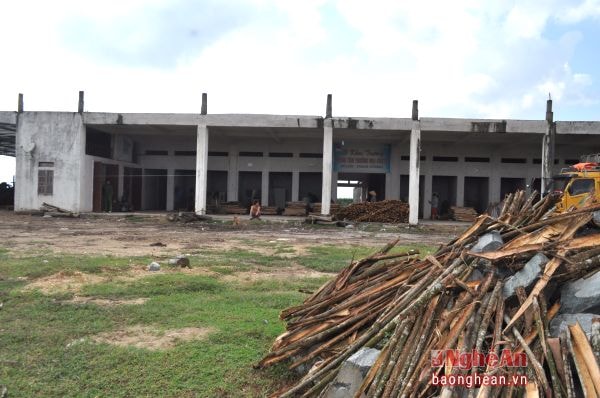 |
| The Vo Liet Shopping Center (Thanh Chuong district), built with billions of dong in investment by a business, opened six years ago but remains abandoned. Photo: Dinh Ha |
| Nghe An province is striving to complete the conversion of 50% of its markets to a business model managed, operated, and managed by enterprises and cooperatives by 2020. To achieve this goal, the involvement of local authorities, businesses, and above all, the support of the people are needed for this market transformation. |
Although Vinh City has implemented market transformation quite effectively, according to Mr. Tran Quang Lam - Head of the Economic Department of Vinh City, the transformation from traditional markets to cooperative management still faces many difficulties: "Currently, there are 3 traditional markets operating in the area (Ben Thuy Market, Kenh Bac Market, and Cua Bac Market) that have been transferred to cooperative management."
However, when campaigning to establish cooperatives, most small traders had limited capital, so only a few households contributed capital and became members. Those households that were not members of the cooperative were always worried about losing their business locations, leading to conflicts.”
Some markets were newly built with investment from businesses, but are still facing various obstacles and have to be abandoned, wasting a large amount of budget.
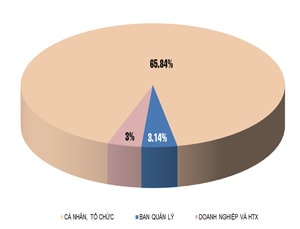 |
| The proportion of stakeholders involved in management. 405 markets in the area. Graphics: Tran Hai |
For example, the Vo Liet Shopping Center (Thanh Chuong district) was built with tens of billions of dong to replace the old, dilapidated market, but despite being open for more than 6 years, the shopping center remains inactive.
Regarding the reasons why people are not enthusiastic about the new shopping center, Mr. Tran Van Ky, Chairman of the People's Committee of Vo Liet commune, said: "Local people and small traders are used to doing business at the old market right next to Ro Bridge. On the other hand, the kiosks in the market are too small, the market fees are higher, and the location is inconvenient..."
There are still many obstacles in implementing the policy of transforming market management models. According to Ms. Vo Thi An, Deputy Director of the Department of Industry and Trade, the biggest difficulty in transforming market management models currently is the lack of strong support from the People's Committees of communes and wards, market management boards, and the lack of enthusiasm from businesses. Furthermore, the procedures and regulations for transforming market management models issued by the Provincial People's Committee, including the bidding regulations for organizations and individuals to invest in, manage, and operate markets, are no longer suitable for the current reality.
Therefore, to create a "framework" for the transformation of market management models, the Department of Industry and Trade is submitting to the Provincial Party Committee a regulation on "The process of transforming the organizational, management, and business operation models of markets in Nghe An province." Accordingly, depending on the time, localities will select the markets that need to be transformed and develop a specific transformation roadmap. After the Provincial People's Committee issues the regulation, specific guidelines will be provided for localities to apply, resolving difficulties in the market transformation process.
Dinh Nguyet