

The Objekt 4202 hypersonic weapon and America's concerns.
Recently, Russia successfully tested the Objekt 4202 hypersonic flying weapon at a test range in Orenburg – a weapon capable of traveling at speeds exceeding Mach 10.
Obsessed with America
Following the test, the Washington Free Beacon reported that while China had also successfully tested the Wu-14 hypersonic glide vehicle (Mach 10), Russia's successful test of the Objekt 4202 warhead was what caused concern in the US and prompted it to seek countermeasures.
The newspaper reported that the US Congress has passed amendments to defense spending laws to counter the growing threat of hypersonic missiles, primarily from Russia, forcing the US to invest in laser weapons to enhance its interception capabilities.
Washington decided to take this step after media reports indicated that Russia was continuing its plans to test the Objekt 4202 hypersonic missile. According to US reports, Moscow also successfully tested the Objekt 4202 on the UR-100N (RS-18B - NATO designation SS-19 Stiletto) ballistic missile last April.
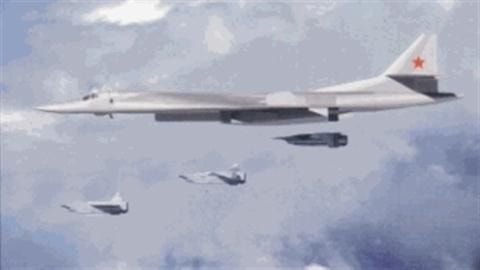 |
| X-90 GELA missile. |
World media reported that since 2012, Russia has also successfully tested hypersonic flight control techniques at the Akhtubinsk launch site in Astrakhan. However, most of these tests were kept secret until Objekt 4202 officially surfaced.
According to James Sayring, head of the U.S. Missile Defense Agency, Congress plans to spend $23 million on a laser weapon development program aimed at protecting the country from global rapid-fire attack vehicles that could be mounted on ballistic missiles.
US laser weapons can be deployed on the ground, on surface warships, on space stations, or carried by spacecraft in space. However, Sayring acknowledged that testing of the new weapon would not take place any sooner than 2021.
Why is it that while China has also successfully tested hypersonic weapons, the US is not as worried as it is about Russia? According to some strategists, this stems from several reasons.
Russia inherits
The reason the US is not worried about Beijing's Wu-14 but is genuinely concerned about Moscow's successful testing of the Objekt 4202 hypersonic weapon is because Moscow inherited the rich technological foundation and experience in hypersonic missile manufacturing from the Soviet Union.
As early as the 1970s, Soviet scientists successfully developed hypersonic warheads for intercontinental ballistic missiles and mastered the advanced technology of controlling dozens of multiple independently targetable reentry vehicles (MIRVs), something that China has yet to achieve.
For example, the NPO Mashinostroyenia, a scientific and technological manufacturer of machine-building enterprises, developed the X-80 Meteorit missile (Kh-80 or AS-X-19 - NATO designation SS-N-24 Scorpion), and then went on to develop the Objekt 4202 weapon (which is the current Yu-71 development plan).
NPO Mashinostroyenia is also one of two members (representing Russia) of BrahMos Aerospace (a Russian-Indian joint venture established in 1998 in New Delhi). NPO is also the creator of India's famous BrahMos II supersonic missile, which can reach speeds of up to Mach 5.
In the 1980s, the Raduga Machine-Building Design Bureau also successfully developed the X-90 GELA (Kh-90 - AS-19 Koala) hypersonic missile. In the early 1970s, Russia also successfully developed the Kholod missile based on the S-200 air defense missile system. In 1991, this missile successfully tested a speed of 6000 km/h; however, the project was canceled after the collapse of the Soviet Union.
With the technological foundation and experience of the Soviet Union and the strong development of Russian missile science, Russia's hypersonic missile project could surpass similar weapons development plans of the US such as the X-51A Waverider, HTV-2 Falcon, etc.
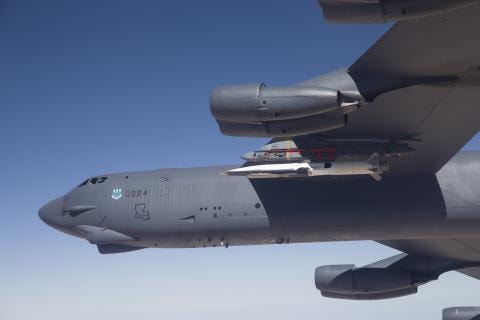 |
| The US is testing the X-51A Waverider missile. |
Super-fast attack
According to Russian military experts, the Objekt 4202 hypersonic weapons are expected to reach speeds exceeding Mach 10 and are capable of concentrated attacks on a single target or multiple highly mobile, uninterceptable targets individually.
The Kremlin has repeatedly expressed concern that the US missile defense system threatens Russia's strategic nuclear forces. Therefore, it is certain that Moscow will equip hypersonic missiles with nuclear warheads on its intercontinental ballistic missiles.
The British defense magazine Jane's Defence Weekly predicts that between 2020 and 2025, Russia is likely to deploy around 24 Objekt 4202 hypersonic weapons.
By the time Objekt 4202 was officially deployed, Russia had also perfected the liquid-fueled RS-28 Sarmat intercontinental ballistic missile (ICBM). This ICBM can carry dozens of hypersonic nuclear warheads.
Jane's report also suggests that Russia's current generation of strategic bombers under development, the PAK-DA, will also be capable of launching these hypersonic missiles. With the incredible speed of hypersonic missiles, Russia will possess an extremely formidable airborne deterrent weapon.
According to Baodatviet
| RELATED NEWS |
|---|