
A 'benchmark' is needed to evaluate officials.
Due to the lack of regulations on employee performance reviews and evaluations, these processes remain largely qualitative and lack specific quantitative measures.
Due to the lack of regulations on employee performance reviews and evaluations, these processes remain largely qualitative and lack specific quantitative measures.
During his lifetime, President Ho Chi Minh always emphasized, "Cadres are the foundation of all work; the success or failure of any undertaking depends on whether the cadres are good or bad." General Secretary Nguyen Phu Trong has also repeatedly affirmed, "Building the Party is a key task, and cadre work is the key of keys."
Right from the start, we must do a good job of evaluating officials.
Mr. Nguyen Duc Ha, former Director of the Central Organization Department, believes that in the various stages of personnel work, each stage plays a different and important role, and no stage should be underestimated or overemphasized. He argues that personnel evaluation is a prerequisite, personnel planning is crucial, personnel training and development is a regular task, and personnel rotation is a groundbreaking step.
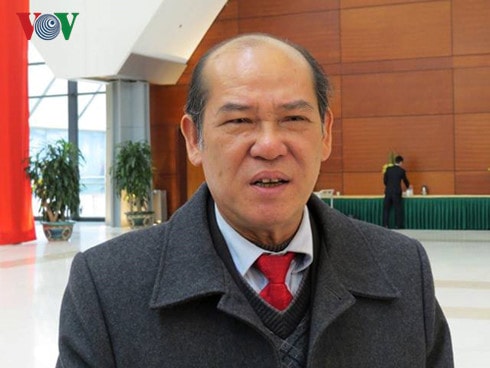 |
| Mr. Nguyen Duc Ha. |
According to Mr. Ha, reality shows that only an accurate assessment of the capabilities and qualities of cadres can serve as the basis for selecting, planning, training, and rotating cadres accurately and objectively. Conversely, subjective, biased, and inaccurate assessments of cadres' qualities and capabilities will lead to improper placement and utilization, resulting in unforeseen consequences, especially the wrong placement of key cadres and leaders. "Therefore, the assessment of cadres is a prerequisite and of particular importance in personnel work, because it relates to all stages of personnel work; every stage of personnel work requires assessment," Mr. Ha emphasized.
The evaluation and placement of cadres still suffer from favoritism and parochialism.
The Resolution of the 4th Plenum of the 12th Central Committee on Party building also noted: The evaluation and placement of cadres still show favoritism and parochialism. Some mechanisms and policies in the promotion and appointment of cadres are not fair. The management of cadres and Party members is still lacking in strictness.
Associate Professor Tran Minh Tuan from the Vietnam Academy of Social Sciences believes that the evaluation and assessment of cadres remains a weak point that has been slow to be addressed, and the results of assigned tasks are not yet the primary measure for evaluation. The development and implementation of quality cadre planning are uneven, lacking foresight and failing to ensure a balanced age structure across three groups. Cadre planning is not truly linked to training, development, placement, and utilization. There is a lack of interconnectedness between lower and higher levels, between localities and the central government, and between different sectors and fields of work. The mechanisms for managing and supervising cadres, and the policies regarding cadre rotation, lack specific regulations, leading to inaccurate evaluations, placements, and utilization of cadres after rotation in some cases.
Also emphasizing that the evaluation of officials is currently the most difficult and weakest link, Mr. Nguyen Duc Ha stated that the tendency to show deference, avoid responsibility, and shy away from confrontation in commenting on and evaluating officials is still quite common at all levels. In many cases, comments and evaluations of officials are subjective, based on personal feelings, lenient towards others, and parochial. “The mindset of focusing on term limits, group interests, or being influenced by other social relationships means that personnel work still does not accurately reflect the capabilities of officials, affecting the overall quality of personnel work.”
Because there are no regulations on evaluating and assessing officials, and no specific standards and criteria for each official position, the evaluation and assessment of officials remains largely qualitative rather than quantitative. “Those responsible for evaluating officials often use their own ‘measures,’ so the evaluations can differ and even contradict each other. Even the same person, using the same ‘measure,’ might give a different assessment yesterday than today,” Mr. Nguyen Duc Ha emphasized.
A "standard benchmark" is needed for evaluating and assessing officials.
Evaluating cadres is generally a difficult aspect of personnel management; therefore, it is necessary to adhere to the principles of transparency in the content, standards, and methods of evaluation, and to ensure fairness and objectivity. Cadre evaluation must be comprehensive, considering all direct, indirect, objective, and subjective factors in all aspects of the cadre's work.
Associate Professor Tran Minh Tuan believes that it is necessary to continue to strongly and comprehensively innovate all aspects of personnel work, first and foremost the evaluation of cadres. This includes developing standards for cadre positions and criteria for evaluating cadres based on these standards, work efficiency, and public trust. The areas of work, assigned tasks, and the results of cadre performance should be made public so that Party members and the people can monitor, supervise, and provide feedback, thereby demonstrating their trust. This process will then be used to consider and evaluate cadres.
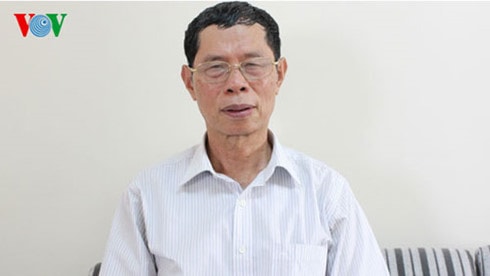 |
| Dr. Tran Van Mieu. |
Dr. Tran Van Mieu also stated that in the process of identifying, selecting, evaluating, training, assigning, challenging, and rewarding personnel, the principles of democracy, openness, transparency, self-criticism, and criticism must be strictly adhered to. Implementing these principles effectively ensures that personnel planning, including the planning of personnel participating in Party committees at all levels, is carefully selected, with thorough screening from lower to higher levels, and creates high unity within the Party. In this way, the Party will select Party members with sufficient competence and dedication to participate in leadership bodies, creating high consensus within the Party and among the people. According to Dr. Tran Van Mieu, former Director of the Central Youth Culture and Education Center, personnel planning must be carried out according to a strict process, from identification and evaluation, selection, training, assignment, challenging, and rewarding. These stages are all very important, closely linked to each other, and have an organic, unified, and complementary relationship.
According to Mr. Nguyen Duc Ha, the evaluation and assessment of cadres must be closely integrated with other aspects of personnel work. This includes continuing to promote and improve cadre planning to meet both immediate and long-term task requirements. Cadre planning must be linked to other aspects of personnel work, ensuring close coordination, synchronization, and interconnectedness between higher and lower levels within the political system. The rotation of leading and managerial cadres within the planning framework should be strengthened, moving them from central agencies to localities, from localities to the central government, and from one locality to another. At the same time, the policy of appointing some key leadership positions at the provincial and district levels to individuals from outside the locality should be promoted to overcome parochialism and insularity in personnel work.
According to VOV.VN